Standing tall in the heart of Manhattan, the Atlas statue is more than just a piece of art—it is a powerful symbol of strength, resilience, and human determination. Created during one of the most pivotal times in American history, this bronze masterpiece continues to fascinate viewers with its grandeur and deeper meanings. In this blog, we will dive into the fascinating story, design, symbolism, and surprising facts about the Atlas statue at Rockefeller Center.
1. Basic Information
Who Created the Atlas Statue?
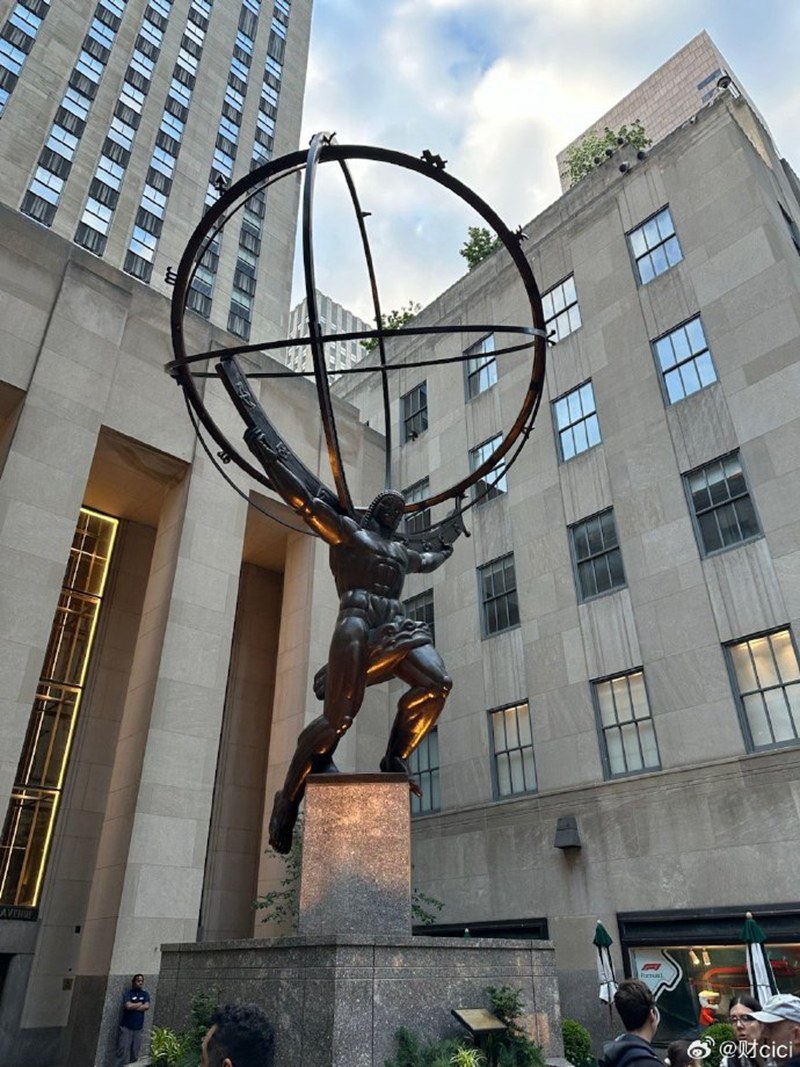
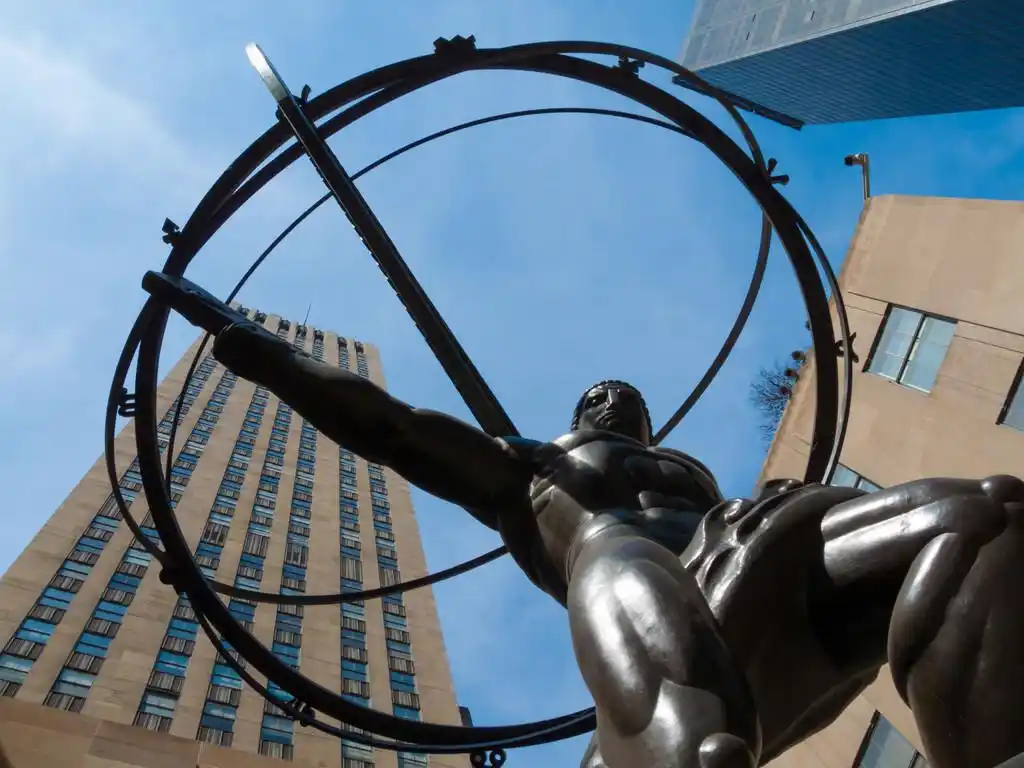
The Atlas statue was designed by American sculptor Lee Lawrie, with decorative details crafted by architectural sculptor Rene Paul Chambellan. Completed in 1937, the sculpture depicts the mythological figure Atlas, a Titan condemned to carry the heavens for eternity.
How Big Is the Atlas Statue?
- Height: Approximately 15 feet (4.6 meters).
- Weight: Around 7 tons.
- Material: Bronze.
The immense size of the statue makes it a striking addition to the cityscape.
Where Is It Located?
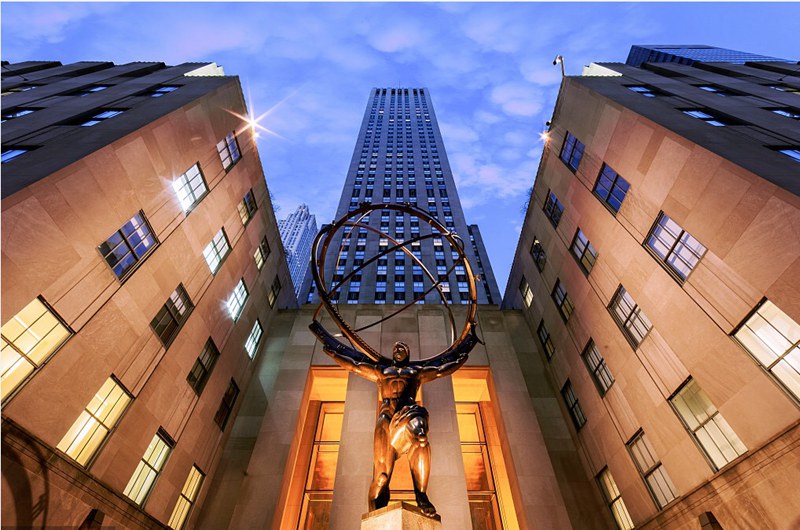
The statue is situated at the entrance of Rockefeller Center, along Fifth Avenue, directly facing St. Patrick’s Cathedral. This arrangement creates a symbolic and thought-provoking visual interaction between the two landmarks.
2. Design and Symbolism
What Is Unique About Atlas’s Pose?
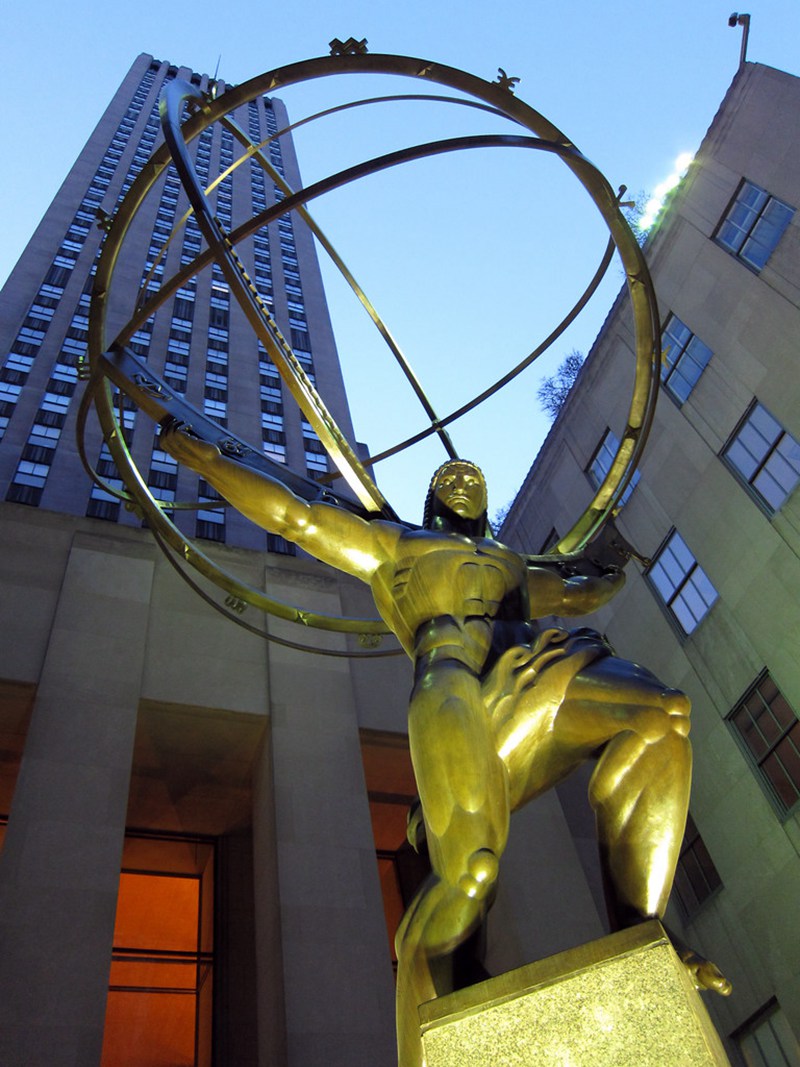
Atlas is depicted standing with his arms extended outward, supporting a celestial sphere composed of open rings. This sphere symbolizes an abstract model of the universe, illustrating the cosmic order of time and space.
The Significance of the Celestial Sphere
- Represents the structure of the universe.
- Reflects humanity’s understanding and mastery of the laws of nature.
- Embodies the confidence of 20th-century industrial civilization in its ability to “carry the world.”
Why Was Atlas Chosen as the Theme?
The Atlas statue was created during the late 1930s when America was recovering from the Great Depression. Atlas symbolizes:
- The burden of responsibility.
- Strength and endurance.
- Humanity’s hope and determination for a brighter future.
3. Artistic Style
What Style Does the Atlas Statue Represent?
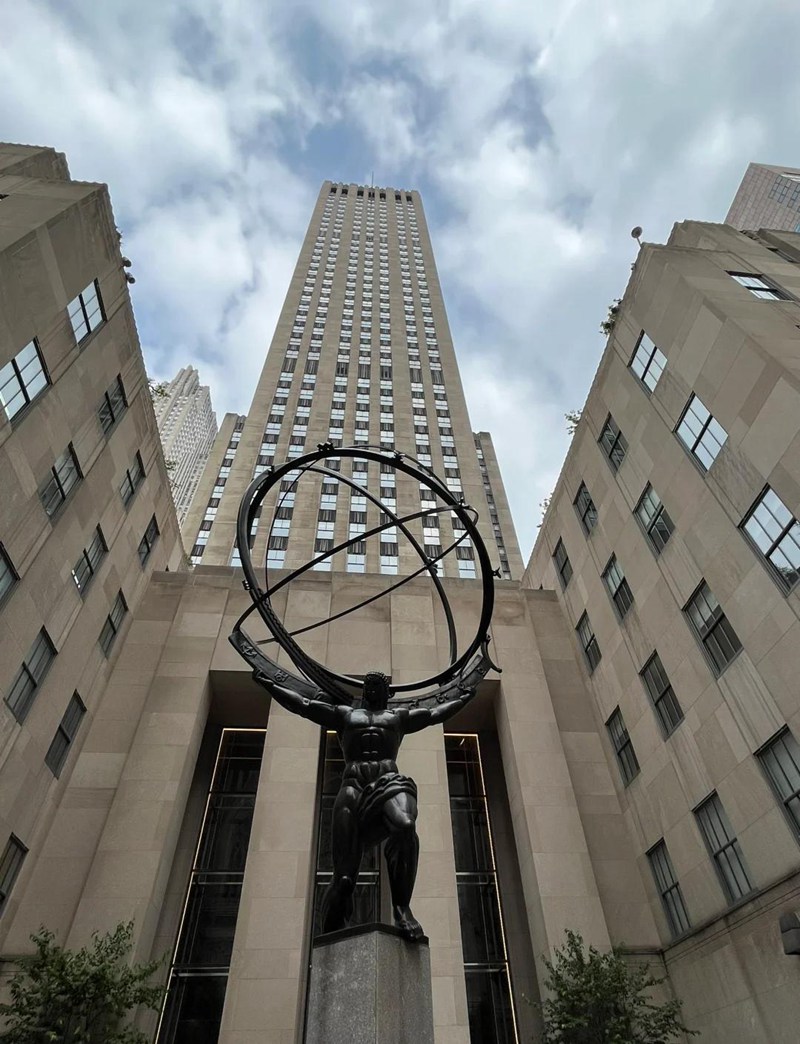
The statue is a classic example of Art Deco design, seamlessly aligning with the architecture of Rockefeller Center.
What Makes Its Design Look “Modern”?
- Geometric muscles: Simplified and stylized lines reflect strength.
- Idealized proportions: The figure resembles a “superhuman” rather than a realistic human being.
- Focus on power: Instead of intricate details, the emphasis is on the grandeur and impact of the form.
This blend of modernity and classicism makes the sculpture timeless.
4. Lesser-Known Stories Behind the Atlas Statue
Has the Statue Ever Sparked Controversy?
Yes. In the mid-20th century, certain religious groups found the statue contentious because:
- Atlas faces the church directly, creating a visual narrative that seemed like a “challenge to God.”
- This perceived conflict between human strength and divine power sparked public debate.
Was It Given Political Interpretations?
During the Cold War, some interpreted Atlas as:
- A symbol of capitalism carrying the weight of global order.
- A representation of extreme individualism.
The statue was even linked (incorrectly) to Ayn Rand’s novel Atlas Shrugged, although the two share no official connection.
Are Its Proportions Realistic?
No. The proportions are deliberately exaggerated to emphasize Atlas’s divine strength, as a real human physique could not support such a colossal sphere.
What Does the Position Opposite St. Patrick’s Cathedral Symbolize?
An interesting interpretation suggests:
- Atlas represents human strength and reason.
- Patrick’s Cathedral represents faith and divinity.
Together, they create a dialogue between modernity and tradition.
Was It Mistaken for a fascist aesthetic?
Some critics of mid-20th-century art noted that the idealized body and exaggerated power in Atlas’s design resembled propaganda art in fascist regimes. However, the statue is purely an embodiment of Art Deco aesthetics and has no political affiliations.
5. Fun Facts
Who Was the Face of Atlas Modeled On?
There is no official confirmation, but many believe the face was modeled on an “ideal male archetype” rather than a specific individual.
Should the Statue Really Be Shouldering the Weight?
No. The statue does not actually support the sphere’s weight. Hidden internal structures distribute the load strategically, creating the illusion of immense strength.
Why Does It Always Look Stunning in Photos?
The design of the statue makes it a natural photography magnet:
- It is perfectly symmetrical.
- The backdrop of St. Patrick’s Cathedral adds depth.
- Lighting and shadows highlight the muscular form and intricate details.
6. Why Is the Atlas Statue One of New York’s Most Iconic Sculptures?
The Atlas statue is one of New York City’s most recognizable symbols because it combines:
- Powerful visual impact: The striking pose and bold lines captivate anyone who sees it.
- Clear symbolic meaning: It represents strength, resistance, and resilience, echoing the ethos of New York itself.
- Perfect integration into the city: The statue sits along Fifth Avenue and aligns perfectly with the city’s architectural and cultural landscape.
Final Thoughts
The Atlas statue at Rockefeller Center is more than just a work of art—it is a testament to the resilience, strength, and ambition of the human spirit. Its story, design, and symbolic layers make it a must-see landmark for anyone visiting New York.
The Significance of Classical Statues as Landmarks
Statues of legendary Greek figures, such as Atlas, hold timeless meaning for modern societies. They remind us of core values such as perseverance, reason, and strength, making them ideal for architectural and cultural landmarks.
If you are interested in custom landmark bronze sculptures, our factory has over 40 years of experience in crafting high-quality sculptures. From classical designs to unique custom pieces, we specialize in turning your ideas into iconic works of art. Contact us today to bring your vision to life!