
Few artists have stamped their identity on the public landscape quite as unmistakably as Fernando Botero. Walk through Medellín, stroll down the Champs-Élysées, or pass through Singapore’s financial district, and you will encounter his work — monumental bronze figures, swollen with volume, serene in expression, impossible to mistake for anyone else’s hand. This guide explores who Botero was, what made his sculptural language so singular, which of his bronzes are considered masterworks, and why the demand for Botero-inspired sculpture continues to grow among collectors, cities, and institutions worldwide.
Who Is Fernando Botero?
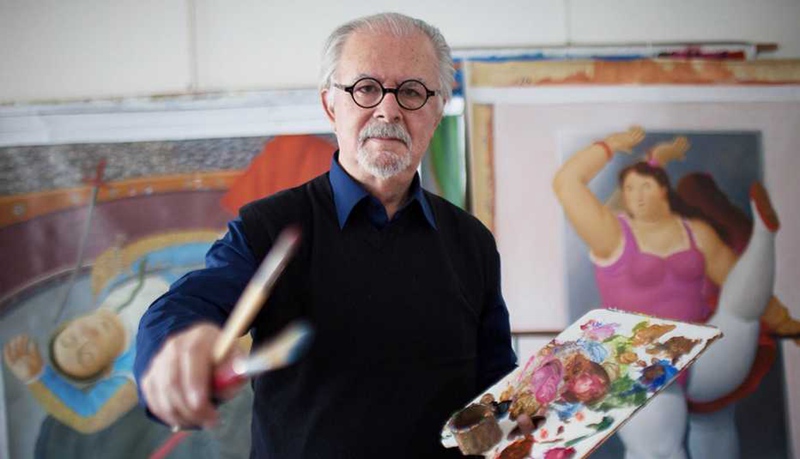
Fernando Botero Angulo (April 19, 1932 – September 15, 2023) was a Colombian figurative painter and sculptor whose work transcended the boundaries of fine art to become a true global cultural phenomenon. Born in Medellín, Colombia, he grew up in a household shaped by loss — his father died when Fernando was four — and was influenced from childhood by the baroque architecture of colonial churches in his hometown. At sixteen, he was already selling illustrations to the newspaper El Colombiano.
After brief stints in bullfighting school, Botero pivoted fully to art. He studied at the Academia de San Fernando in Madrid, spent long hours copying Goya and Velázquez in the Prado, immersed himself in the Louvre in Paris, and absorbed the Renaissance masters during time in Florence. These classical foundations would remain bedrock to everything he created.
Although many people describe his works as “fat figures,” Botero himself rejected this interpretation. He explained that his interest lay in exploring volume, form, and proportion, not body size.
The Artistic Language of Botero Sculpture
To understand Botero’s sculpture, you first have to set aside the word “fat.” The artist himself resisted that framing. What he pursued — consistently, from his first paintings in the late 1950s through his final sculptures — was volume as a formal and philosophical language.
Boterismo: More Than a Style
Botero called his aesthetic approach “Boterismo.” At its core, it involves the deliberate exaggeration of volumetric proportion: figures and objects rendered with inflated, rounded, swollen forms that depart radically from naturalistic representation. Instead of pursuing anatomical realism, Botero intentionally enlarges every element of the subject:
- Faces
- Hands
- Feet
- Animals
- Musical instruments
- Clothing
- Architectural objects
The result is not distortion for its own sake but an exploration of visual balance and sculptural volume.
But Boterismo is not simply about making things look large. As Botero explained: “All the elements of my work as a painter and sculptor spring from the same spirit: namely, from my passion for volumes.” Volume, for Botero, was a vehicle for sensuality, humor, political commentary, and an almost meditative stillness. His figures are rarely in motion; they occupy space with a calm, monumental authority.
Bronze as the Perfect Medium
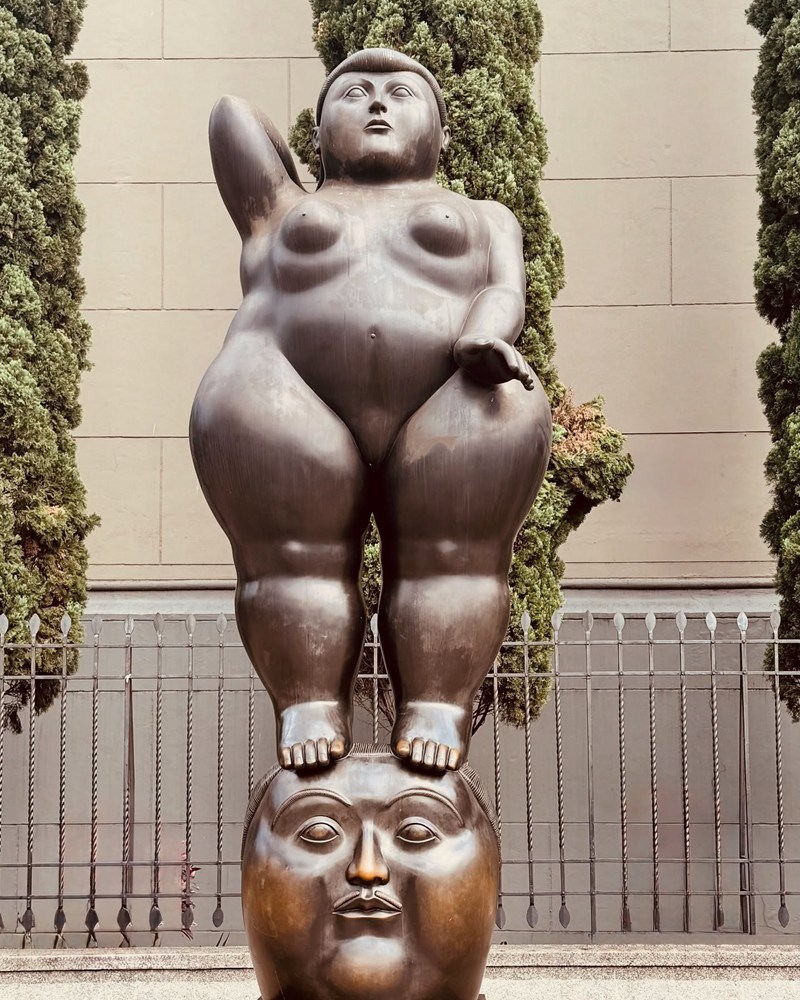
When Botero moved from canvas to sculpture, bronze proved the ideal material. Its weight and permanence mirror the gravitas of his forms. Bronze can hold fine surface detail — the folds of fabric, the smoothness of skin — while projecting enormous physical presence at monumental scale.
Over decades of public display, something remarkable happens to Botero bronzes: they develop what scholars call “tactile patina.” In Medellín’s Plaza Botero, visitors have worn the shiny bronze on their knees, toes, and hands simply by touching the statues repeatedly. That physical dialogue between art and viewer is entirely consistent with Botero’s democratic vision of art belonging in the streets, among people.
Social and Political Depth
Botero’s rounded figures are not merely decorative. His work has always carried sharp social commentary — sometimes humorous, sometimes devastating. His Presidential Family (1967) satirizes Colombia’s political class with pompous, puffed-up absurdity. His Abu Ghraib series (2005) deployed the same language of swollen forms to produce harrowing images of torture. The Dove of Peace sculpture in Medellín was literally bombed by guerrillas in 1995, killing 23 people. Rather than removing the destroyed bronze, Botero insisted it remain in place as a memorial, and donated an intact replica to stand beside it — an act of artistic and political conviction without parallel in contemporary sculpture.
Most Famous Fernando Botero Sculptures Around the World
Botero’s public bronzes are distributed across every inhabited continent, and several have become landmarks in their own right.
Botero’s public bronzes are distributed across every inhabited continent, and several have become landmarks in their own right.
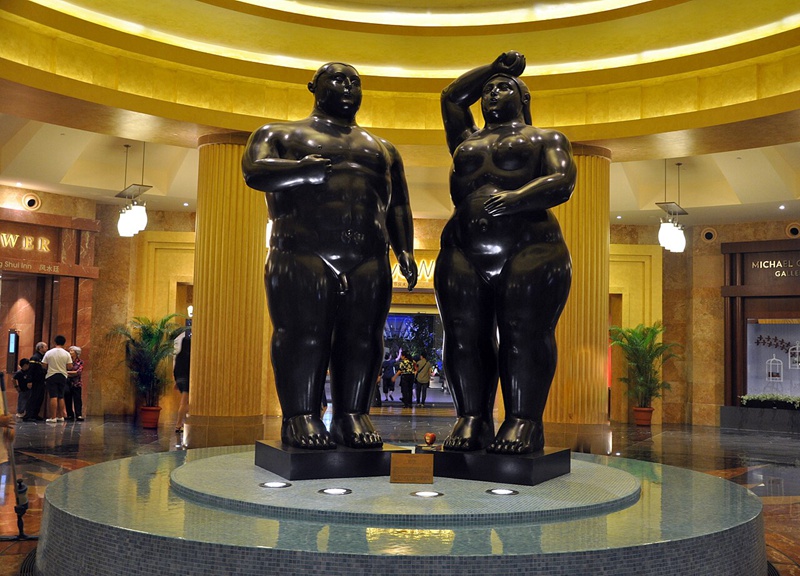
Adam and Eve (Resorts World Sentosa, Singapore)
Two large nude figures standing together, representing the biblical first couple in Botero’s signature voluminous style.
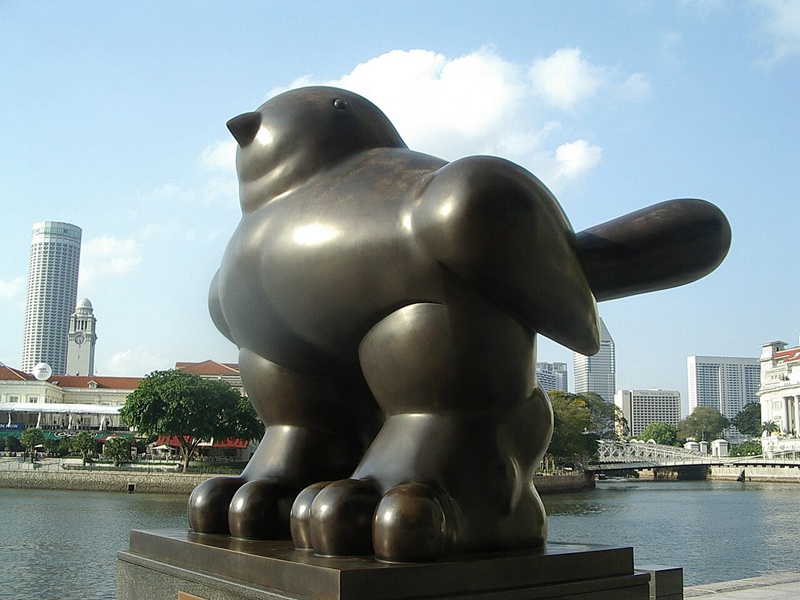
Bird (1990, UOB Plaza, Singapore)
A chubby, rounded bird sculpture placed outdoors by the river, showing how Botero applies his style even to animals.
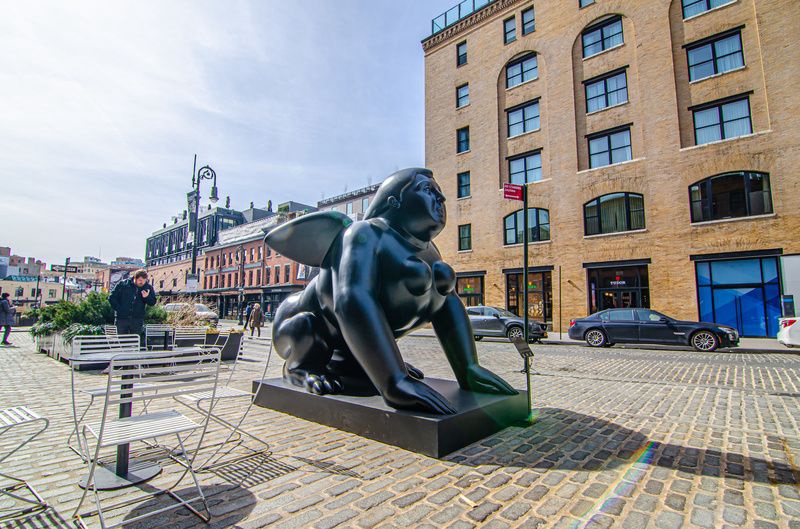
Sphinx
A winged female figure in a crawling pose, combining human and mythological elements with Botero’s characteristic full, rounded forms.
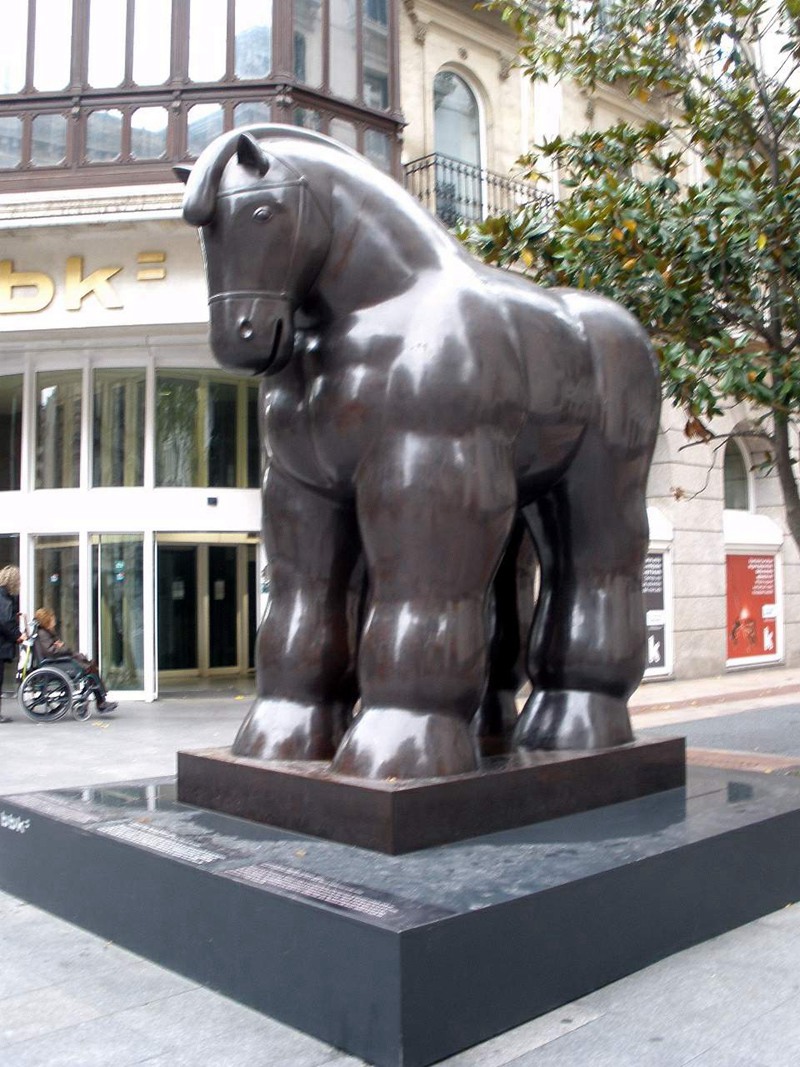
Horse with Bridle (Bilbao, Spain)
A powerfully built, oversized horse wearing a bridle, displaying Botero’s love of giving animals exaggerated, balloon-like proportions.
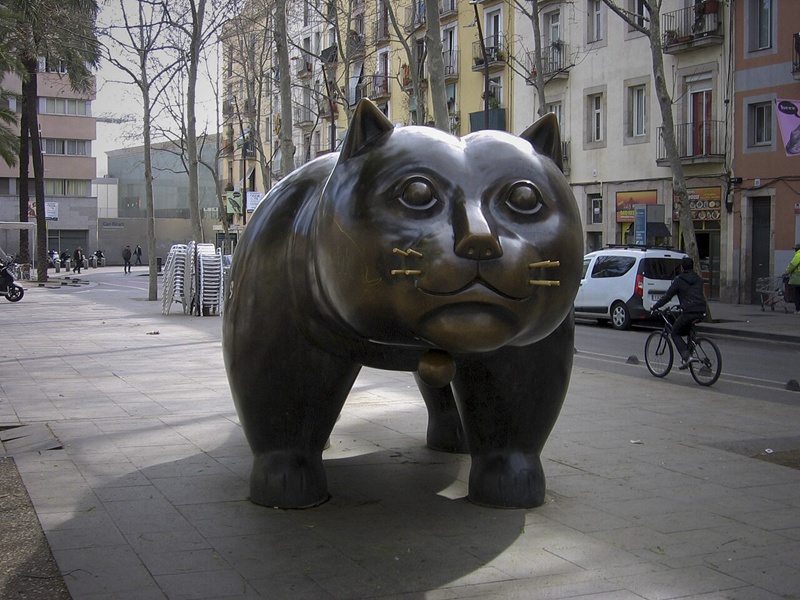
Cat (1990, Barcelona, Spain)
A giant, round-faced cat standing on a city street is one of Botero’s most beloved and playful public sculptures.
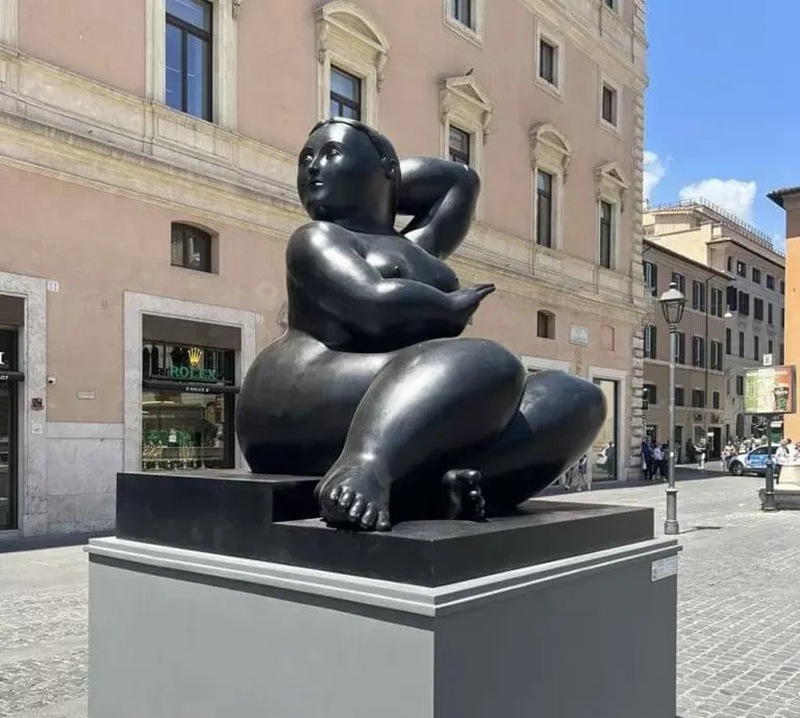
Seated Woman (Rome, Italy)
A compact, rounded female figure seated with her arms raised, placed in a busy Roman street.
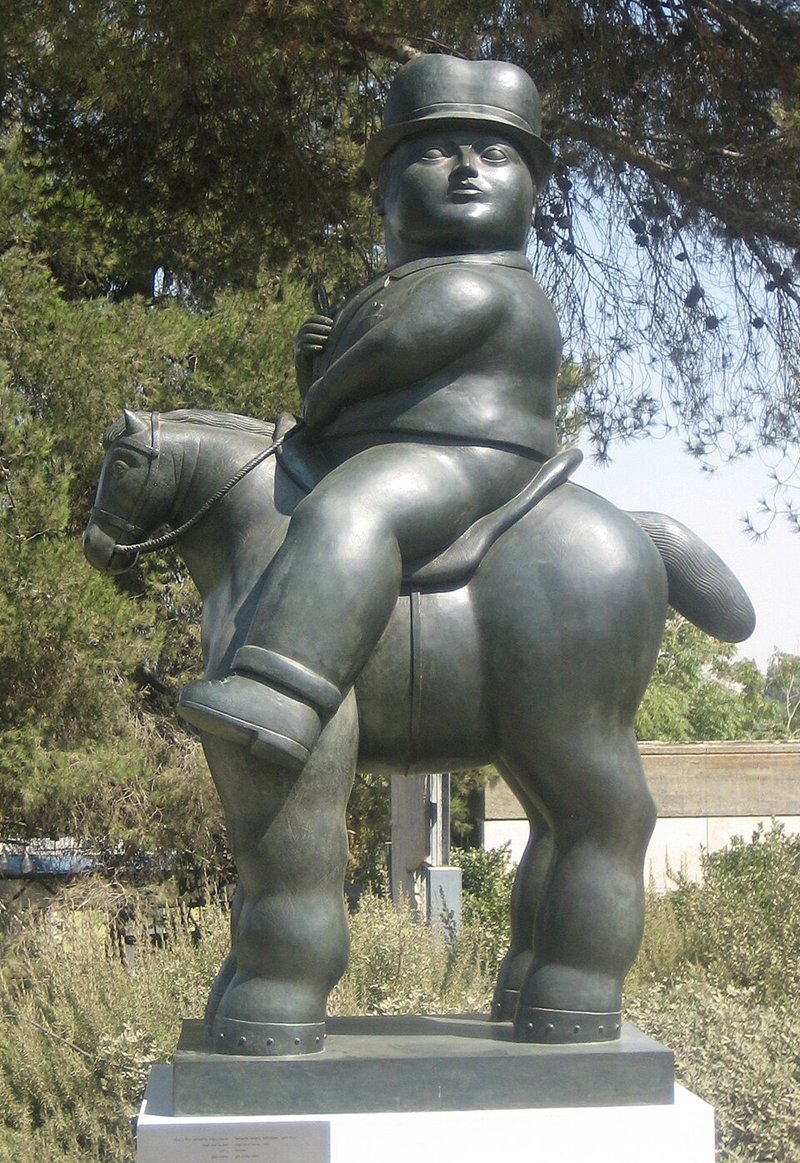
Man on Horse (1992, Israel Museum, Jerusalem)
A plump soldier riding a sturdy horse, referencing classical equestrian statues but reimagined in Botero’s exaggerated style.
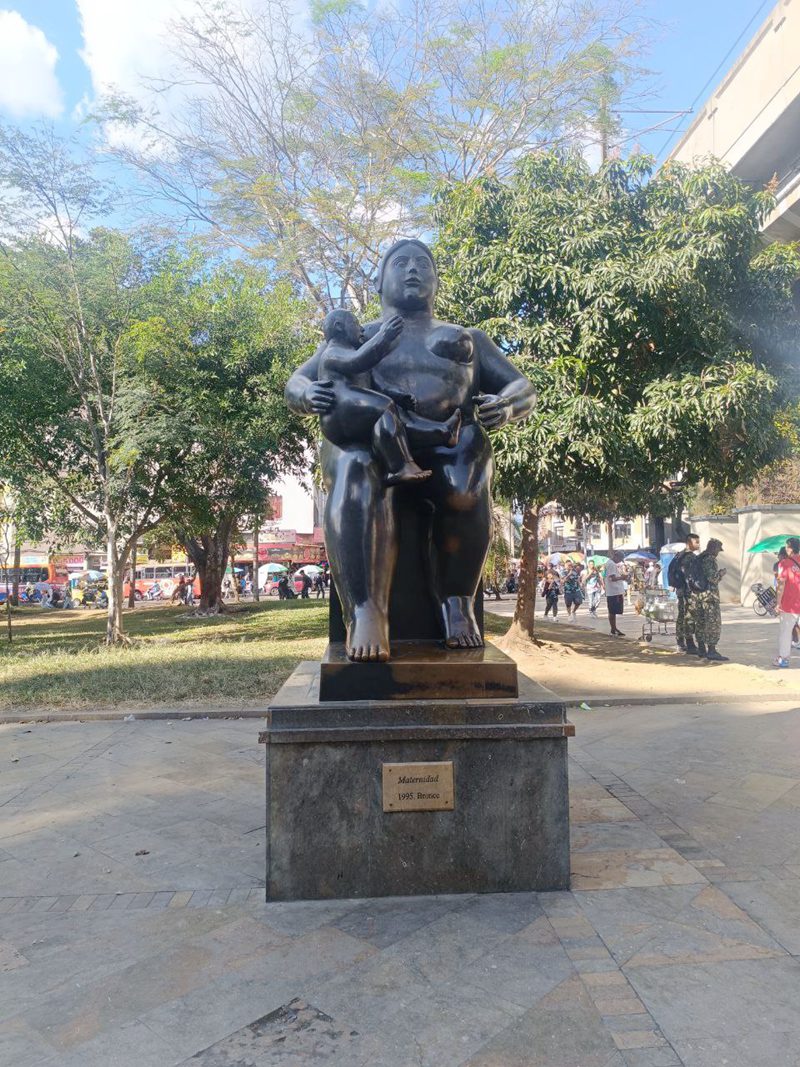
Maternity (1995, Medellín, Colombia)
A large mother holding her baby, representing the tenderness of motherhood through Botero’s bold, full-bodied forms.
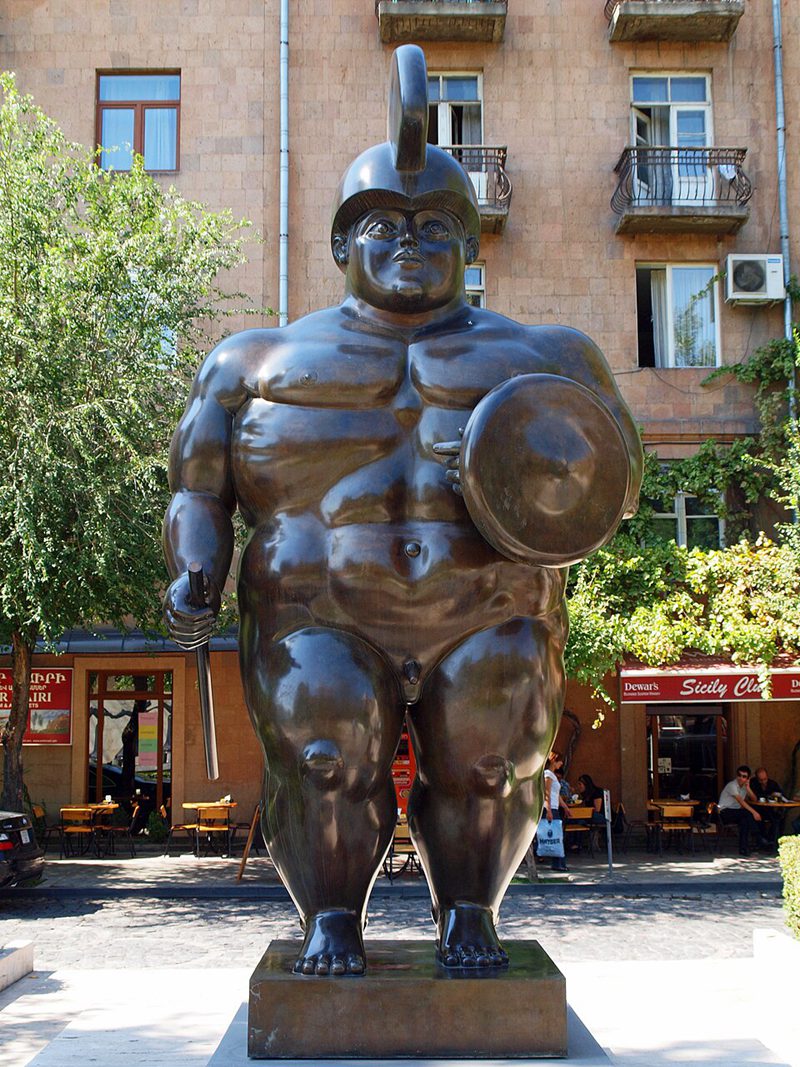
Roman Warrior (Cafesjian Museum, Yerevan, Armenia)
A massive, heavily built warrior in a Roman helmet holding a sword and shield, blending ancient imagery with Botero’s humor.
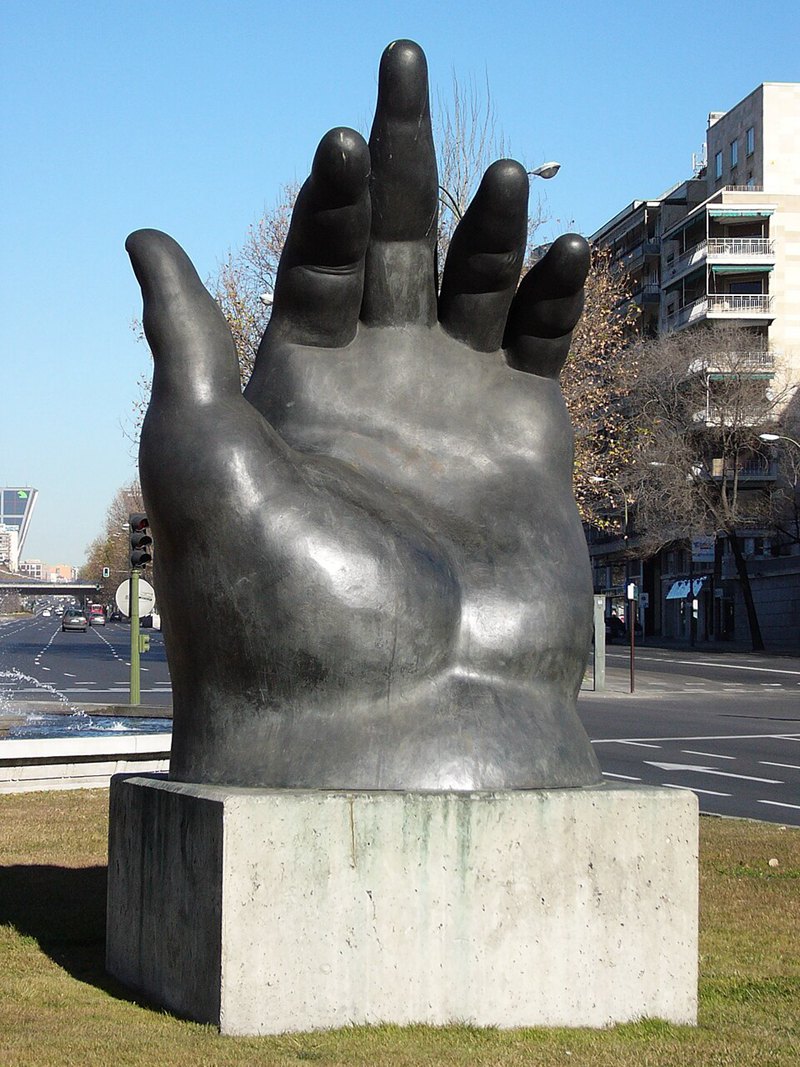
The Hand (Madrid, Spain)
An enormous bronze hand reaching upward, one of Botero’s more abstract works that focuses on a single body part at a monumental scale.
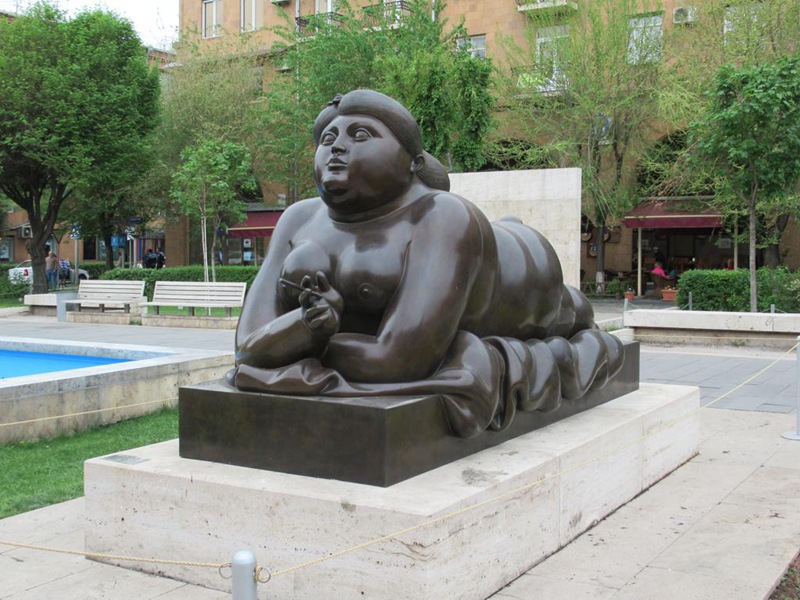
Woman with Cigarette (Yerevan, Armenia)
A reclining woman holding a cigarette, relaxed and sensual, is typical of Botero’s reclining female figures.
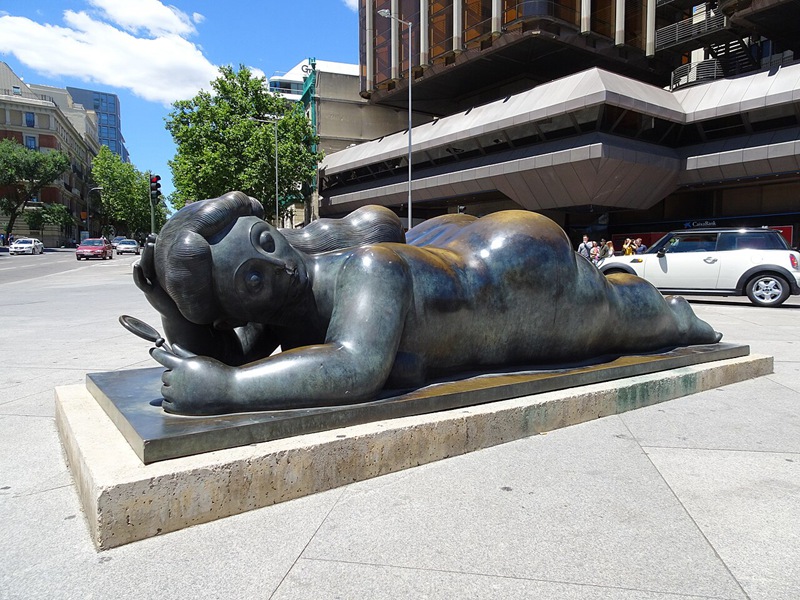
Woman with Mirror (1987)
A reclining nude woman holding a small mirror, echoing the classical “Venus with mirror” theme in Botero’s distinctive, rounded style.
The Production Challenge Behind Botero-Style Sculptures
Creating large-scale bronze sculptures in the Botero tradition is among the most technically demanding tasks in the production of figurative art. Understanding what goes into authentic bronze casting helps explain both the value of original Botero works and the skill required to produce quality Botero-inspired pieces.
Lost-Wax Bronze Casting (Cire Perdue)
Botero’s bronzes were produced using the ancient lost-wax method, which begins with a detailed clay or plaster model. A wax version is cast from that model, then invested in a ceramic shell. The wax is melted out (hence “lost”), and molten bronze — typically an alloy of copper, tin, and small amounts of other metals — is poured in. After cooling, the ceramic shell is broken away, and the raw bronze casting is finished by hand.
For Botero’s characteristically smooth, monumental forms, exceptional skill is required at every stage: the clay model must capture the signature volumetric quality; the bronze pour must avoid bubbles or voids; and the finishing and patina work — which gives each piece its distinctive color and surface — must be executed with precision.
Patination and Surface Treatment
The warm, dark brown surfaces of most Botero bronzes are achieved through controlled chemical patina. Different acids and heat combinations produce different colors and surface effects. The repeated touch of the public, over decades, wears away the patina at high-contact points, creating the characteristic bright burnishing at knees, fingers, and toes that makes well-loved public Botero bronzes visually distinctive.
Scale Challenges
Many of Botero’s public sculptures stand three to five meters tall and weigh several tons. Fabricating at this scale while maintaining the precise volumetric proportions that define Boterismo requires industrial foundry equipment combined with master artisan craftsmanship. Small deviations in proportion at a small scale are amplified enormously at monumental size.
Modern Demand for Botero-Inspired Bronze Sculptures
Since Fernando Botero’s passing in 2023, global interest in his work and in Botero-inspired bronze sculpture has grown significantly across both public and private sectors.
Institutional and Municipal Projects
Cities in Asia, the Middle East, and Latin America are increasingly commissioning monumental bronze sculptures for plazas, cultural centers, hotels, and corporate campuses. Botero’s signature style—rounded, welcoming forms and emotionally accessible figures—translates well into diverse cultural environments, making it a popular choice for public art.
Private Collectors
Original Botero bronzes continue to achieve multi-million-dollar results at auction. As access becomes more limited, collectors are turning to high-quality Botero-inspired commissions that capture the essence of his “Boterismo” style while remaining original works in their own right.
Hospitality and Commercial Design
Luxury hotels and resorts favor monumental figurative bronze sculptures as focal points in architectural landscapes. Botero-inspired forms are especially valued for their strong visual identity, universal appeal, and high photographic impact in the social media era.
Cultural and Artistic Institutions
Museums, sculpture gardens, and foundations continue to expand modern figurative collections, often incorporating Botero-style works into outdoor displays. His cultural legacy has also encouraged philanthropic acquisitions and donations, further supporting demand for large-scale bronze sculpture worldwide.
Our Factory Capability: Custom Bronze Sculpture Production
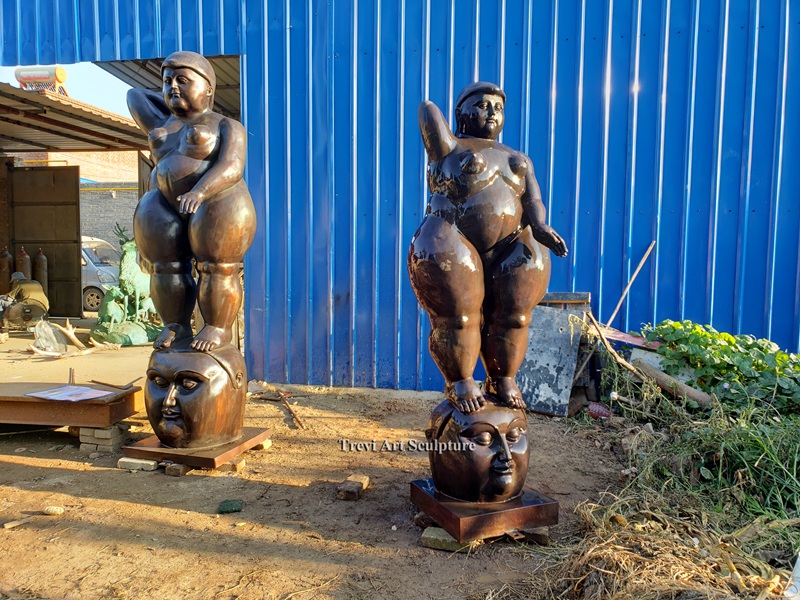
As a professional bronze sculpture factory with over 40 years of manufacturing experience, we specialize in producing large-scale custom bronze sculptures for clients worldwide.
Our experienced team combines traditional lost-wax bronze casting with modern digital technologies to achieve exceptional quality and accuracy.
Every project undergoes rigorous quality control, from concept development and clay modeling to bronze casting, finishing, and installation support.
Whether you are creating a sculpture for a luxury estate, a public square, a hotel, or a commercial landscape, our team can help transform your ideas into a lasting bronze artwork. We also develop original custom designs inspired by broad artistic traditions while respecting applicable intellectual property rights.
Fernando Botero transformed contemporary sculpture by proving that volume, elegance, and simplicity could coexist in a single artistic language. His unmistakable bronze figures continue to inspire collectors, architects, landscape designers, and art enthusiasts around the world.
If you’re planning a custom bronze sculpture project, partnering with an experienced manufacturer ensures that every stage—from concept and modeling to casting and finishing—is executed with precision, craftsmanship, and long-term durability.
FAQ
What is Fernando Botero known for?
Fernando Botero was a Colombian painter and sculptor famous for his signature style called “Boterismo,” which depicts people, animals, and objects with exaggerated, inflated proportions. His rounded, voluminous figures are among the most recognizable in twentieth-century art.
When did Fernando Botero die?
Fernando Botero passed away on September 15, 2023, in Monaco, at the age of 91, from complications related to pneumonia.
What does “Boterismo” mean?
Boterismo refers to Botero’s distinctive artistic style of representing figures with exaggerated volumetric proportions — swollen, rounded, and inflated forms — which can convey humor, sensuality, or political satire depending on the context of the work.
Where can I see Fernando Botero sculptures in person?
Botero sculptures can be seen in many locations worldwide. The largest concentration is at Plaza Botero in Medellín, Colombia, which holds 23 bronze sculptures donated by the artist. Other major locations include the Museo Botero in Bogotá, the Museum of Antioquia, and permanent installations in Singapore, Madrid, New York, and cities across Europe and Latin America.
How much are Fernando Botero sculptures worth?
Original Botero bronze sculptures can sell for millions of dollars at international auction. The Man on Horse, for example, has exceeded $4 million at auction. Values vary significantly based on scale, subject, edition number, provenance, and condition.
Why did Botero leave the bombed sculpture in Medellín standing?
In 1995, terrorists detonated a bomb beneath one of Botero’s bronze sculptures in Medellín’s Parque San Antonio, killing 23 people. Rather than remove the destroyed sculpture, Botero insisted it remain as a memorial and had the names of the victims inscribed on it. He then donated an identical, undamaged bronze to stand beside it — a powerful artistic and moral statement about memory, violence, and resilience.
What material are Botero sculptures made from?
Botero’s sculptures are primarily cast in bronze using the traditional lost-wax (cire perdue) method. He began experimenting with acrylic resin and sawdust in the 1960s but abandoned this because the material was too porous, returning to bronze — the material for which he became world-renowned — in the 1970s.
Can I commission a Botero-style bronze sculpture?
Yes. While original Botero works are museum pieces or command auction prices, many professional bronze foundries and sculpture studios produce Botero-inspired works for private collectors, public institutions, hotels, and municipalities. Quality varies significantly; commission work only from studios with demonstrable experience in large-scale figurative bronze casting.
Is Fernando Botero’s work politically motivated?
Botero’s work spans a wide range — from humorous reinterpretations of classical paintings to searing political commentary. His Abu Ghraib series (2005) confronted torture at the infamous Iraqi prison. His Presidential Family satirizes political power. His response to the Medellín bombing was itself a profound political statement. He was not primarily a political artist, but political and social consciousness runs throughout his oeuvre.
Where is the Botero Museum located?
The Museo Botero (Botero Museum) is located in Bogotá, Colombia. Botero donated 123 of his own works and 85 pieces from his personal collection — including works by Picasso, Chagall, and French Impressionists — to the museum in 2000. It is one of the most visited museums in Latin America.
Did Fernando Botero have children?
Botero had four children: Fernando, Lina, and Juan Carlos with his first wife, Gloria Zea, and a son, Pedro, with Cecilia Zambrano. Tragically, Pedro was killed in a car accident in Spain in 1974 at the age of four. Botero created the work Pedrito a Caballo in memory of his son.
What was Fernando Botero’s most expensive sculpture?
While exact auction records vary by year, the bronze Man on Horse is among the most valuable of Botero’s sculptures, with auction results exceeding $4 million. Prices at auction for original Botero bronzes have consistently risen in the years following his death in 2023.


