
One of the most common questions we hear from custom sculpture clients is:
“What material should I choose for my sculpture?”
Whether the project is for a public park, memorial garden, church, school campus, private estate, or commercial property, material selection is often the biggest decision after the design itself.
Many clients initially focus on price. They compare bronze, aluminum, and resin sculptures and wonder whether paying more for bronze is really worth it. Others worry about durability, maintenance, weather resistance, or long-term value.
At Trevi Statue, we have worked with hundreds of custom sculpture projects for clients across North America and Europe. We have seen many customers start their projects unsure about the material and eventually choose a solution based on their budget, installation environment, and long-term goals.
This guide compares the cost, durability, appearance, and practical advantages of bronze, aluminum, and resin sculptures to help you make an informed decision.
Quick Material Comparison Table
| Factor | Bronze Sculpture | Aluminum Sculpture | Resin Sculpture |
| Initial Cost | High | Medium | Low |
| Durability | Excellent | Very Good | Moderate |
| Lifespan | 50-100+ Years | 30-50+ Years | 5-20 Years |
| Outdoor Performance | Excellent | Very Good | Fair |
| Weather Resistance | Excellent | Excellent | Moderate |
| Artistic Detail | Excellent | Very Good | Good |
| Structural Strength | Excellent | Good | Limited |
| Maintenance | Low | Low | Moderate |
| Prestige & Value | Highest | Medium | Low |
| Ideal For | Public Art, Memorials, Luxury Projects | Large Outdoor Sculptures | Indoor Decor, Temporary Displays |
At a Glance
If your priority is:
- Maximum longevity: Bronze
- Lower weight with good durability: Aluminum
- Lowest budget: Resin
However, the best choice depends on how and where the sculpture will be used.
Bronze Sculptures
Why Bronze Has Been Trusted for Centuries
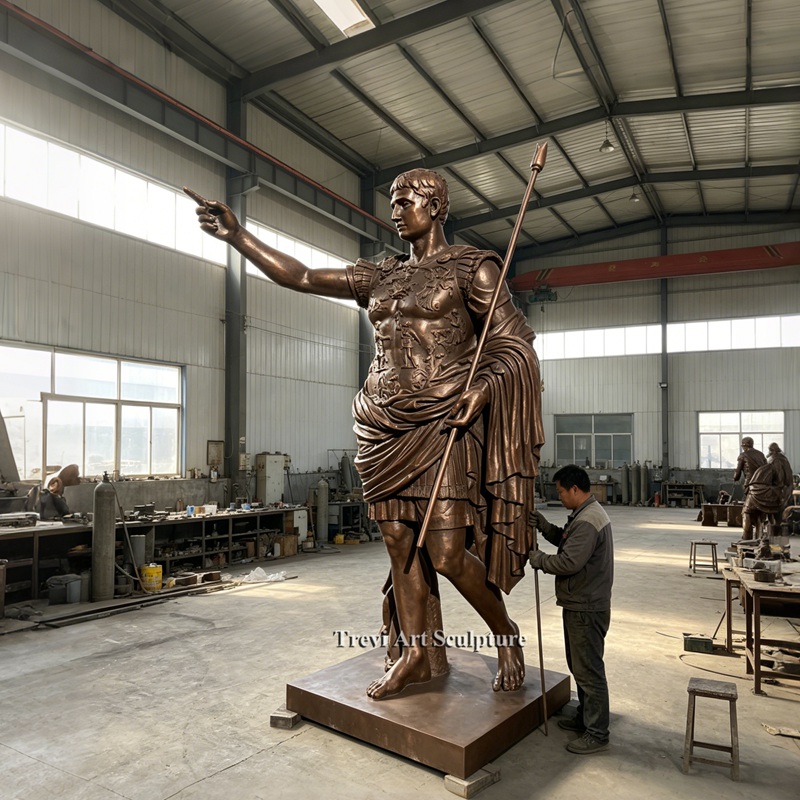
Bronze has been the preferred material for sculptures for thousands of years. Many famous monuments and public artworks around the world were created using bronze because of its exceptional strength and longevity.
Advantages of Bronze
Outstanding Durability: A properly cast bronze sculpture can last for generations. Unlike many materials, bronze develops a natural patina over time that actually helps protect the metal from corrosion.
Rich Artistic Details: Bronze casting captures extremely fine details. Facial expressions, clothing folds, animal fur, and decorative elements can all be reproduced with remarkable accuracy.
Strong Investment Value: Many clients view bronze sculptures as permanent assets rather than decorative objects. For memorial projects, civic monuments, church sculptures, and luxury estates, bronze often provides the greatest long-term value.
Potential Drawbacks: The primary disadvantage is cost. Bronze material prices and foundry labor costs are generally higher than aluminum or resin.
However, when evaluated over a lifespan of several decades, many clients find bronze to be the most economical option in the long run.
Aluminum Sculptures
A Practical Alternative for Large Projects
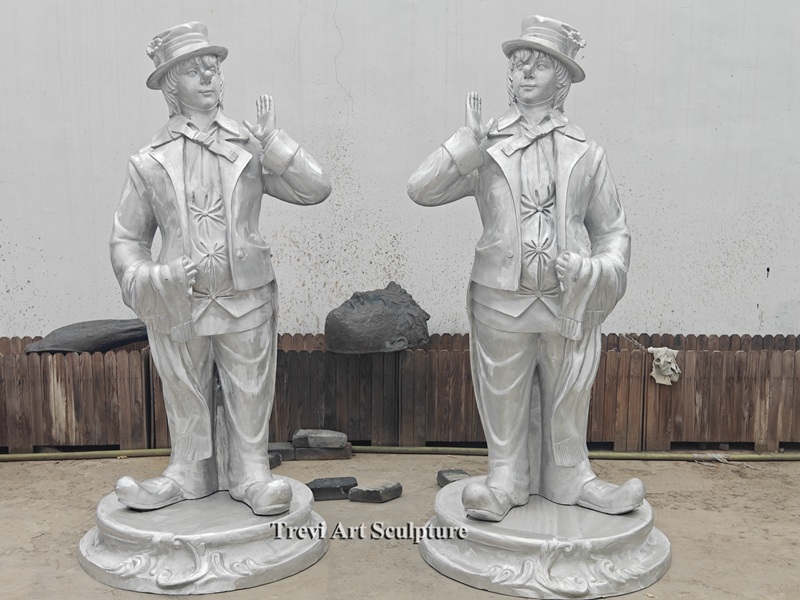
Aluminum has become increasingly popular for outdoor sculptures because it offers good durability at a lower cost than bronze.
Advantages of Aluminum
Lower Material Cost: Aluminum typically costs less than bronze while still providing a metal sculpture appearance.
Lightweight Construction: Large sculptures can be easier to transport and install. This can reduce shipping expenses and crane costs for oversized projects.
Corrosion Resistance: Aluminum naturally forms an oxide layer that helps protect it from weather exposure.
Limitations
Although aluminum performs well outdoors, it generally does not offer the same prestige, weight, or historical appeal as bronze.
Many clients who are creating memorials or high-profile monuments still prefer bronze because of its traditional significance and premium appearance.
Resin Sculptures
Budget-Friendly but Limited for Long-Term Outdoor Use
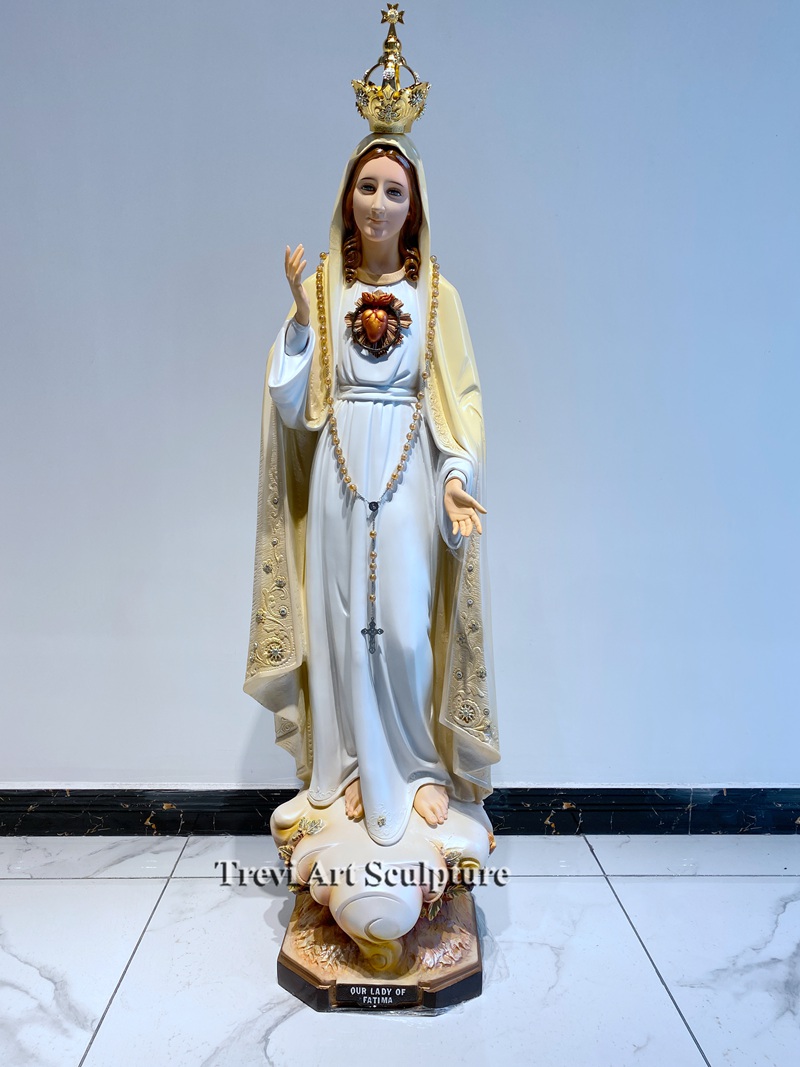
Resin sculptures are widely used for decorative applications because they are affordable and can imitate the appearance of bronze, stone, or other materials.
Advantages of Resin
Lowest Initial Investment: Resin is usually the least expensive option among the three materials.
Flexible Design Possibilities: Complex shapes can often be produced quickly.
Lightweight: Easy transportation and installation make resin attractive for temporary projects.
For permanent outdoor projects, resin has several disadvantages:
- More susceptible to UV damage
- Can crack under impact
- Less structural strength
- Shorter lifespan
- Lower perceived value
Many clients initially consider resin because of the lower price, but later choose metal when they realize the sculpture is intended to remain outdoors for decades.
Factors Affecting Material Choice
Choosing a sculpture material is rarely just about cost.
Here are the questions we encourage clients to ask themselves:
- How Long Should the Sculpture Last?
- Is the Sculpture Indoors or Outdoors?
- What Is the Project’s Purpose?
- What Is the Available Budget?
A Real Custom Sculpture Project: Why Our Client Chose Bronze
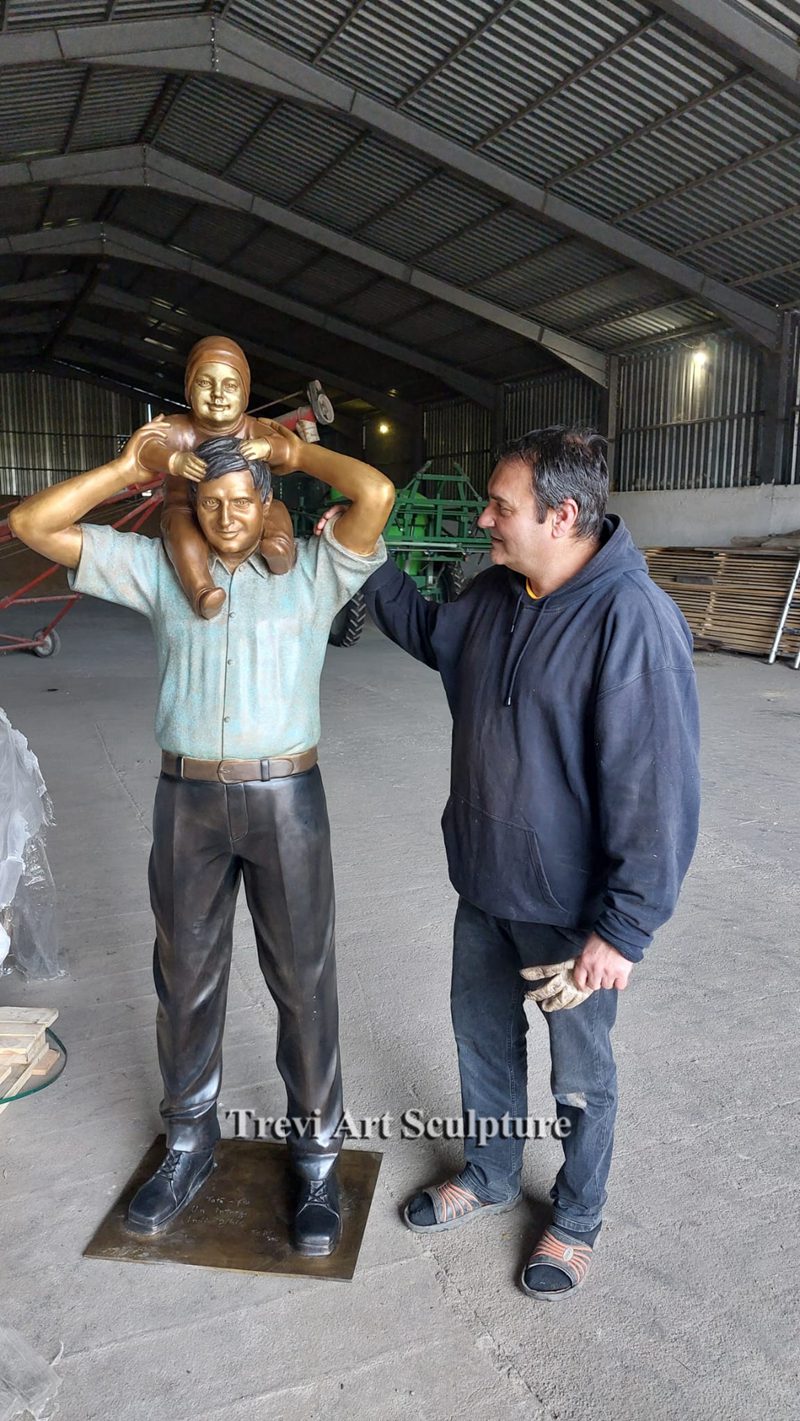
At Trevi Statue, we recently worked with a client who wanted a life-size commemorative sculpture for a public memorial space. The client wanted to donate some military sculptures.
The client first contacted us with reference photos and a concept design. His primary concern was controlling the project budget.
Like many first-time sculpture buyers, they wondered whether bronze was necessary or if a less expensive material could achieve the same result. After reviewing the installation environment, we learned that the sculpture would remain outdoors year-round and was expected to become a permanent feature of the site. The client ultimately chose bronze for several reasons.
Experiences like this are common. Many clients begin the process focused primarily on upfront cost, but after considering lifespan, maintenance, and long-term value, they often conclude that bronze is the best investment for permanent projects.
At Trevi Statue, we specialize in custom bronze sculptures, including:
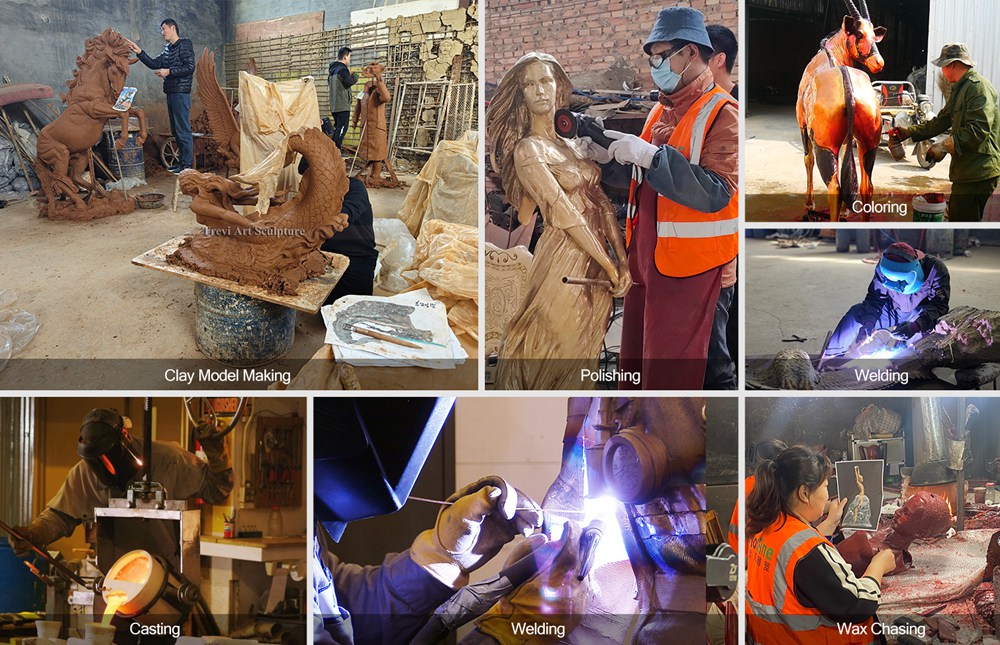
Our team provides design consultation, clay modeling, bronze casting, patina finishing, packaging, and international shipping services to help clients choose the most suitable material for their project. If you would like to learn about the specific process of commissioning a custom copper sculpture, you can read this article: Complete Guide on Commissioning a Custom Bronze Sculpture
If your goal is to create a sculpture that can withstand decades of outdoor exposure while maintaining its beauty and significance, bronze is often the material that delivers the best long-term return on investment.
At Trevi Statue, we help clients compare materials, evaluate budgets, and select the right solution based on their specific project requirements. If you’re planning a custom sculpture project, contact us today for professional advice, design consultation, and a free quote.


