
If you have ever encountered the fire-breathing, lion-headed, goat-bodied, and serpent-tailed figure in ancient Greek mythology, if you have ever seen those whimsical, beast-like stone carvings perched on the cornices of Gothic cathedrals, or if you have ever been struck by a patchwork-like hybrid creature installation at a contemporary art exhibition—you have met the very same name that has spanned three thousand years: Chimera.
We have seen so many people instantly drawn to this figure. Some are obsessed with the mythological epic behind it, some love its rule-breaking patchwork aesthetic, while others want to find a truly unique, signature piece of decor for their studio, private residence, or art space. Today, we start from the very origin of the myth, guiding you step-by-step to understand why the Chimera has become the most narrative-rich choice for contemporary spatial sculptures.
What Does a Chimera Look Like?
The story of the Chimera was first recorded in the verses of the Homeric Epics. It was no ordinary beast, but the offspring of Typhon, the “Father of All Monsters,” and Echidna, the “Mother of All Monsters” in ancient Greek mythology. Wild, primordial power ran naturally through its veins.
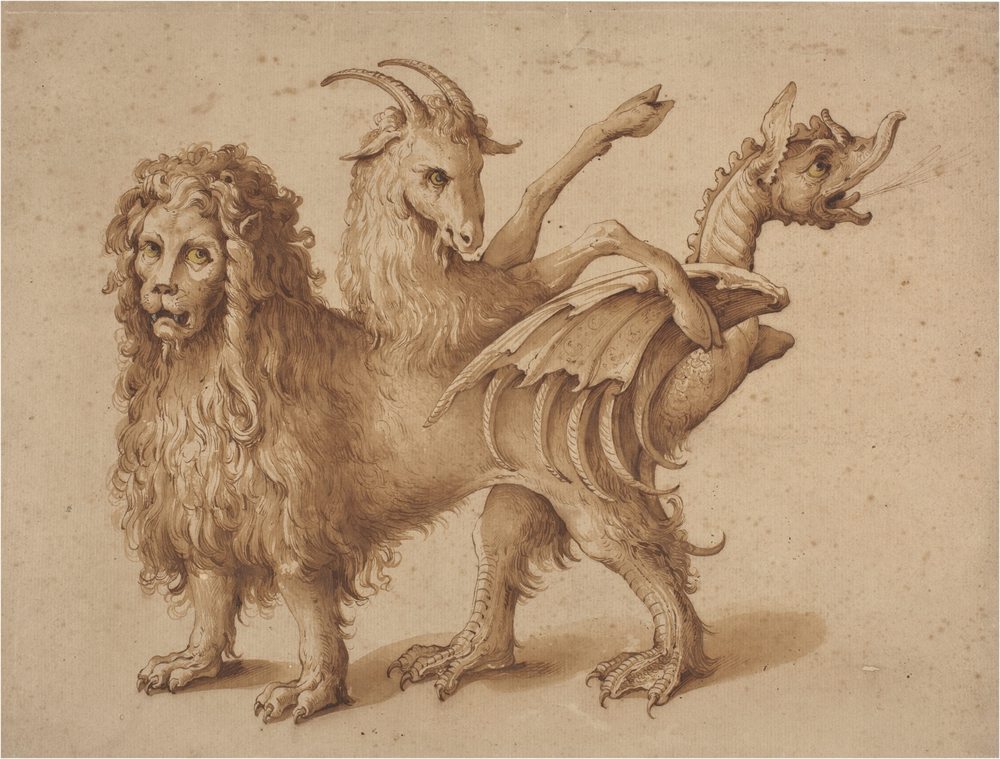
Its appearance is a forced stitching together of three entirely different creatures:
The front portion is a ferocious lion, representing unrivaled aggression.
The midsection is a gentle mountain goat, making the body’s structure suddenly absurd and contradictory.
The tail is a venomous serpent, a constant reminder that there is no absolute safety, even if you slip behind it.
Lineage and Origins
The Chimera is a female, fire-breathing monster from ancient Greek mythology. Mainstream accounts identify her as the child of the storm giant Typhon and the half-woman, half-serpent Echidna, though some texts attribute her parentage to Gaia (the Earth Mother) and Tartarus (the deity of the Abyss).
Her classic form features a lion’s head, a goat’s body, and a serpent’s tail. Some descriptions depict her with three independent heads capable of breathing searing flames, reducing everything in her path to barren wasteland.
Mythological Legends of the Chimera
Early Life
In her youth, the Chimera was kept as a pet by the king of Caria in southwestern Asia Minor. However, her violent nature quickly surfaced. She escaped to the neighboring kingdom of Lycia, where she devoured humans and livestock and burned down villages, becoming a catastrophic plague that no one could stop.
A Hero Tasked to Slay the Beast
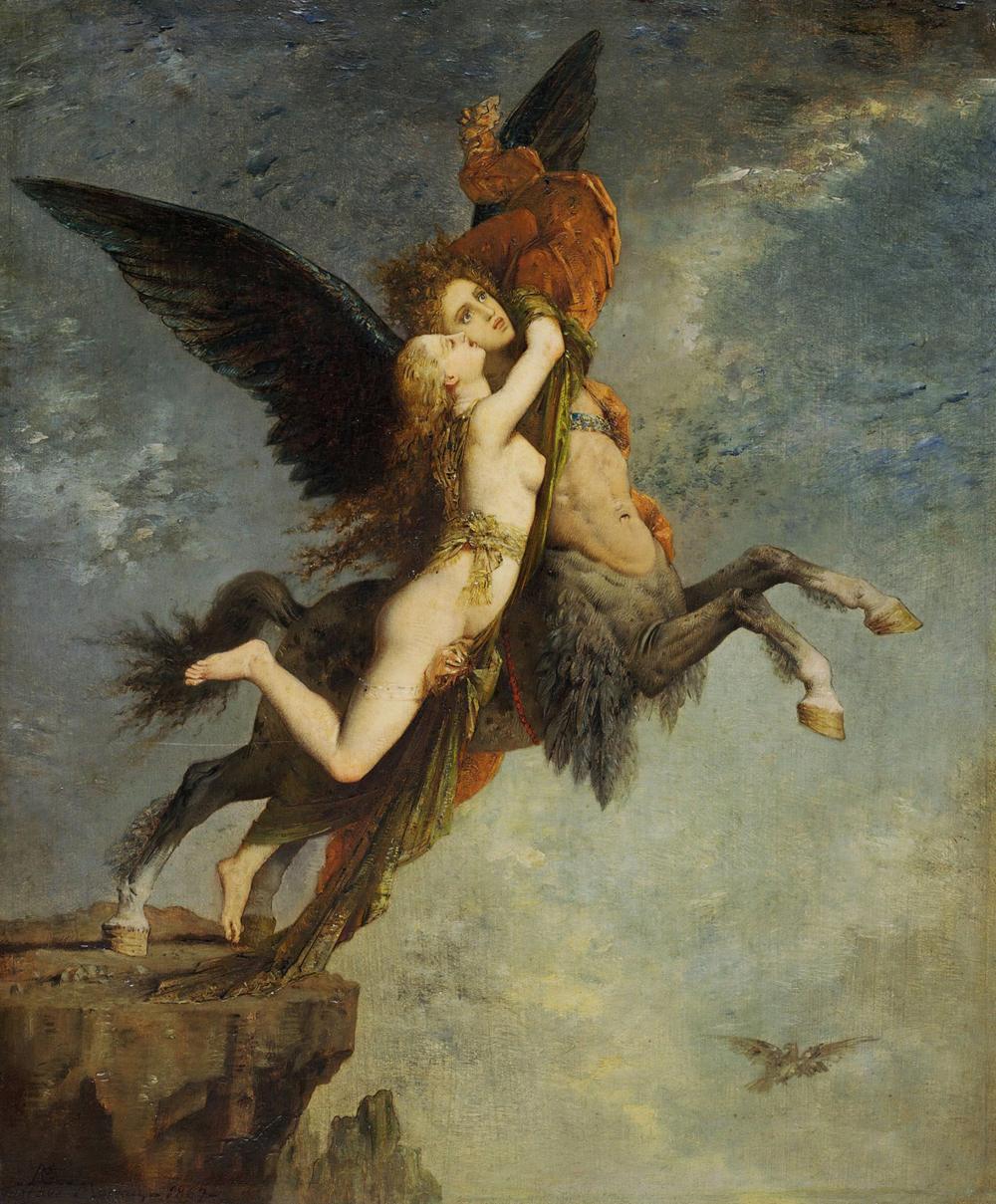
The young hero Bellerophon was dispatched to Lycia by the sea god Proteus. However, the secret order received by the King of Lycia was actually to eliminate Bellerophon. Unwilling to do the deed himself, the king sent Bellerophon to slay the seemingly invincible Chimera, hoping the monster would kill him.
Slaying the Chimera
Riding the winged horse Pegasus, Bellerophon flew into the territory haunted by the Chimera. The intense flames spewed by the monster kept him from getting close, and ordinary arrows failed to inflict any real damage.
He devised a brilliant strategy: he coated the tip of his spear with fireproof lead. Seizing the moment as Pegasus soared close, he thrust the spear directly into the Chimera’s fire-breathing throat. The lead melted from the heat, blocking her breath and successfully killing her.
Real-World Metaphors of the Myth
Modern research suggests that the image of the Chimera is highly likely a geographical metaphor for the volcanic region of Lycia in Turkey. In ancient times:
Lions roamed the crater.
Goats grazed on the mountain slopes.
Serpents infested the base of the mountains.
Combustible gases naturally seeping from the rocky crevices ignited on contact with air, matching the “fire-breathing monster” of the myth. Today, this natural flaming phenomenon still exists in the region and is known as the “Flames of Chimaera.”
By the Renaissance, the Chimera had completely broken free from its identity as a mere “monster.” Artists no longer viewed it solely as a symbol of evil; instead, they fell in love with its core characteristic: the juxtaposition of entirely disparate elements.
It could represent the fusion of the lion’s strength, the goat’s softness, and the serpent’s cunning. It could also represent the collision between classical mythology and contemporary aesthetics. It was no longer a symbol of terror but a vessel for artists to express their wildest imaginations.
Today, “Chimera” has taken on far richer meanings:
In biology, it refers to a genetic “chimerism” or chimera.
In literature, it represents a wild, impossible, yet utterly mesmerizing fantasy.
In art, it has become synonymous with “breaking boundaries and refusing homogenization.”
Classic Chimera Sculptures in the History of Art
If you’ve ever stood before one of history’s great Chimera sculptures, you’ll understand why this mythical creature has continued to fascinate people for more than 3,000 years. Combining the strength of multiple animals into a single legendary beast, the Chimera has inspired generations of artists, sculptors, and collectors.
The Chimera of Arezzo Bronze Statue
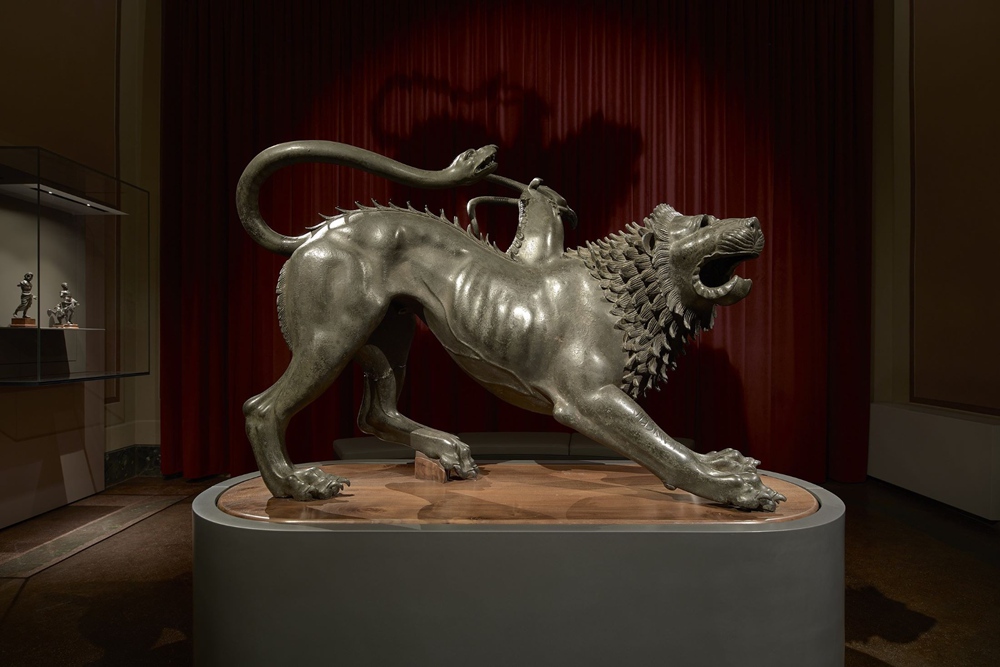
The Chimera of Arezzo is a bronze masterpiece created by the Etruscan civilization in the 4th century BC. It is considered one of the most complete and powerful surviving original bronze sculptures of the mythical Chimera. Discovered accidentally in 1553 among ancient ruins in Arezzo, Italy, the statue immediately shocked the European art world when it was brought back to light. Today, it is permanently housed in the National Archaeological Museum of Florence.
The bronze sculpture stands 78.5 cm high and 129 cm long. With no unnecessary decoration, all of its expressive power is concentrated on the body of the monster itself. Its muscles are tense with energy, its sharp claws firmly grip the ground, and a wound on its chest still bears the mark of the hero’s spear. The lion’s head rises proudly, as if flames could still burst from its throat. Every detail, from the texture of the skin to the veins beneath the surface, is carved with extraordinary realism.
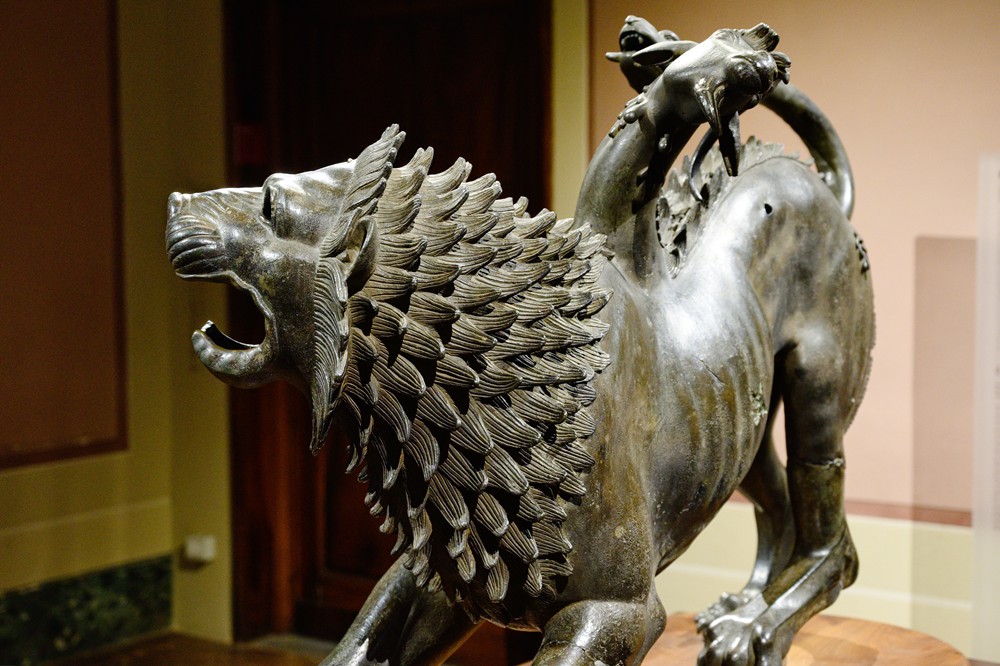
An Etruscan inscription is engraved on its right front leg, revealing that the sculpture was originally a votive offering dedicated to Tinia, the supreme god of the Etruscans. The mythical monster was transformed into a sacred connection between humans and the divine.
What makes the sculpture even more fascinating is its imperfection. When it was discovered, the original serpent-like tail had already been lost, and the tail we see today is an 18th-century restoration. This missing piece and later reconstruction give the sculpture an even deeper sense of history, showing the marks left by the passage of time.
The Chimera Gargoyles of Notre-Dame Cathedral in Paris
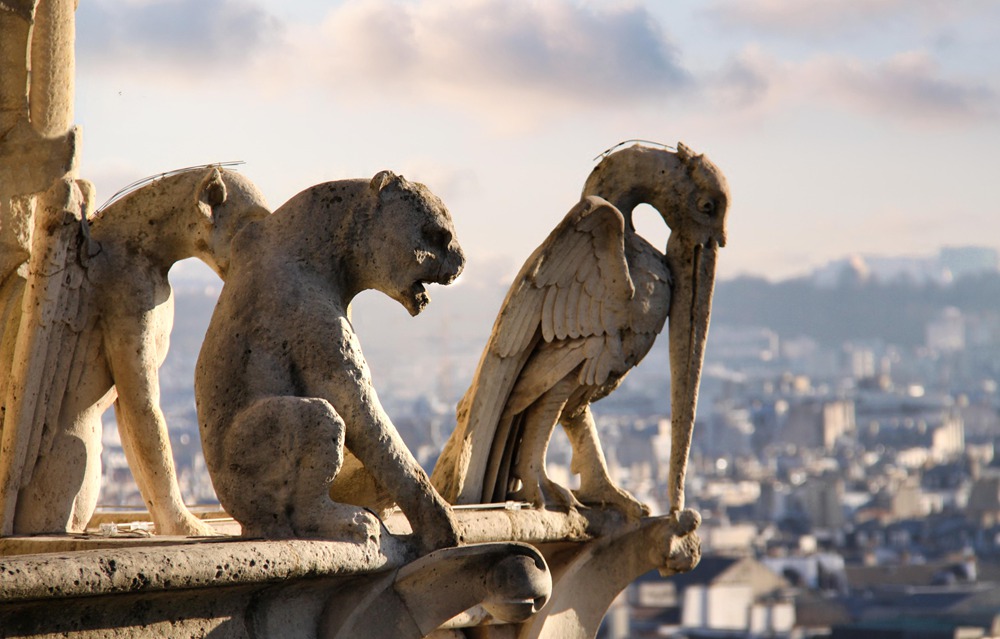
If the Chimera of Arezzo represents the “epic story of a single mythical beast,” the 54 Chimera sculptures on Notre-Dame Cathedral in Paris create an entire fantasy kingdom of monsters.
These stone chimera sculptures were created during the major restoration of Notre-Dame in the 19th century. Under the direction of architect Eugène Viollet-le-Duc, craftsmen drew inspiration from ancient mythology and medieval legends to design these fantastical creatures specifically for the upper levels of the cathedral.
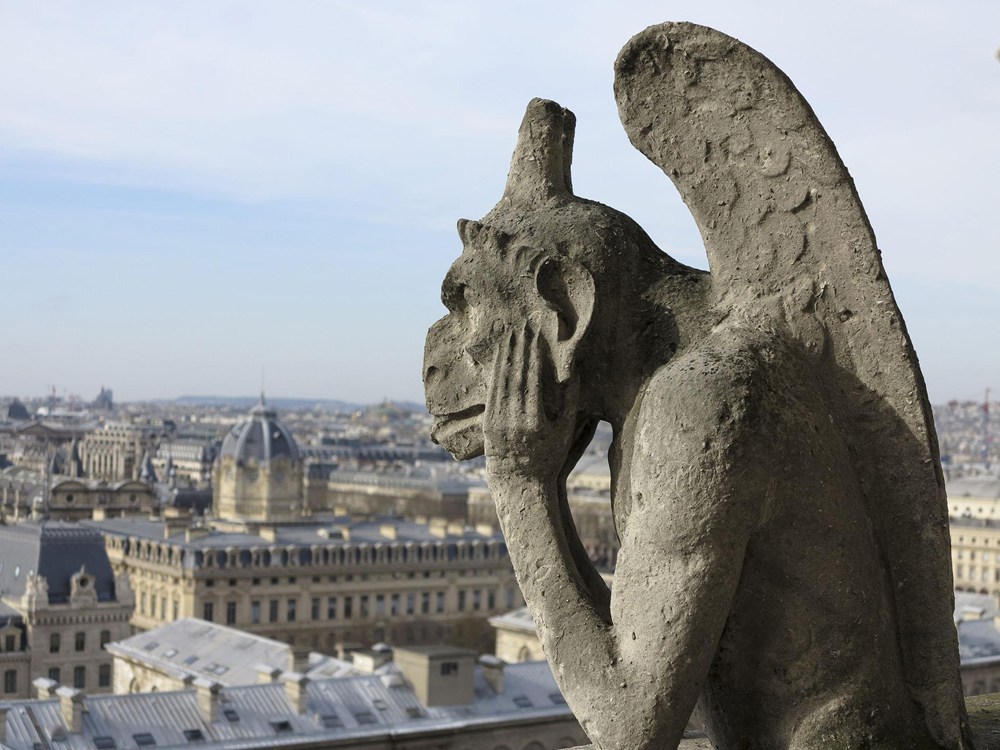
Unlike ordinary architectural decorations, these 54 chimeras were not made as identical frightening monsters. Each figure has its own unique expression and personality. The most famous one, known as “The Stryge” (The Contemplating Demon), rests its elbow on the stone railing, supports its chin with one hand, and gazes melancholically over the city of Paris below.
They are not merely cold architectural ornaments; they are more like silent guardians watching over history from above. Since their installation in the 19th century, they have witnessed countless Parisian sunsets, boats sailing along the Seine, the devastating fire of Notre-Dame in 2019, and the years of restoration that followed. Today, they continue to stand as timeless symbols of imagination, mystery, and the enduring power of Gothic art.
Why a Chimera Sculpture Is the Perfect Statement Piece for Your Space
As a professional sculpture manufacturer, Trevi Factory has worked with countless homeowners, designers, architects, and collectors searching for something beyond ordinary decorative pieces. They want artwork that tells a story rather than simply filling an empty corner—and a Chimera sculpture does exactly that.
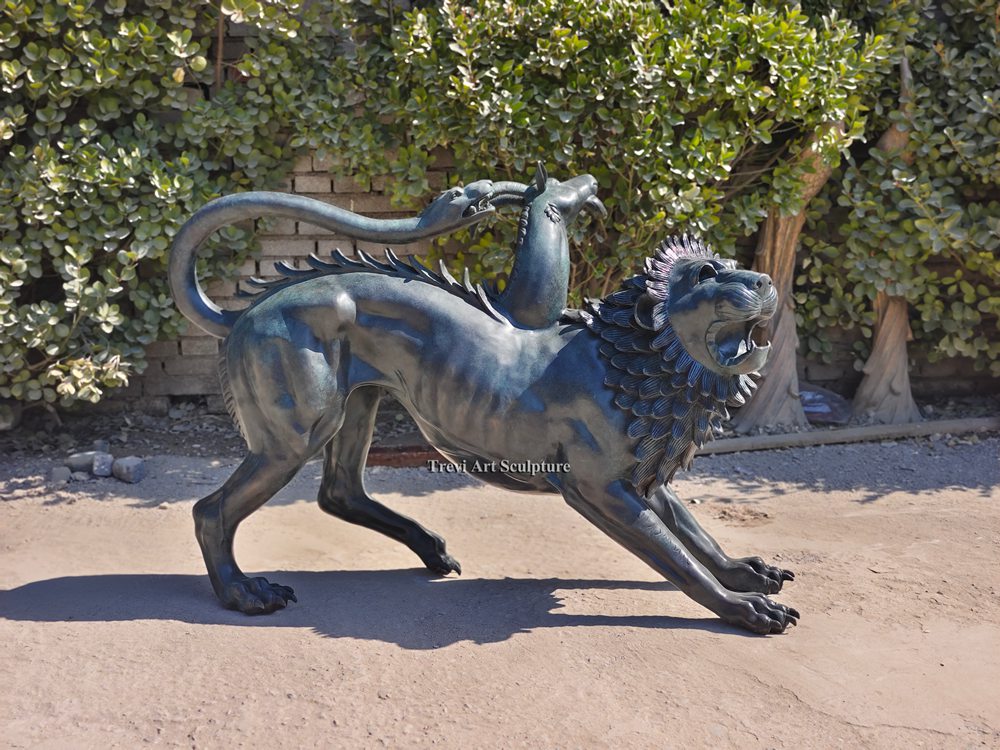
For owners of classical homes or vintage-inspired interiors, a handcrafted reproduction of the Etruscan Bronze Chimera creates an unforgettable focal point. Whether displayed beside a fireplace, in a grand library, or near a floor-to-ceiling window, its rich bronze finish and dramatic form instantly add depth, history, and artistic character to the space.
More importantly, the Chimera has never been a symbol of comfort or conformity. It represents limitless imagination, the courage to unite seemingly impossible elements, and a willingness to embrace originality. Rather than serving as a simple decoration, it becomes a conversation piece—a sculpture that gives a space personality, meaning, and lasting visual impact.
If you’re inspired by this legendary creature that has captivated civilizations for over three millennia, we would be delighted to help you create a custom Chimera sculpture for your private residence, commercial property, hotel, garden, or public project. Contact us today to learn more about our customization options, craftsmanship, and previous projects, and let this timeless mythological masterpiece become the defining highlight of your space.


