
A campus mascot is more than a team symbol. Cast in bronze and placed where students gather, it can become a lasting expression of school spirit—and a favorite backdrop for graduation photos. The ten animal designs below show different ways to bring that identity to life, from a soaring eagle to a determined bulldog. Each one can be adapted to a school’s own mascot artwork, colors, traditions, and installation site.
The images below are design illustrations, not documentation of completed university installations. Any lettering shown in an image is illustrative and should be replaced with your school’s approved branding.
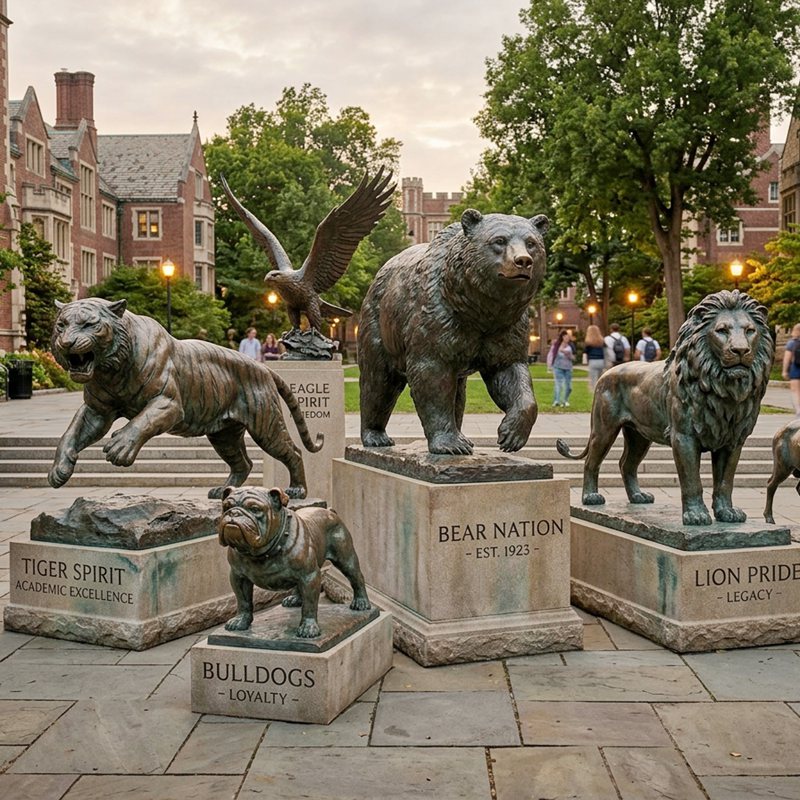
1. Bronze Eagle Statue: Vision and Ambition
An eagle with its wings fully spread creates an immediate landmark at a campus entrance or along a central walkway. Its lifted head and layered feathers give the composition movement even while the sculpture stands still. The eagle represents vision, independence, and the courage to aim high—qualities that connect naturally with learning and achievement. A raised base can make the silhouette visible from across a plaza, while a more compact wingspan may work better beside a building entrance.
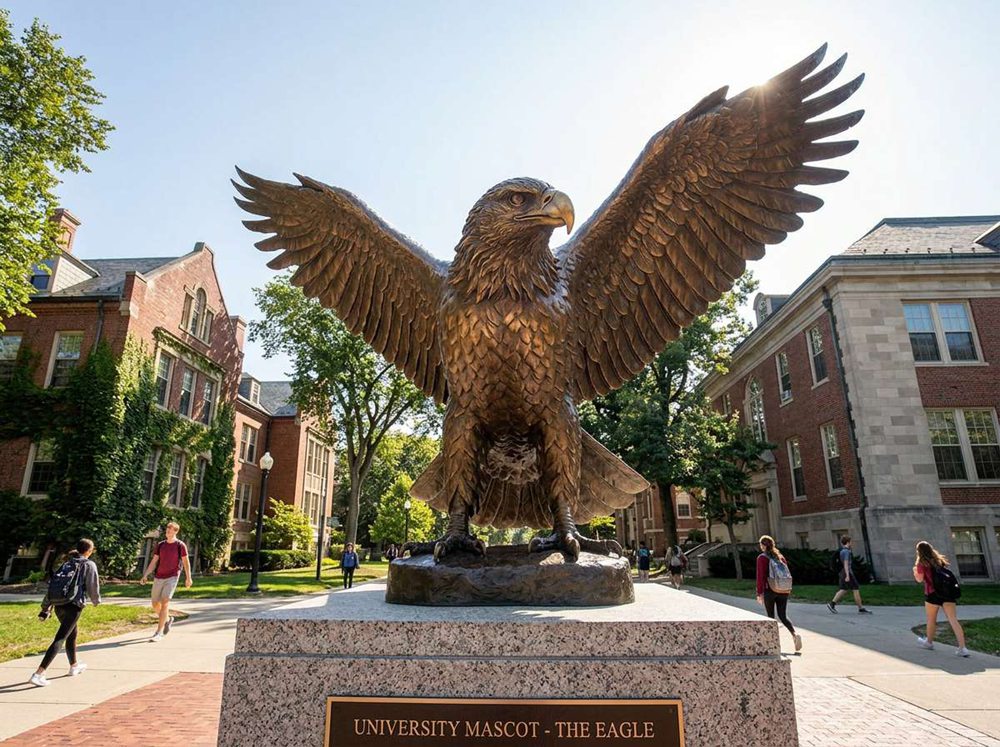
2. Bronze Elephant Statue: Wisdom and Community
An elephant mascot can be majestic, friendly, or playfully dressed in a school jacket. The upward-curving trunk in this design gives it an upbeat, welcoming personality, suitable for a student center or alumni gathering area. Elephants evoke wisdom, memory, loyalty, and strong social bonds. These associations make an elephant a thoughtful choice for a school that wants its mascot to speak to both academic growth and a supportive community. Uniform details or a school pennant can be shaped around the institution’s own identity.
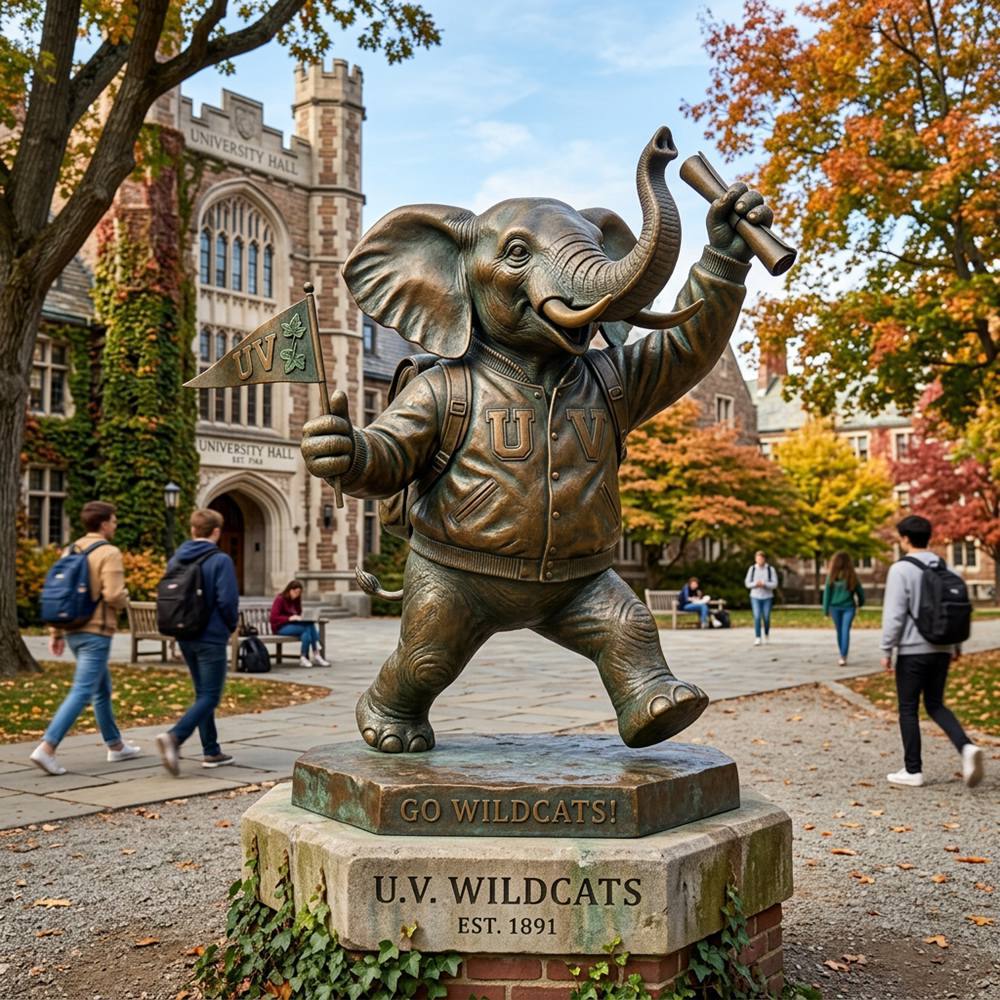
3. Bronze Bobcat Statue: Alertness and Resourcefulness
A bobcat standing above a rocky base feels watchful and ready to move. Its pointed ears, compact body, and focused gaze distinguish it from other wildcat mascots; keeping those details accurate matters when the sculpture must match a specific school emblem. The bobcat can represent alertness, adaptability, and resourcefulness. A lively pose suits an athletics plaza, while a calm, observant version could mark an academic courtyard. The pedestal offers room for a school name, motto, or donor dedication.
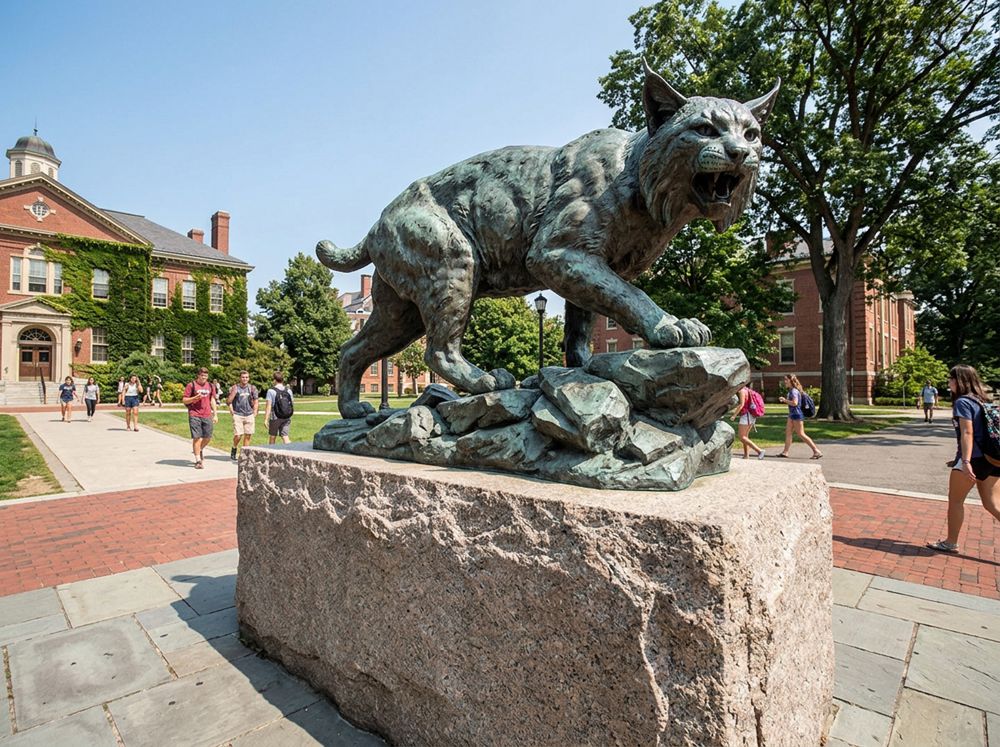
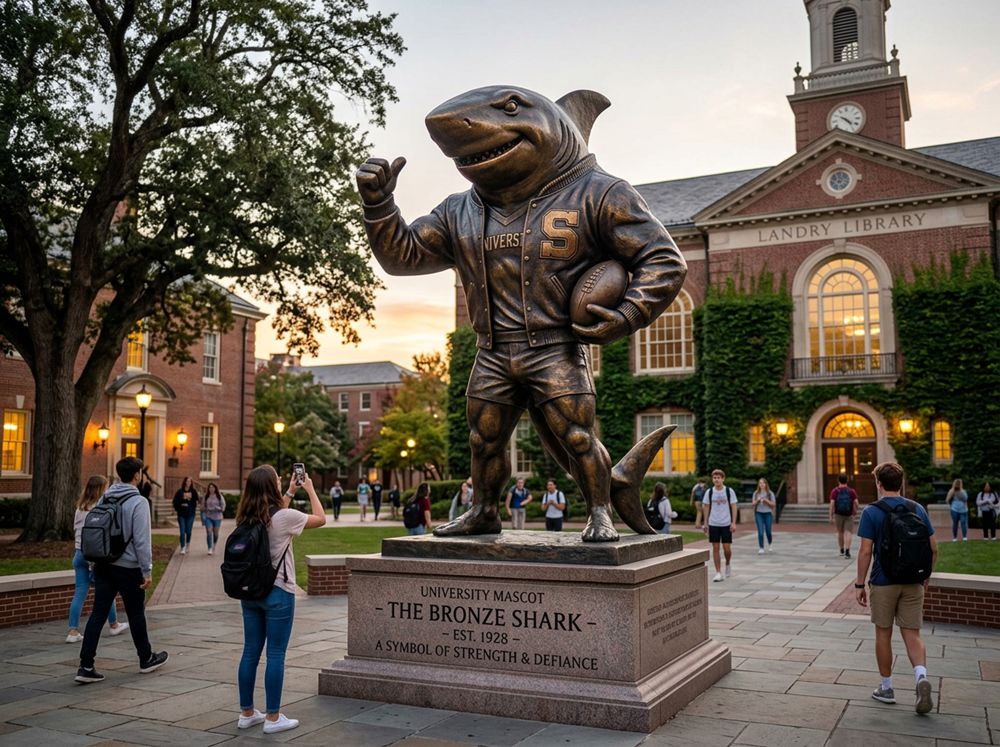
4. Bronze Shark Statue: Drive and Fearlessness
A shark does not have to be shown swimming to be instantly recognizable. This character-style design uses its distinctive head, dorsal fin, and tail alongside a varsity jacket and athletic pose. Sharks suggest drive, confidence, and the determination to keep moving forward. That energy makes a shark mascot particularly striking near a sports venue or student recreation area. For a different mood, the same animal could be sculpted in a natural swimming form above a wave-shaped base.
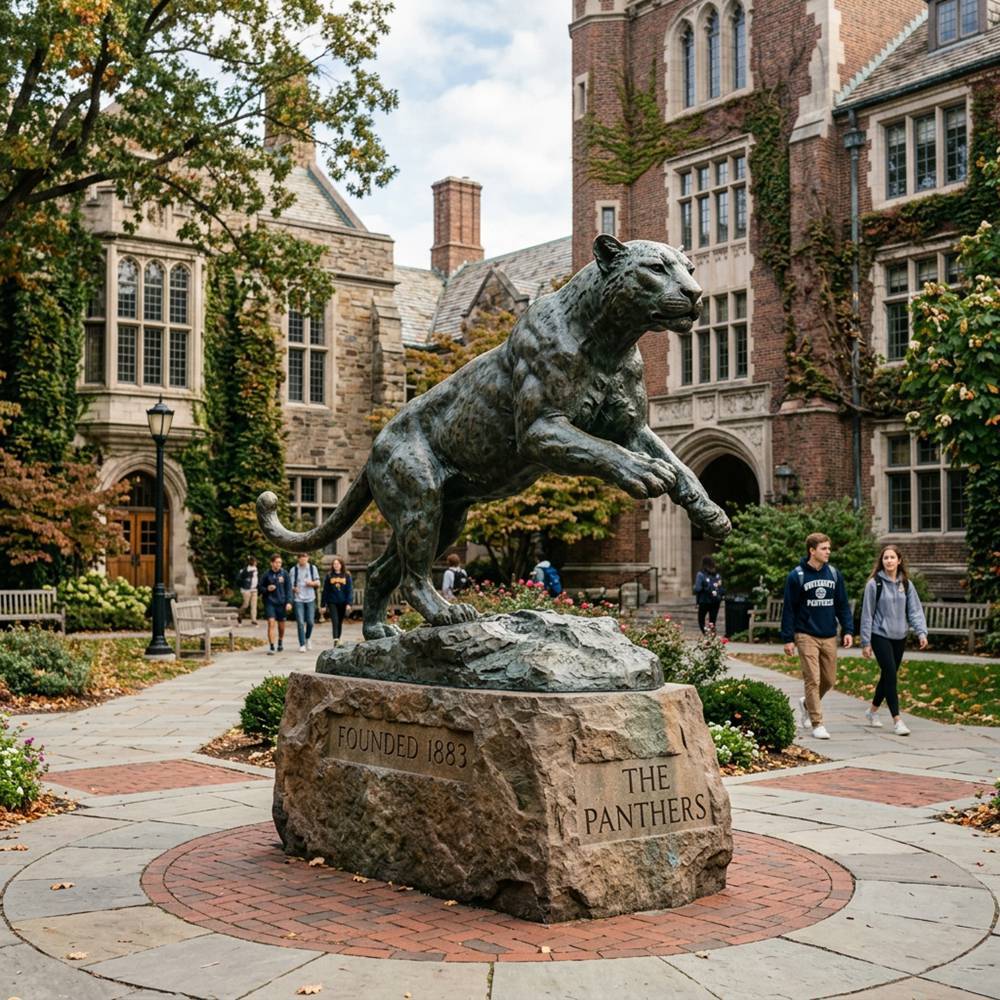
5. Bronze Leopard Statue: Agility and Focus
A leopard in mid-leap brings athletic energy to a campus garden or arena approach. Its extended forelegs and low, streamlined body make the sculpture feel as though it is crossing the space in front of it. The leopard represents agility, focus, and decisive action. If the school’s mascot is specifically a spotted leopard, its coat pattern should be modeled or finished deliberately; a plain-coated big cat can read more like a panther. Matching the institution’s established mascot design is more important than using a generic feline shape.
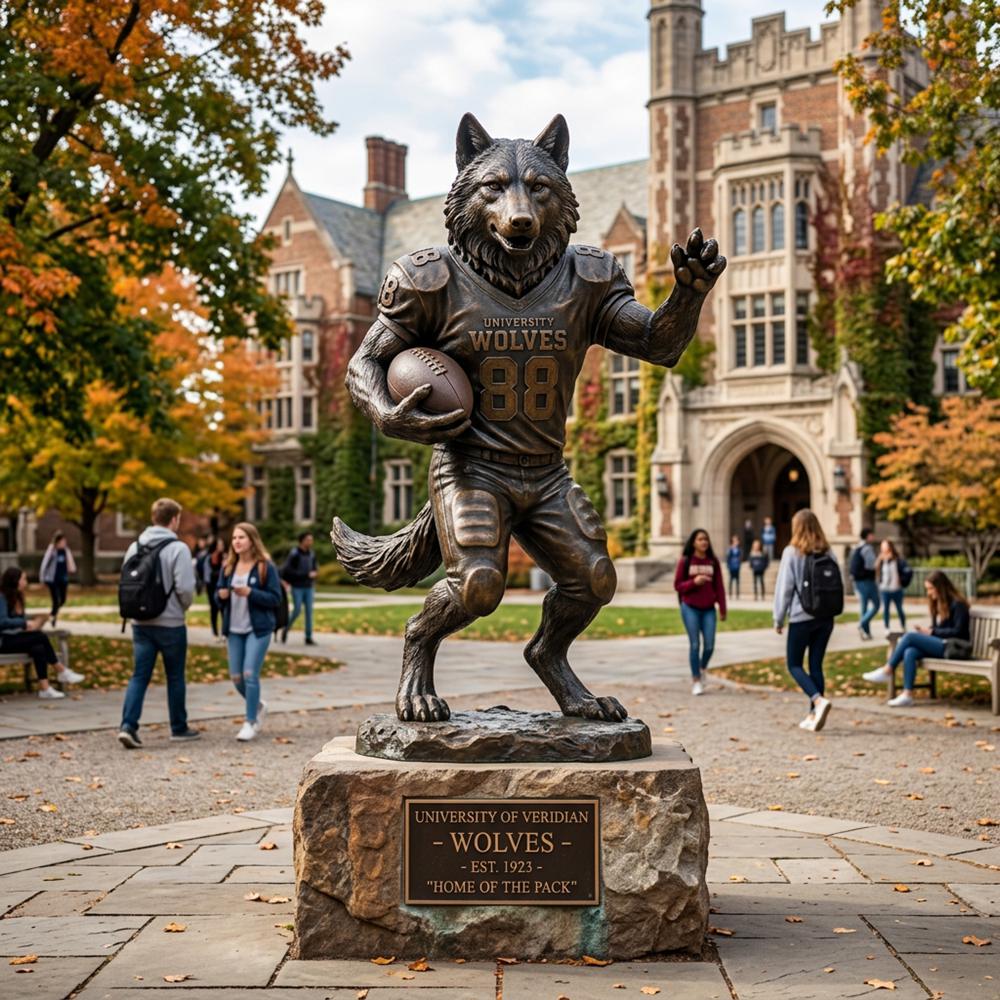
6. Bronze Wolf Statue: Teamwork and Perseverance
A wolf mascot in a sports uniform makes a direct connection between campus identity and game-day culture. One raised paw gives students a natural gesture to echo in photos, while the football and jersey can be customized to suit the school’s team. Wolves are often associated with teamwork, loyalty, and perseverance: a strong individual still belongs to a pack. A school that prefers a more natural look could instead commission a standing or howling wolf, retaining the same sense of shared purpose without the uniform.
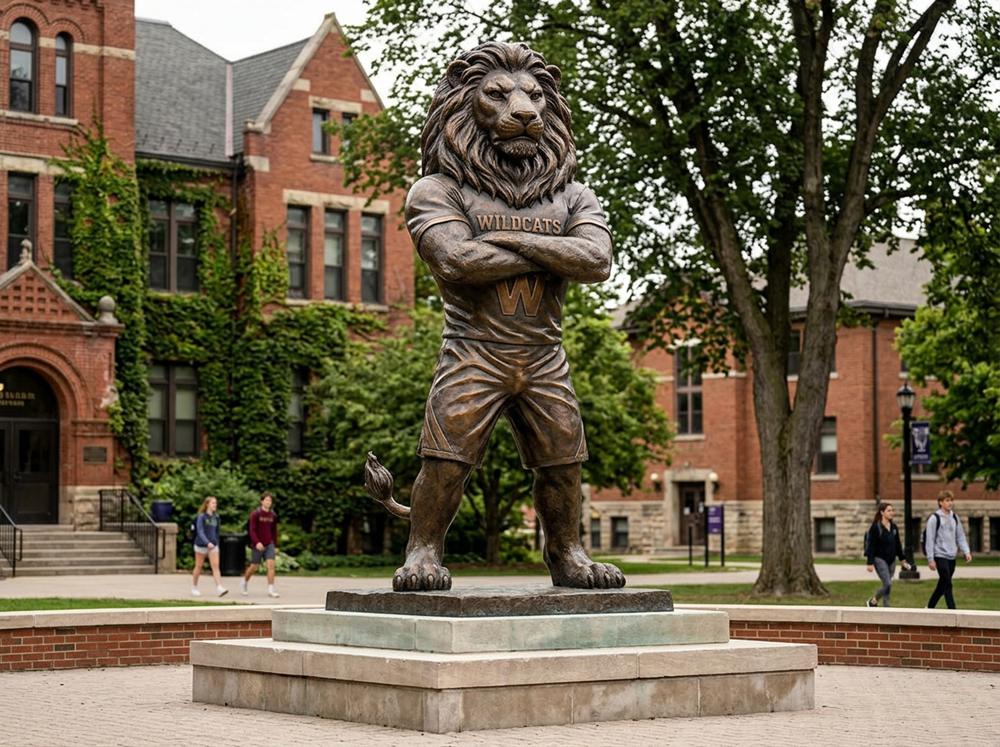
7. Bronze Lion Statue: Courage and Leadership
A lion with a full mane and confident stance gives a campus a powerful focal point. This humanlike, folded-arm design feels like a team captain; a naturalistic seated or walking lion would create a more formal impression. The lion stands for courage, leadership, and pride. Because its personality can shift so much with posture and expression, the best design begins with the school’s existing mascot: should it feel approachable to younger students, or command attention at a stadium entrance?
8. Bronze Bear Statue: Strength and Protection
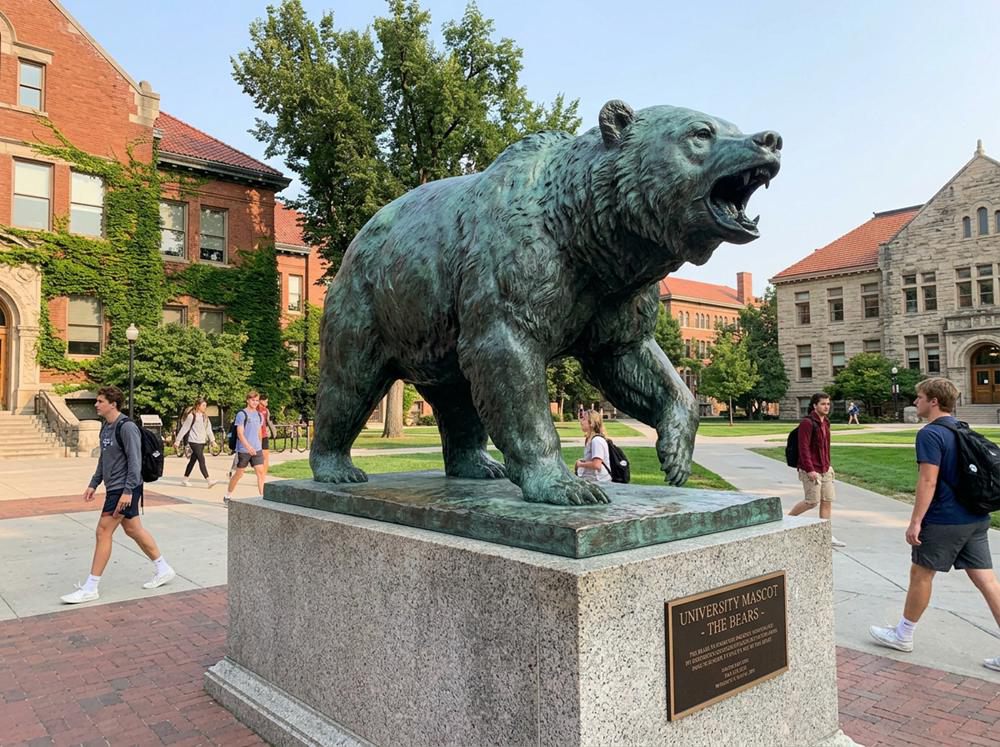
A striding bear makes an impressive statement in an open quad. Broad shoulders, large paws, and a textured coat create a strong silhouette that reads clearly from a distance. Bears can express strength, resilience, and protection, but the mood depends on the pose: an open-mouthed bear conveys competitive energy, whereas a calm bear can feel welcoming. Set beside a main path with adequate room around the base, it can become a natural meeting point without interrupting pedestrian movement.
9. Bronze Bulldog Statue: Tenacity and Loyalty
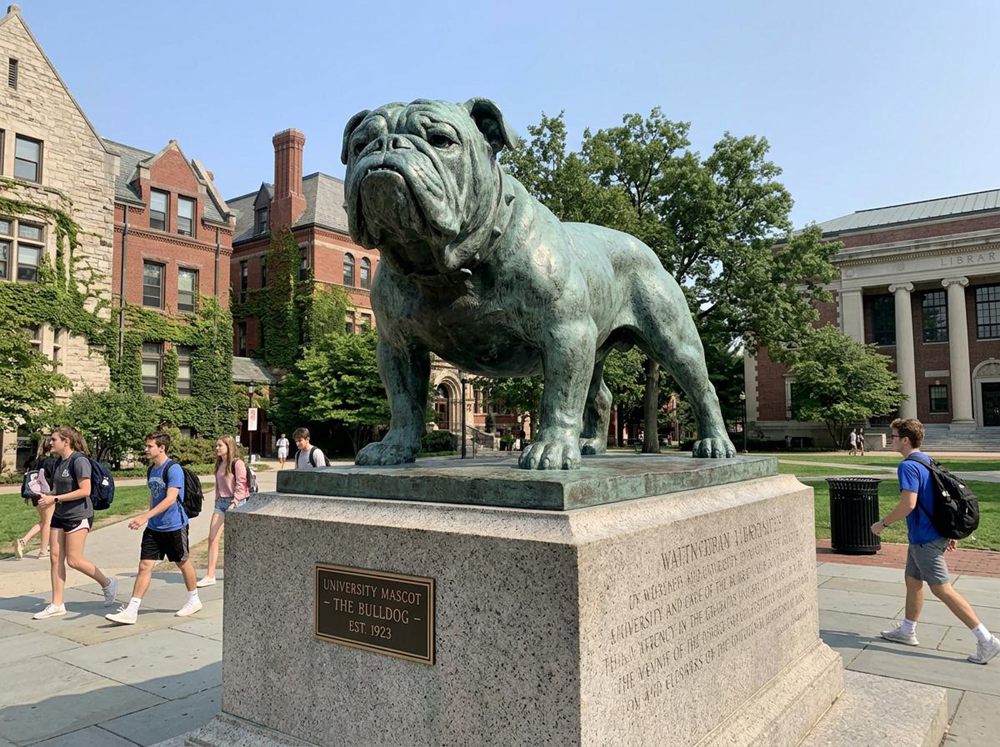
The bulldog’s planted feet, compact frame, and unmistakable face make it a memorable mascot even without exaggerated motion. A firmly standing sculpture works well outside a library, school hall, or athletics building. The bulldog embodies tenacity, loyalty, and steadfast determination—the spirit of holding your ground when a challenge gets difficult. Subtle attention to facial folds, ears, and stance can capture a school’s particular mascot character without turning the sculpture into a copy of every other bulldog statue.
10. Bronze Tiger Statue: Confidence and Momentum
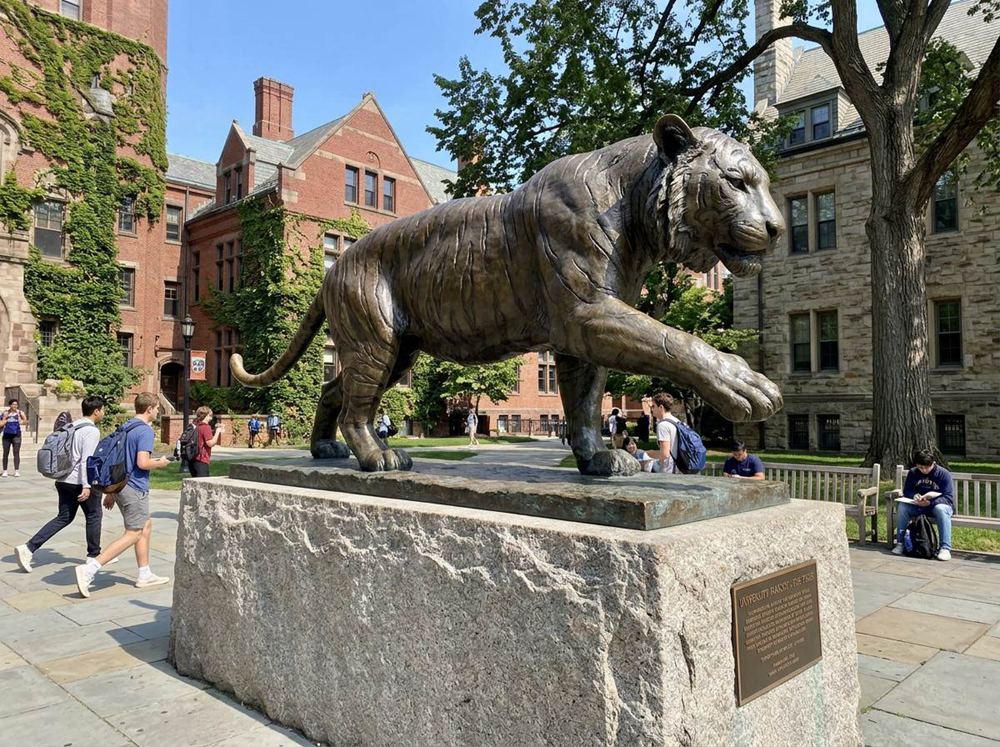
A tiger moving forward offers a dramatic closing choice for this collection. Its long body and lifted paw suggest motion; modeled stripes and a powerful face make the species clear at a glance. Tigers convey confidence, courage, and the momentum to pursue a goal. A walking pose can guide the eye along a landscaped path, while a poised tiger may suit a smaller entry court. As with any school mascot, its final expression should reflect the community’s personality, not just the animal’s fierceness.
Create a Bronze Mascot That Belongs to Your School
These ten designs are starting points, not one-size-fits-all statues. The right mascot should reflect your school’s approved artwork and story, and its pose, scale, finish, and base should fit the installation site.
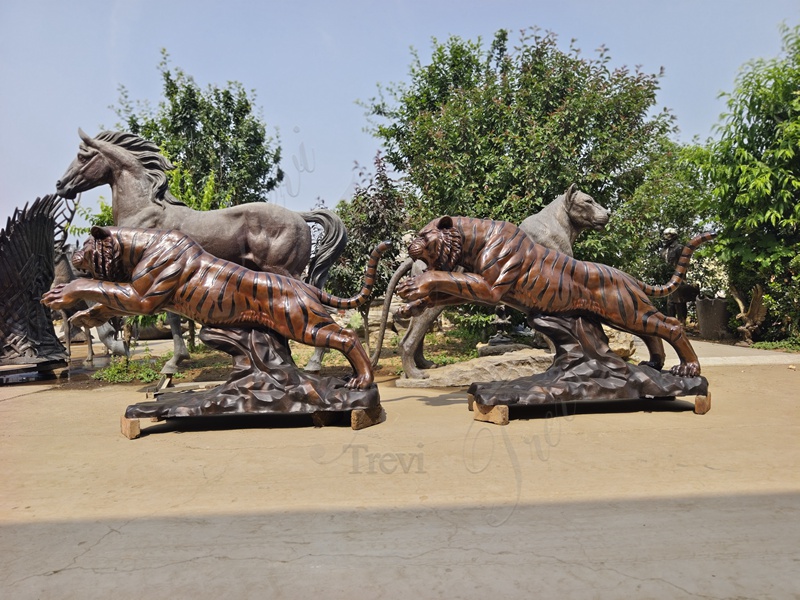
Trevi Statue is a sculpture manufacturer in Quyang, China. Its in-house team handles clay modeling, lost-wax bronze casting, welding, and finishing. Schools can provide a logo, sketches, photos, or an existing mascot design for review, see progress photos and videos during modeling, and discuss pedestal details, shipping, and installation guidance with the factory. Contact Trevi Statue to discuss a custom bronze mascot for your campus.
For the full journey from the first design brief through clay modeling, casting, finishing, and delivery, read How to Customize a Life-Size School Mascot Statue.


