
From my experience working in the sculpture industry, I have learned that lion statues are never just decorative objects. For many buyers, designers, and city planners, a lion sculpture carries a clear message: strength, protection, dignity, and good fortune.In China, stone guardian lions are often placed at gates to protect a home, temple, hotel, or public building. In many Western countries, lion sculptures are often connected with monuments, royal power, military memory, and city identity. Some famous lion statues have stood for hundreds or even thousands of years. They are works of art, but they are also important physical records of history and culture.
In this article, I will introduce the origin of lion sculpture, share famous lion statues around the world, and explain why lion sculptures are still widely used today in gardens, hotels, villas, public squares, memorial sites, and commercial spaces.
The Origin and Meaning of Lion Sculptures
Lion sculptures have appeared in different cultures for a very long time. Although real lions did not live in every region where lion statues became popular, the image of the lion traveled through trade, religion, military contact, and art.
The lion became a powerful symbol because of its appearance and behavior. It looks strong, calm, alert, and dominant. These qualities made it a natural choice for sculpture.
In many cultures, lion statues commonly represent:
From my experience, this is one reason lion sculpture remains popular with modern buyers. A lion statue is easy to understand across cultures. Even when the style changes, the meaning is still clear.
1. Lion Monument, Lucerne, Switzerland
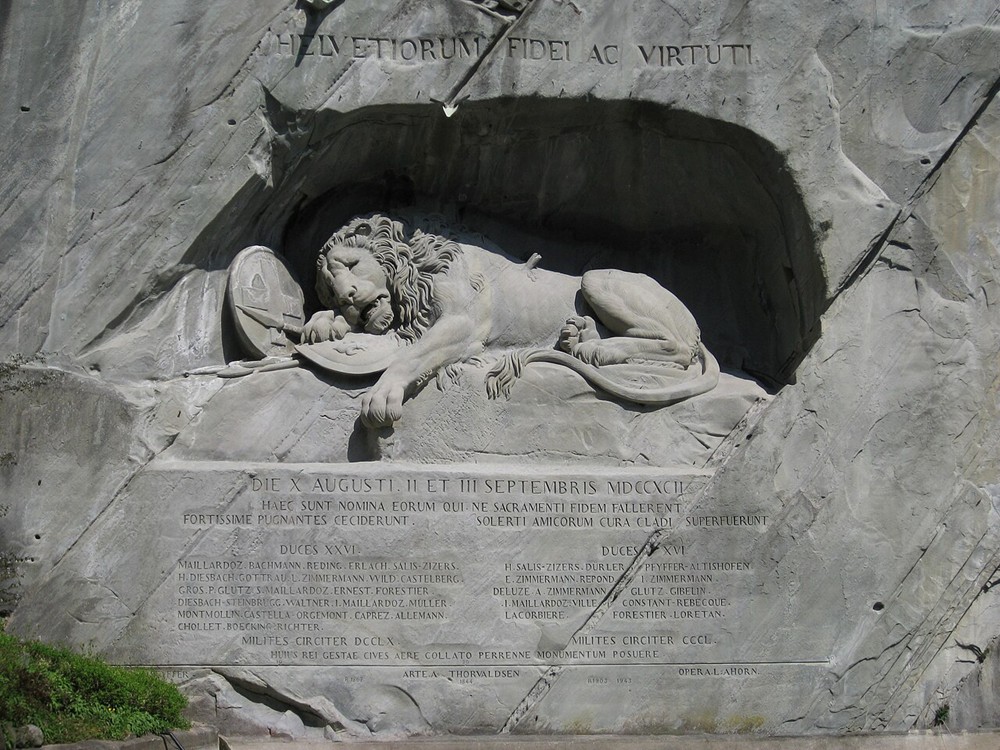
The Lion Monument in Lucerne is one of the most moving lion sculptures in the world. It is also known as the “Dying Lion of Lucerne.”
This sculpture was created to honor the Swiss Guards who died during the French Revolution in 1792 while protecting King Louis XVI and the royal family. According to the historical background, 786 Swiss mercenaries died in that event.
The monument shows a wounded lion lying in a carved rock niche. A broken spear is in its body, and its face shows pain, loyalty, and quiet sadness. This is very different from the usual image of a lion as fierce and victorious.
The Lion Monument is often understood as a memorial for sacrifice and a wish for peace. Switzerland’s later position of permanent neutrality is also often discussed in connection with this painful historical memory.
2. Hercules and the Nemean Lion, Berlin, Germany
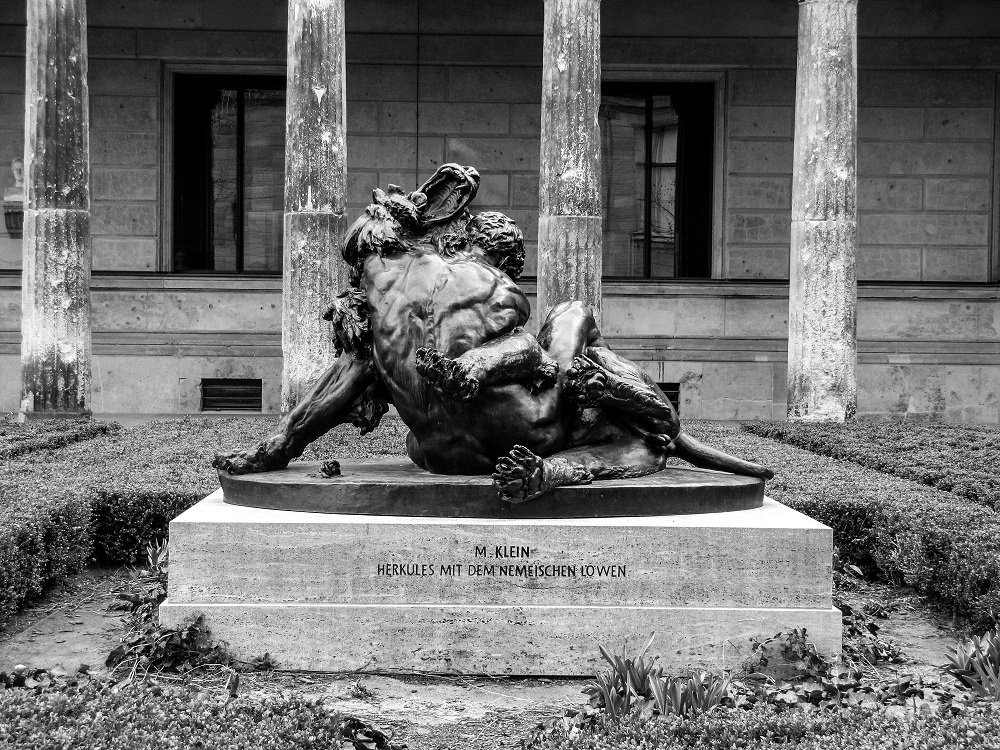
The story of Hercules and the Nemean Lion comes from Greek mythology. The Nemean Lion was a powerful beast with a skin that could not be pierced by ordinary weapons. Hercules defeated it as one of his famous labors.
In sculpture, this subject usually shows a dramatic physical struggle between the hero and the lion. The lion here represents danger, strength, and a nearly impossible challenge. Hercules represents courage, endurance, and victory.
In Berlin, sculptures with classical themes such as Hercules and the Nemean Lion reflect the long influence of Greek and Roman art on European public sculpture. For buyers and designers, this type of lion sculpture has a different feeling from a guardian lion. It is more about movement, muscle, storytelling, and heroic energy.
3. The Lions at Nelson’s Column, London, England
Nelson’s Column in Trafalgar Square is one of London’s best-known landmarks. Around the base of the column sit four large bronze lions.
These lions were created by British sculptor Sir Edwin Landseer and installed in the 19th century. They guard the base of the monument to Admiral Horatio Nelson, a major figure in British naval history.
The lions do not appear aggressive. Instead, they are calm, heavy, and powerful. Their seated posture gives the square a feeling of stability and national pride.
4. The Lion of Venice, Italy
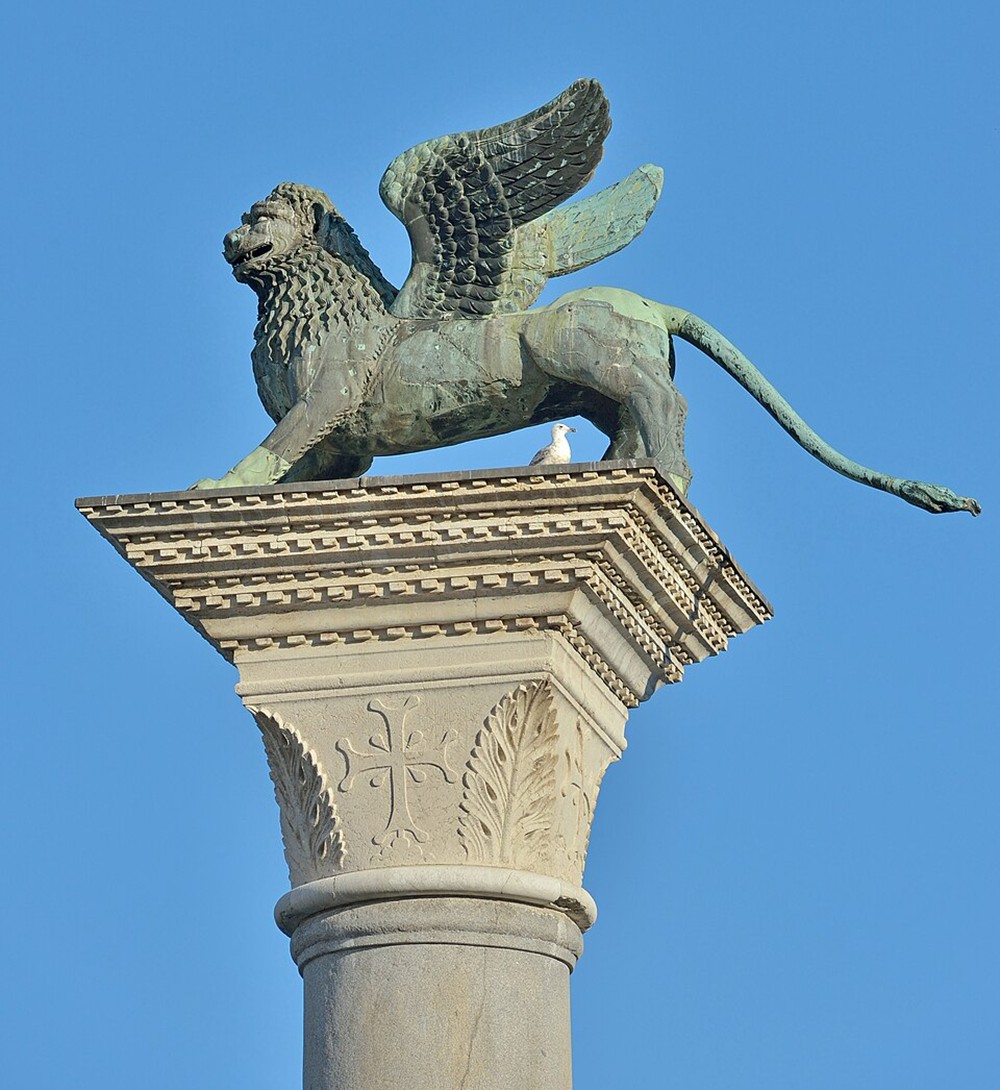
The Lion of Venice is one of the most famous city symbols in Europe. It is usually shown as a winged lion and is connected with Saint Mark, the patron saint of Venice.
This lion appears on buildings, flags, columns, coins, and many works of art. In Venice, the winged lion is not only a sculpture subject. It is a symbol of the city’s history, maritime power, religion, and identity.
The most famous example stands on a column in Piazza San Marco. The raised position gives the lion a strong civic meaning. It watches over the square and represents Venice itself.
For modern city projects, the Lion of Venice is a good reminder that an animal sculpture can become more than decoration. Over time, it can become part of a city’s brand and memory.
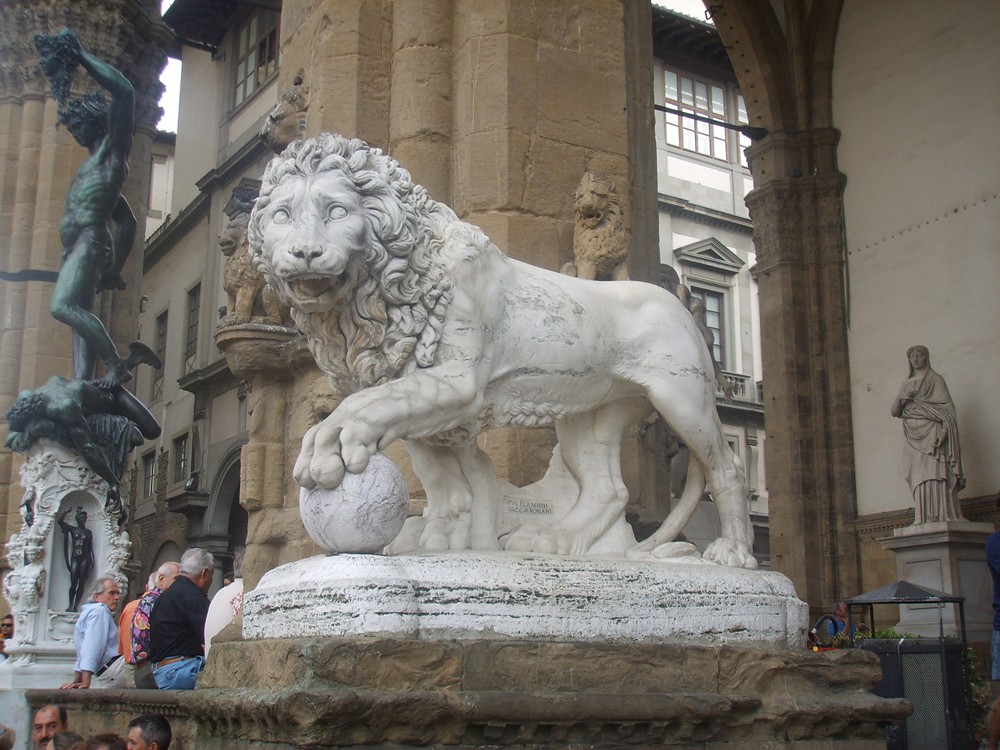
5. The Medici Lions, Florence, Italy
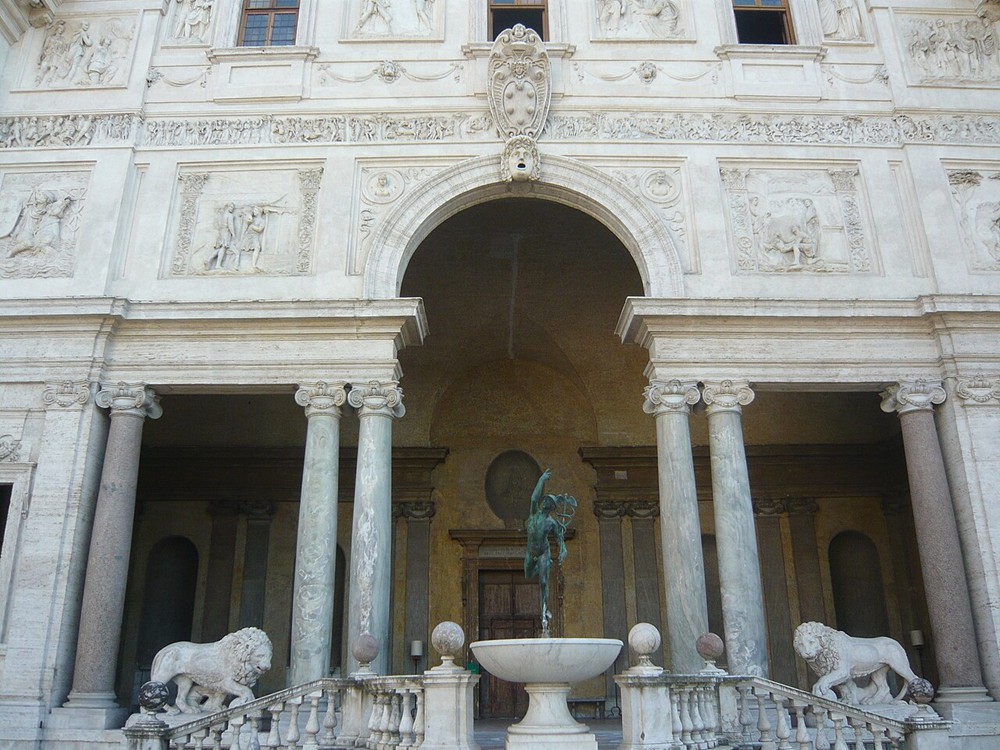
The Medici Lions are a famous pair of marble lions associated with the Medici family in Florence. They became models for many later lion sculptures in Europe and beyond.
One lion is ancient Roman, and the other was made later to form a pair. They were placed at the Villa Medici in Rome and later moved to Florence. Their image has been copied many times for gardens, estates, museums, and luxury entrances.
The Medici lion style is elegant and classical. The lions are usually shown with one paw resting on a ball. This pose suggests control, balance, and noble power.
From my experience, many clients who ask for traditional marble lion statues are often looking for a feeling close to this style: formal, balanced, European, and suitable for a villa, garden, or grand staircase.
6. The Art Institute Lions, Chicago, United States
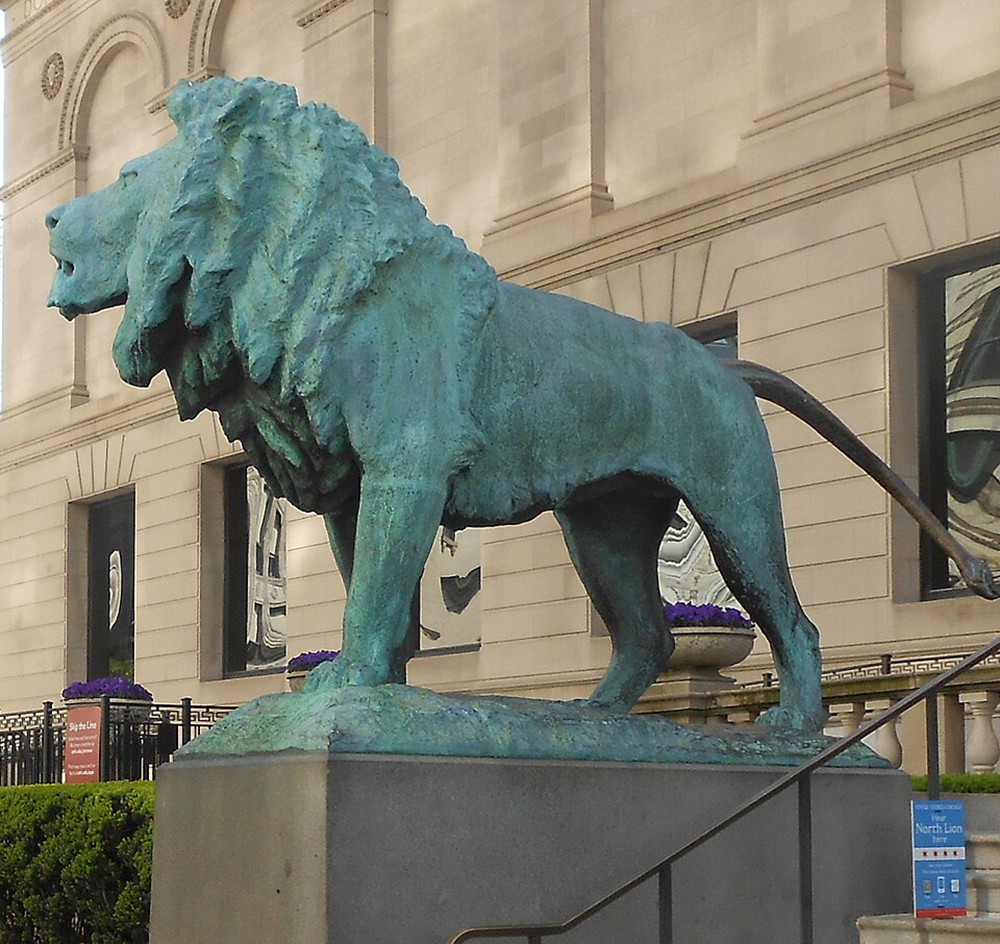
The two bronze lions outside the Art Institute of Chicago are among the most beloved public sculptures in the United States. They were created by sculptor Edward Kemeys and installed in 1894.
These lions stand on both sides of the museum entrance. Each lion has a slightly different posture and expression. They are not just identical decorative pieces. They have personality.
One appears more alert, while the other seems ready but calm. This subtle difference makes them feel alive and memorable.
7. The Merlion, Singapore
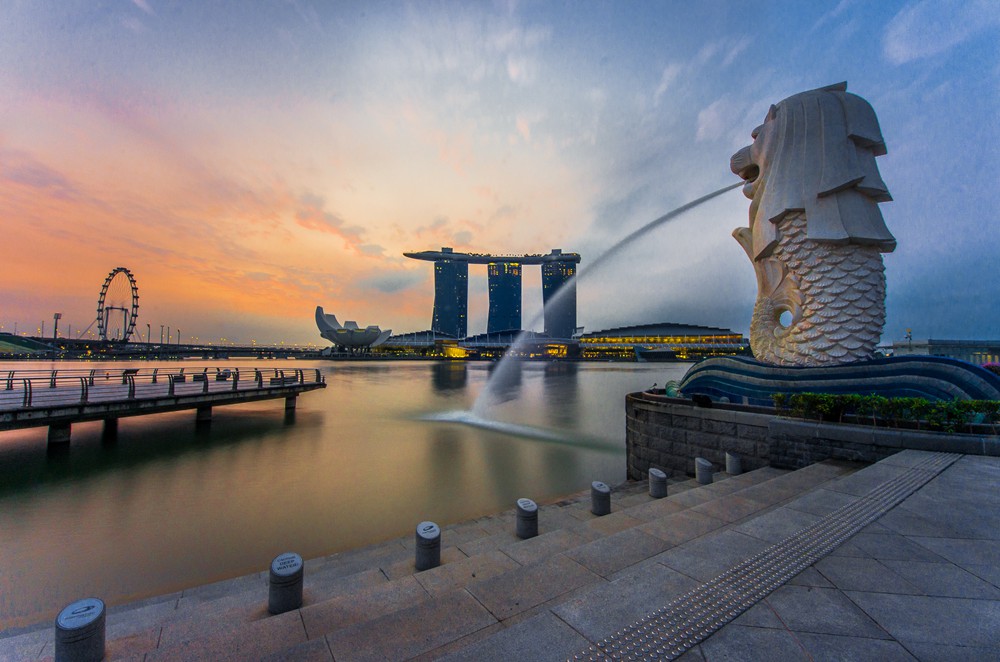
The Merlion is one of the most recognized modern symbols in Asia. It has the head of a lion and the body of a fish.
The lion head is connected with Singapore’s name and legend, while the fish body refers to the city’s history as a fishing village and port. This makes the Merlion a strong example of symbolic sculpture made for modern national and tourism identity.
Unlike ancient lion sculptures, the Merlion is not a traditional guardian lion or a war monument. It is a designed civic icon. It combines mythology, history, and branding in one clear image.
For commercial and public projects today, the Merlion shows how a custom sculpture can represent a place, company, hotel, resort, or cultural story. A lion does not always need to be realistic. It can be stylized, combined with other forms, or designed as a unique landmark.
8. The Lion Statues of the HSBC Main Building, Hong Kong
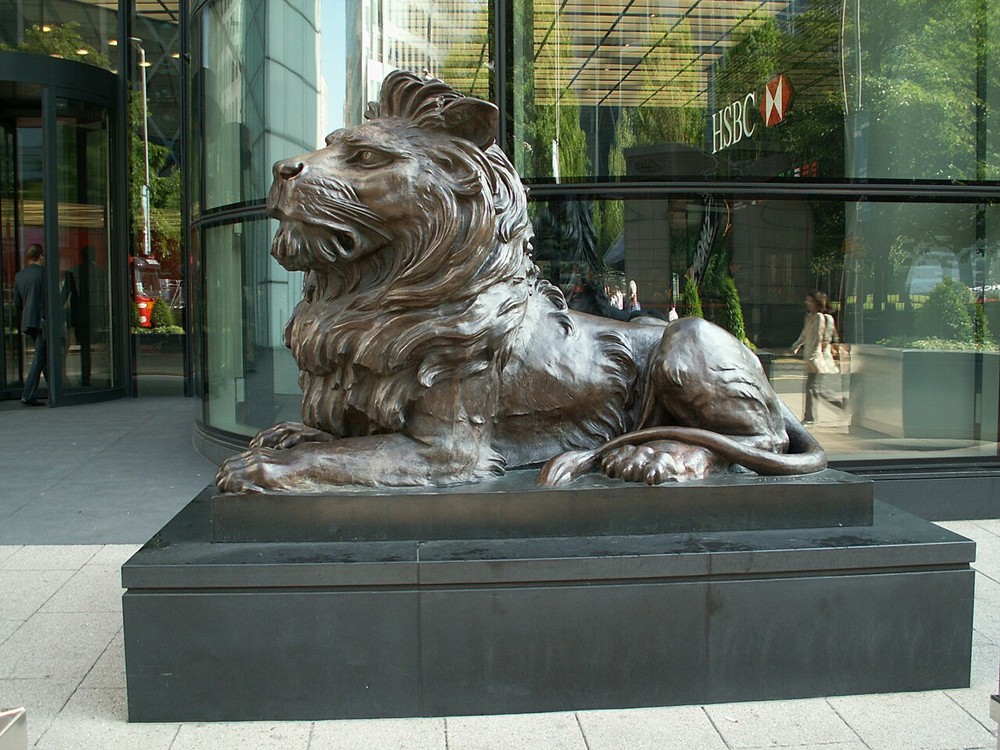
The bronze lion statues outside the HSBC Main Building in Hong Kong are famous in business culture. The two lions are commonly known as Stephen and Stitt.
They stand at the entrance of the bank and have become symbols of strength, wealth, security, and confidence. Many people also associate them with good fortune.
These lions are especially interesting because they connect Western bronze sculpture, Chinese symbolic meaning, and modern commercial architecture. For banks, hotels, offices, and shopping centers, lion sculptures often work well because they communicate trust and protection before a visitor even enters the building.
From my experience, this is one reason many commercial clients still choose lion statues for front entrances. The message is immediate and easy for visitors to understand.
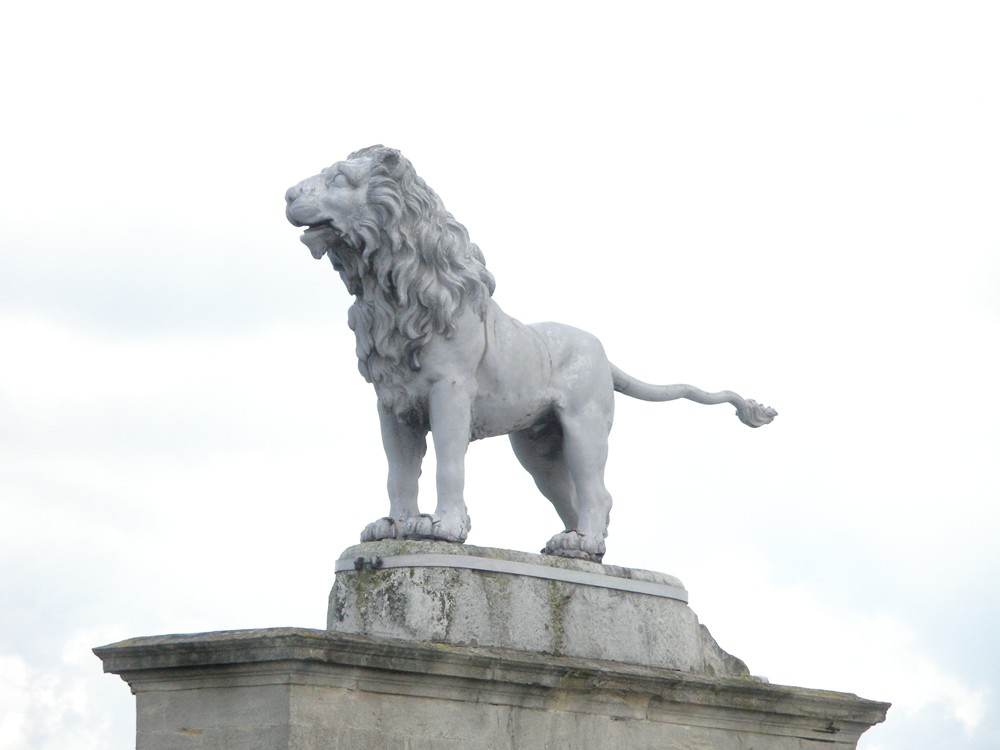
9. The Percy Lion, United Kingdom
The Percy Lion is associated with the Percy family, one of the historic noble families of England. The lion appears in heraldry, architecture, and family symbolism.
In this context, the lion is a sign of noble identity, courage, and lineage. It is not only a public statue but also part of a larger visual language used by families, institutions, and historic estates.
Heraldic lions often have strong stylized poses. They may stand upright, raise one paw, or appear more symbolic than realistic. This kind of lion design is useful when a buyer wants a sculpture connected with a crest, logo, family name, or institutional identity.
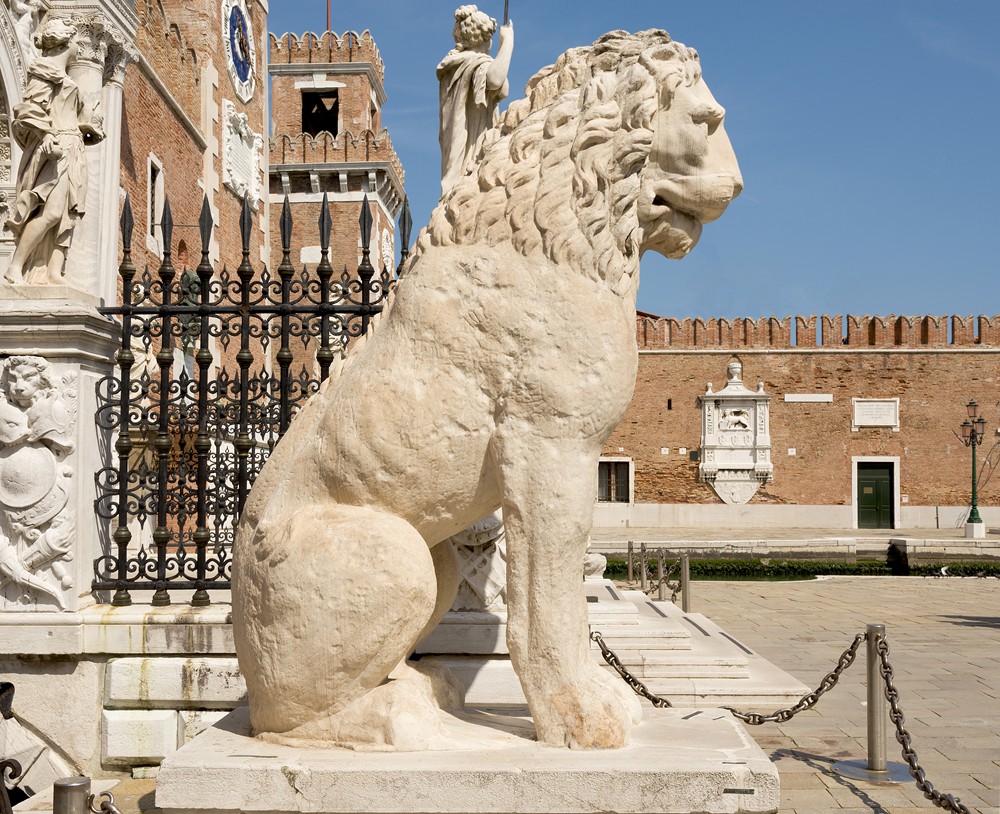
10. Piraeus Lion, Greece
The Piraeus Lion is an ancient marble lion originally from Piraeus, the port of Athens. It is now located in Venice.
This lion is especially important because of its long and complex history. It has traveled across cultures and time periods, and it also contains inscriptions that have attracted historical interest.
The Piraeus Lion shows how a sculpture can become a historical document. It is not only valuable because of its form, but also because of where it has been, who interacted with it, and what marks were left on it.
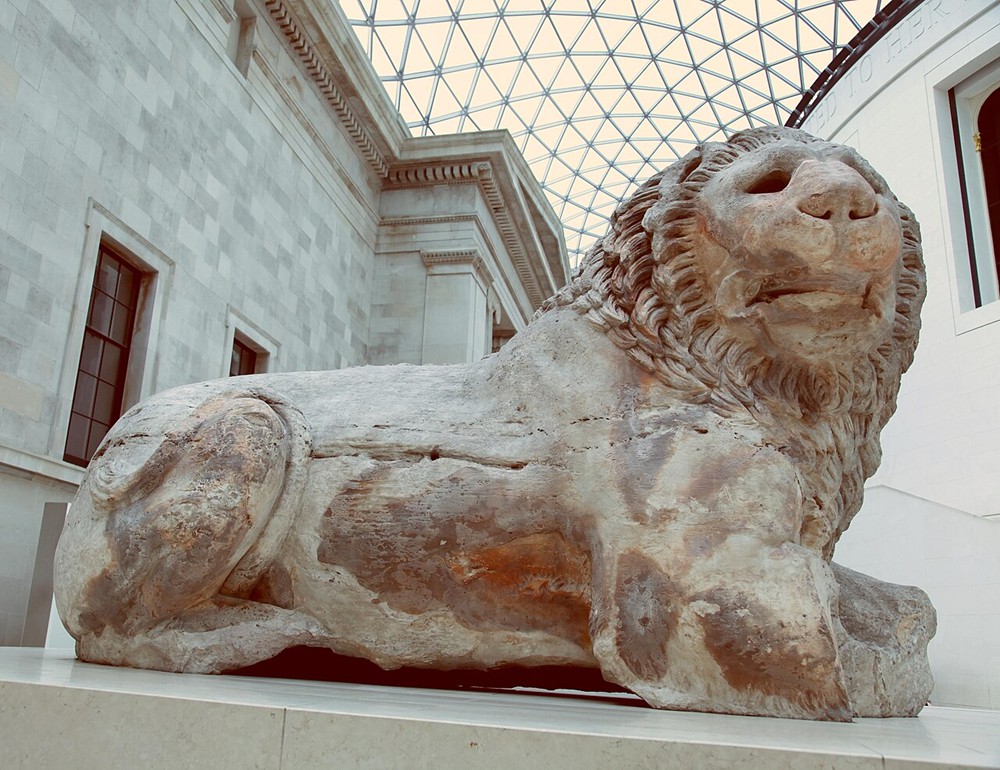
11. Lion of Knidos, British Museum, London
Although the title of this article focuses on 10 famous lion statues, I want to include the Lion of Knidos because it is too important to ignore.
The Lion of Knidos is a large ancient Greek marble lion now in the British Museum in London. It was originally part of a funerary monument near Knidos, in present-day Turkey.
The sculpture has a strong, watchful presence. It was likely connected with memory, protection, and honor for the dead. Like many ancient lion sculptures, it combines artistic power with symbolic function.
Why Lion Statues Are Still Used Today
Lion sculptures are still popular because their meaning remains clear. They can fit many styles, from classical to modern. I often see lion statues used in both private and public spaces because they create a strong first impression.
In practical terms, the best lion sculpture is not always the biggest one. It should match the site, viewing distance, architecture, budget, and long-term maintenance plan.
From my experience, a pair of entrance lions needs special attention to symmetry, direction, and proportion. If the two lions are placed on both sides of a gate, they should feel balanced with the building, not too small or too crowded.
Final Thoughts
Lion statues have remained important across many cultures because their message is simple and powerful. They can guard a home, honor the dead, decorate a city, strengthen a brand, or become a landmark that people remember for generations.
From the sad Lion Monument in Lucerne to the proud bronze lions in London and Chicago, each famous lion sculpture tells a different story. Some speak of sacrifice. Some show royal or civic power. Some bring good fortune. Others become symbols of an entire city.
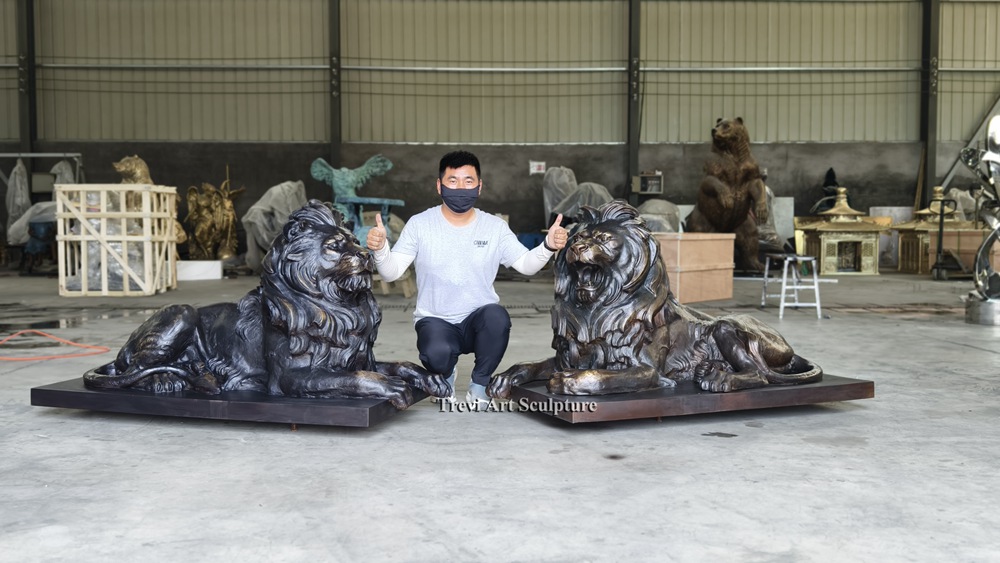
Custom Lion Sculptures from My Factory
My factory can provide lion sculptures in different materials, including marble lion statues, bronze lion statues, and stainless steel lions. These materials are suitable for different project types, from private villas to commercial entrances and public outdoor spaces.
If you need a custom lion statue for a villa, hotel, garden, public square, bank, or commercial entrance, my factory can provide marble, bronze, and stainless steel options. You can send the preferred size, material, site photos, and reference style, and I can help you review a practical sculpture solution for your project.
Frequently Asked Questions
What does a lion statue usually symbolize?
A lion statue usually symbolizes strength, protection, courage, dignity, and good fortune. In Chinese culture, stone lions are often used to guard entrances and drive away bad energy. In Western sculpture, lions are often used for memorials, city symbols, and monuments.
Which material is best for an outdoor lion statue?
Marble, bronze, stainless steel, and natural stone can all be used outdoors. Marble gives a classical look, bronze is traditional for public art, stainless steel feels modern, and stone is strong and timeless. The best choice depends on the climate, design style, budget, and maintenance plan.
Should I choose one lion statue or a pair?
For entrances, a pair of lion statues is usually better because it creates balance and a guarding effect. For a garden, memorial, lobby, or landmark, one large lion may be enough. I suggest choosing based on the space and the visual message you want to create.
Can a lion statue be customized from a famous design?
A custom lion statue can be inspired by classical styles, historical poses, or famous sculpture traditions. However, the final design should be adjusted for your site, material, and project identity. I recommend using famous statues as references rather than making a direct copy without thought.
What information should I prepare before ordering a custom lion sculpture?
You should prepare the preferred size, material, installation location, style references, site photos, and any special meaning you want the lion to express. If the sculpture is for an entrance, measurements of the gate or building façade are especially helpful.
Are lion sculptures difficult to ship internationally?
Large lion sculptures need careful export packing, especially marble and stone pieces. Bronze and stainless steel sculptures also need protection against scratches and impact. Good packing, clear size confirmation, and proper handling plans help reduce shipping risk.


