
The Renaissance was a golden age in Western art, marking a break from the religious constraints of the Middle Ages and a return to the splendor of humanism. Sculpture, as the art form that best conveys a sense of three-dimensionality and power, embodies that era’s profound exploration of the aesthetics of the human form, the humanistic spirit, and classical mythology. From solemn religious sculptures to dynamic mythological group statues, Italian artisans used marble and bronze as their media to capture the eternal beauty of art. This article will guide you through a detailed appreciation of twelve iconic Renaissance sculptures, helping you understand the artistic romance and the spirit of the age as captured by the masters.
David – Michelangelo
Material: Marble
Current Location: Accademia Gallery, Florence
Description: A masterpiece representing the pinnacle of Renaissance sculpture. Inspired by the Bible, it captures the moment before David faces the giant Goliath. Through a “contrasting balance” pose, it showcases the human form at its most athletic and beautiful, with precise, realistic depictions of muscular contours and a tall, robust physique. The work not only embodies classical ideals of human beauty but also symbolizes the freedom and resilience of the Florentine Republic, serving as a tangible expression of the humanist spirit.

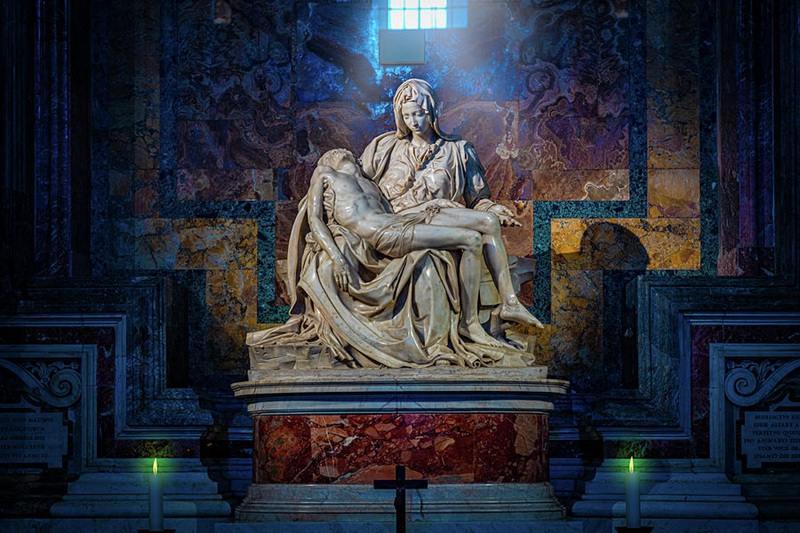
The Pietà – Michelangelo
Material: Marble
Current Location: St. Peter’s Basilica, Vatican City
Description: Michelangelo‘s masterpiece was created when he was 24 years old. It depicts the Virgin Mary holding the crucified Christ. Through its pyramidal composition and exquisitely delicate carving, the work fuses profound maternal love with sacred sorrow. Using a subtle and gentle sculptural technique, the master softens the harshness of death, seamlessly blending deep, compassionate maternal love with a sacred religious atmosphere. The drapery flows naturally and gracefully, and the figures’ expressions convey sorrow without despair, making this a masterpiece of Western religious sculpture.
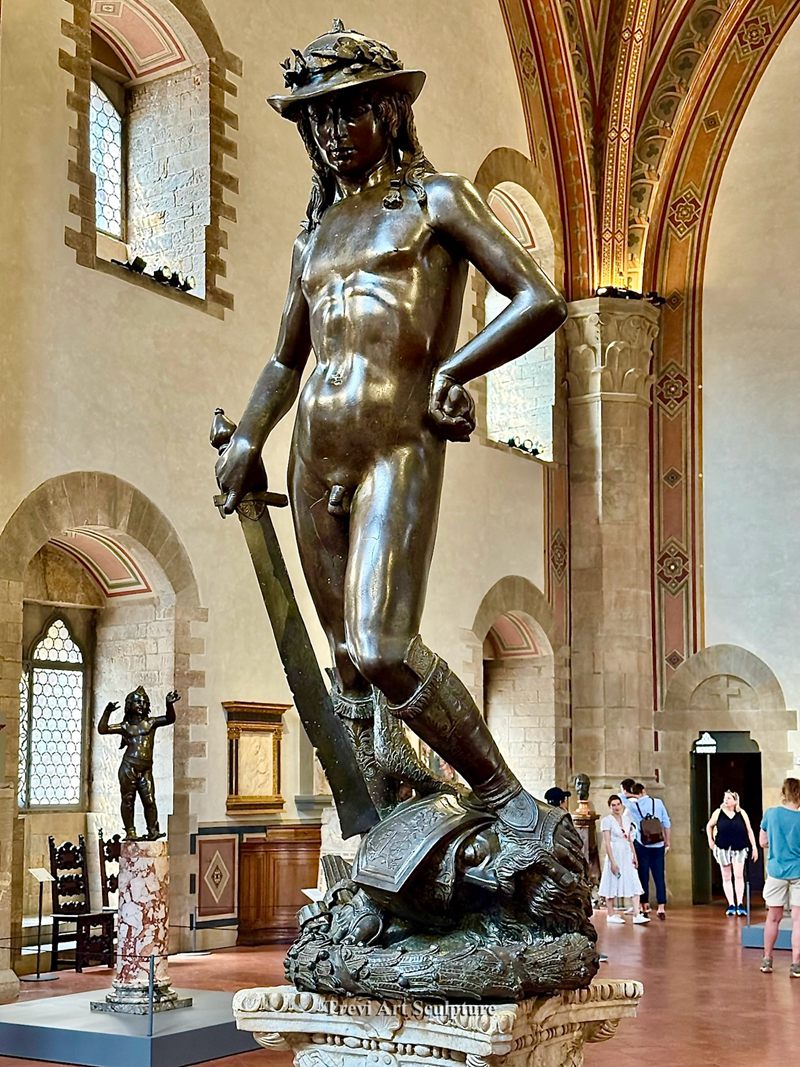
David – Donatello
Material: Bronze
Current Location: Bargello Museum, Florence
Description: The first life-size nude sculpture of the Renaissance. It depicts the young David in a relaxed and self-assured pose, standing on his enemy’s head after defeating Goliath. Characterized by an elegant and realistic style, the sculpture captures the relaxed and composed demeanor of the young David after slaying the giant. With a slender, graceful physique and a calm, confident expression, it echoes the simple beauty of ancient Greek sculpture and laid an important foundation for the development of figurative sculpture in later generations. Learn More: David Donatello Sculpture: History, Craftsmanship, and Legacy
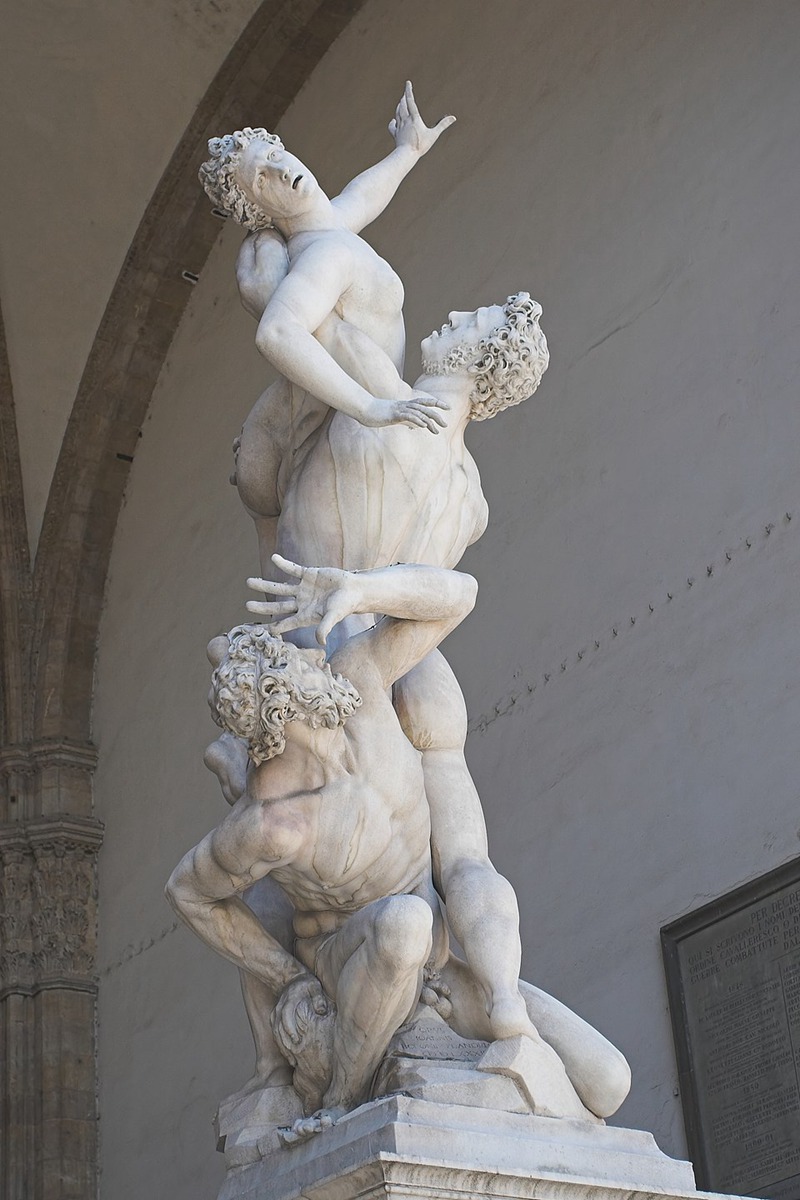
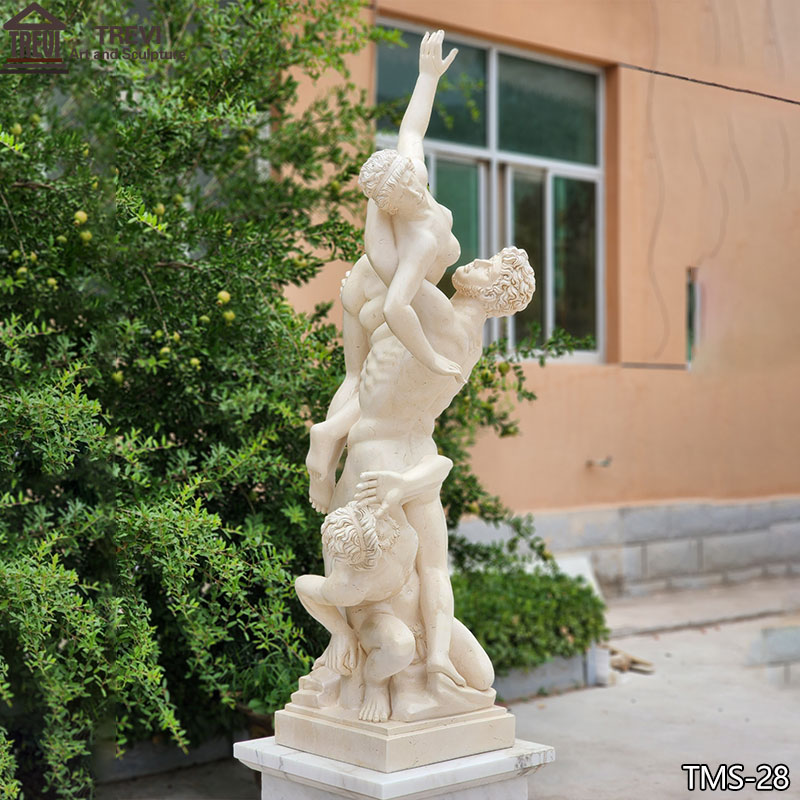
The Rape of the Sabine Women – Giambologna
Material: Marble
Current Location: Loggia dei Lanzi, Florence
Description: A masterpiece of Mannerist sculpture. It depicts the mythical moment when the Romans abducted the Sabine women. The three figures spiral upward in an intertwined dynamic, requiring a 360-degree view to fully appreciate the composition. This work pioneered multi-perspective composition and influenced Baroque art.
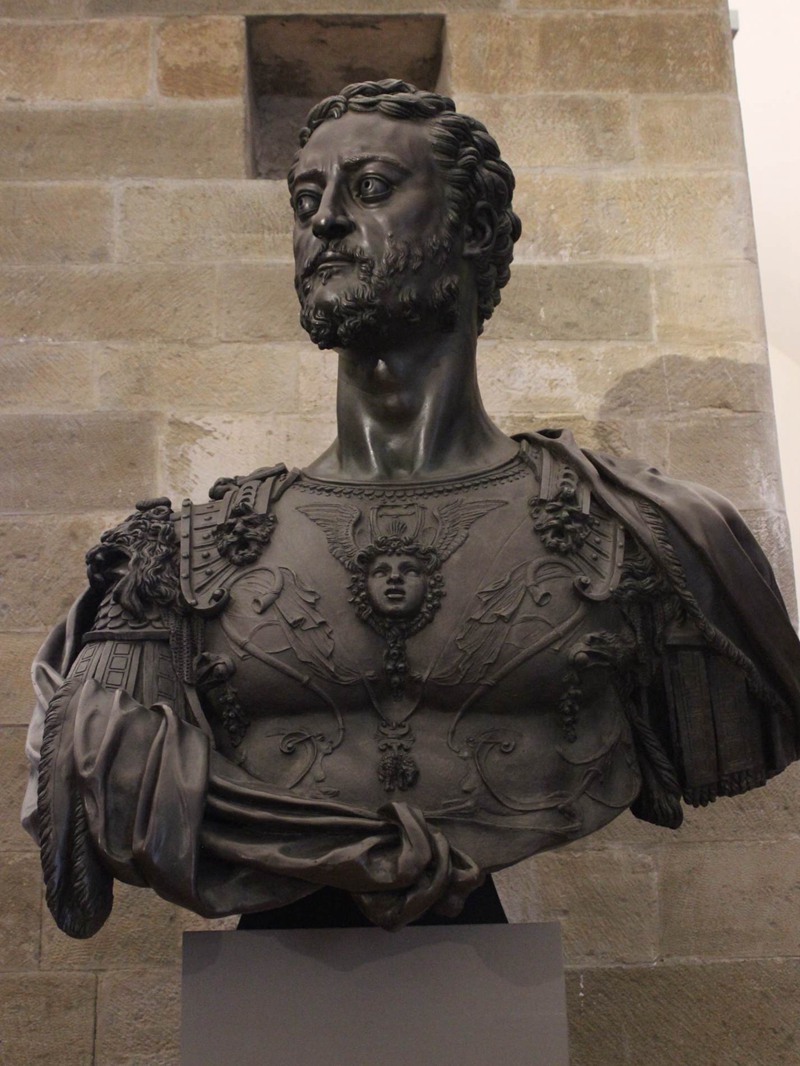
Bust of Cosimo I (Duke Cosimo I) – Benvenuto Cellini
Material: Bronze
Current Location: Bargello Museum, Florence
Description: A portrait of Cosimo I, Duke of Florence. Clad in Roman-style armor, he wears a dignified expression and stands in a solemn pose. The lion relief on his shoulder symbolizes power, blending classical style with realistic craftsmanship.
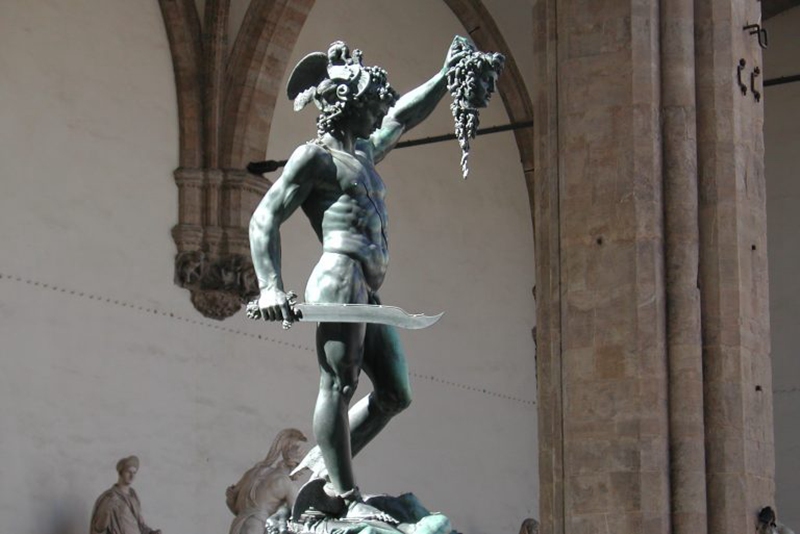
Perseus with the Head of Medusa – Benvenuto Cellini
Material: Bronze
Current Location: Loggia dei Lanzi, Florence
Description: A masterpiece that took Cellini ten years to complete. Cast using the lost-wax technique, it features exquisite detail, with the serpentine hair and bloodstains rendered with lifelike realism. Symbolizing the authority of the Medici family, it stands as a benchmark of Renaissance bronze art.
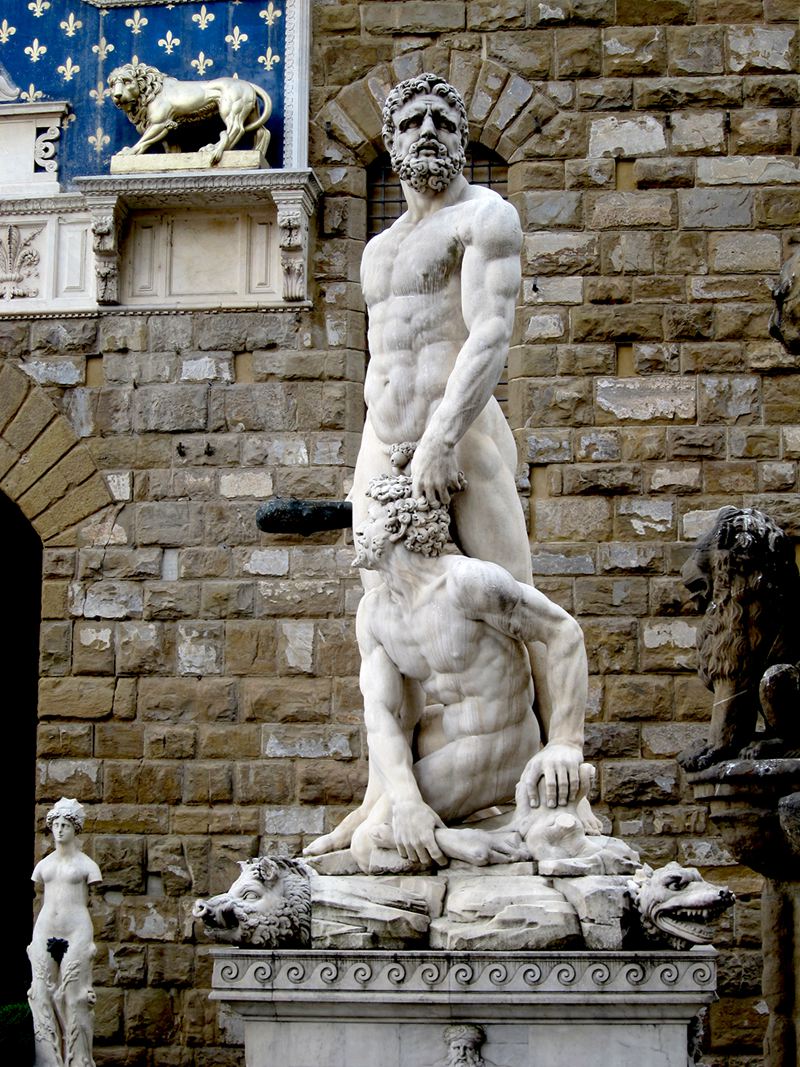
Hercules and Cacus – Baccio Bandinelli
Material: Marble
Current Location: Piazza della Signoria, Florence
Description: Facing Michelangelo’s David. Depicts the scene of Hercules subduing the fire-breathing giant Cacus. With exaggerated musculature and a powerful presence, the sculpture symbolizes the return of the Medici family’s power.
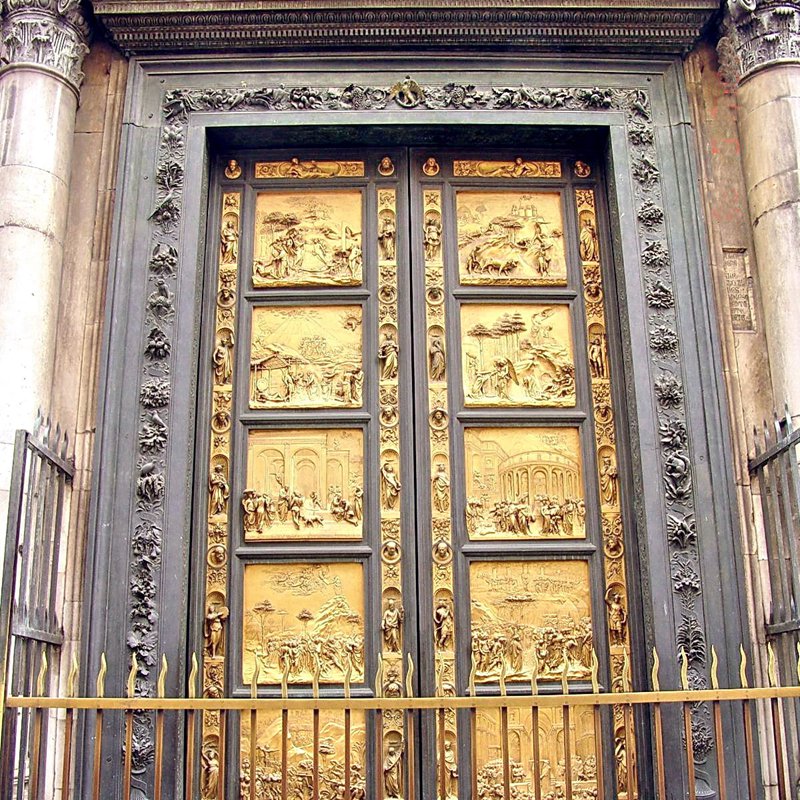
The Gates of Paradise – Lorenzo Ghiberti
Material: Gilded bronze
Current location: Baptistery of San Giovanni, Florence
Description: Named “The Gates of Paradise” by Michelangelo. Consisting of 10 relief panels depicting stories from the Old Testament. Employing perspective and bas-relief techniques, the work possesses a powerful sense of space and represents the pinnacle of narrative sculpture in the early Renaissance. Learn More: The Gates of Paradise: Everything about Lorenzo Ghiberti’s Masterpiece
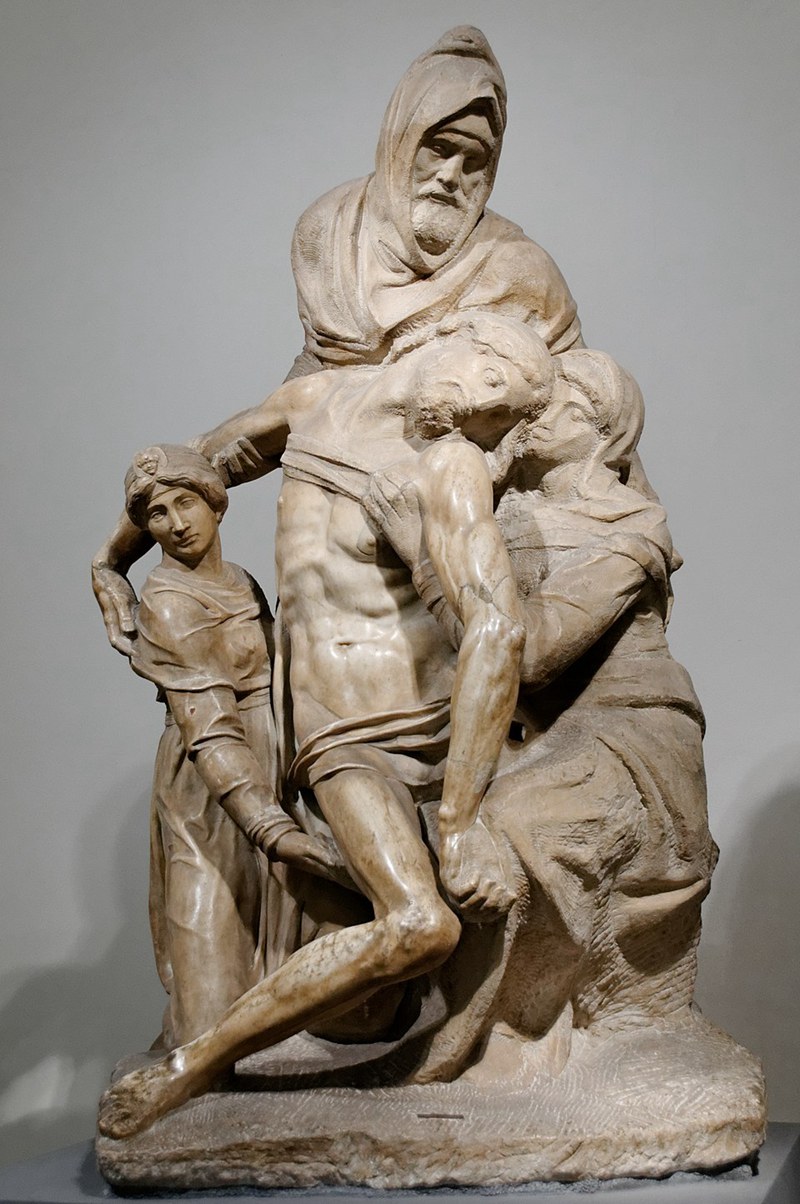
The Deposition – Michelangelo
Material: Marble
Current Location: Museo del Duomo, Florence
Description: Part of Michelangelo’s unfinished “Pietà” series from his later years. It depicts the scene of Christ being taken down from the cross. The composition is compact, the figures are filled with sorrow, and the style shifts from classical harmony to a profound, introspective depth, brimming with tragic power. This work is characterized by a somber and weighty style, with the figures’ bodies tightly intertwined and their expressions filled with grief. The sculptural technique is bold yet restrained, revealing the master’s profound reflections on life and suffering in his later years, and imbued with a strong sense of tragic artistry.
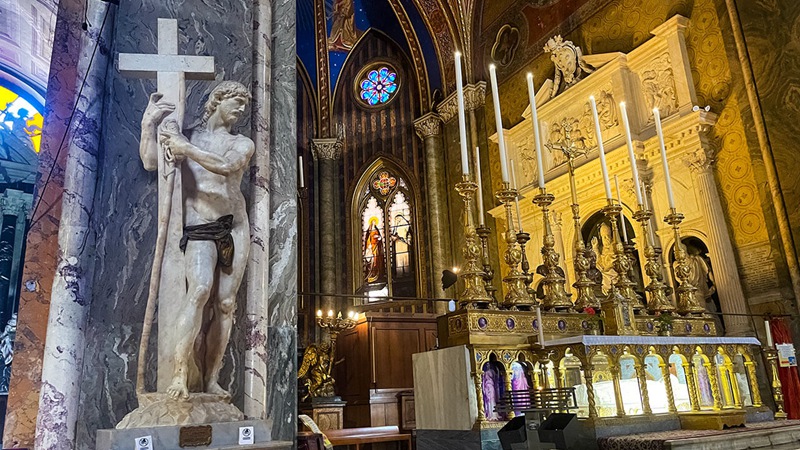
Christ the Redeemer
Material: Marble
Description: Christ holds the cross, his posture steady and resolute. The anatomical rendering is precise, and his solemn expression conveys a sense of the sacred mission of redemption, embodying the Renaissance fusion of the divine and the human.
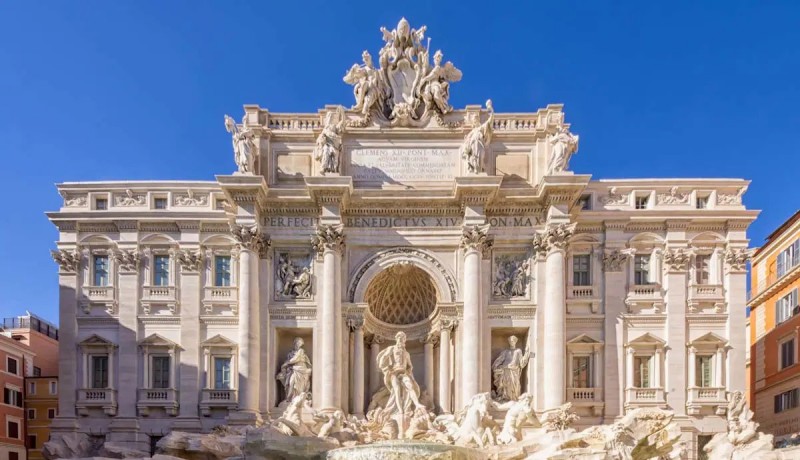
Oceanus of the Trevi Fountain
Material: Marble
Current Location: Trevi Fountain, Rome
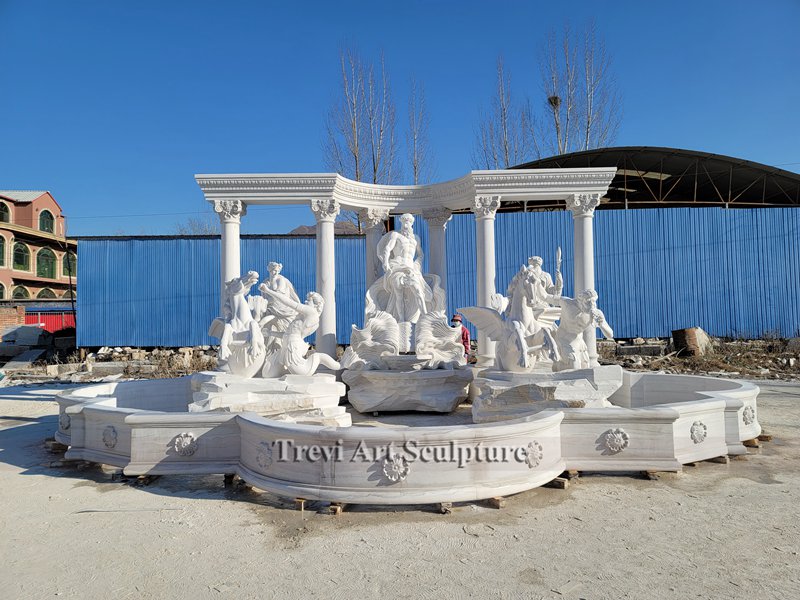
Located at the center of Rome’s Trevi Fountain, this marble sculpture was completed under the supervision of Pietro Bracci. Although it was ultimately completed during the Baroque period, its overall design draws upon the classical aesthetics of the Renaissance. The sculpture’s central figure, Oceanus, stands atop a conch-shell chariot drawn by seahorses, flanked by sculptures of Tritons and mermaids. The waves are rendered with grand scale and dynamic energy. Blending imagery from classical mythology with the solemn symmetry of the Renaissance and the dynamic splendor of the Baroque, this sculpture stands as a landmark water feature in Rome. Learn More: Exploring the Mythological Statue of the Trevi Fountain
Renaissance sculptures didn’t just wow people in their own time—they changed the way artists think about art forever. By focusing on lifelike human forms, balanced proportions, and real emotion, these masterpieces set the bar for generations to come. From the dramatic heroes of marble to delicate bronze figures, their influence can be seen in Baroque, Neoclassical, and even modern sculpture. Simply put, they taught the world how to bring art to life.
FAQ
Q1: What defines a Renaissance sculpture?
A Renaissance sculpture emphasizes realism, proportion, and the beauty of the human form. Artists studied anatomy, perspective, and classical art to create works that balanced naturalism with idealized beauty. Marble and bronze were the most common materials.
Q2: Who are the most famous Renaissance sculptors?
Some of the most renowned sculptors include Michelangelo, Donatello, Benvenuto Cellini, Giambologna, Lorenzo Ghiberti, and Baccio Bandinelli. Each brought their own style and innovation, from Michelangelo’s detailed anatomy to Ghiberti’s intricate bronze panels.
Q3: Why is Michelangelo’s David so famous?
Michelangelo’s David is celebrated for its perfect proportions, lifelike detail, and representation of human strength and intelligence. It became a symbol of Florence and Renaissance artistic achievement.
Q4: How were large bronze sculptures made in the Renaissance?
Renaissance bronze sculptures were typically created using the lost-wax casting method. Artists first sculpted a model in wax, covered it with clay, and then heated it to melt the wax, leaving a mold. Molten bronze was then poured into the mold to create the final sculpture.
Q5: Where can I see Renaissance sculptures today?
Many masterpieces are housed in Italy, especially in Florence, Rome, and Venice. Key locations include the Galleria dell’Accademia, the Uffizi Gallery, Piazza della Signoria, and St. Peter’s Basilica. Some works have replicas around the world for museums and collectors.
Q6: Can Renaissance sculptures inspire modern home decor?
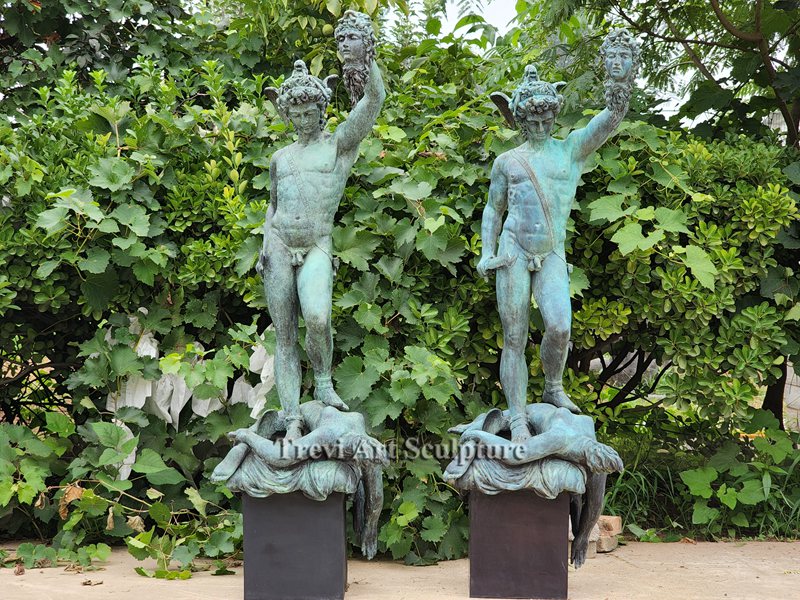
Absolutely! Many collectors and enthusiasts use replicas of Renaissance sculptures to decorate gardens, courtyards, or interior spaces. Iconic works like David, Perseus with Medusa, or angelic figures can bring classical elegance and artistic heritage into modern living spaces.
Q7: Are there any famous myths depicted in Renaissance sculptures?
Yes, many Renaissance sculptures draw from mythology, such as Cellini’s Perseus with the Head of Medusa, Giambologna’s Rape of the Sabine Women, and Bandinelli’s Hercules and Cacus. These works combine humanism, drama, and intricate detailing to bring ancient stories to life.


