
The winged lion is one of the most iconic and powerful mythical creatures found in art, architecture, and ancient symbolism. With its majestic wings and lion’s body, it has inspired awe for centuries. Let’s explore its origins, meaning, and the artistic mastery behind these remarkable sculptures, before introducing how our life-size and large bronze winged lion sculptures can bring this timeless symbol of strength and grandeur into your space.
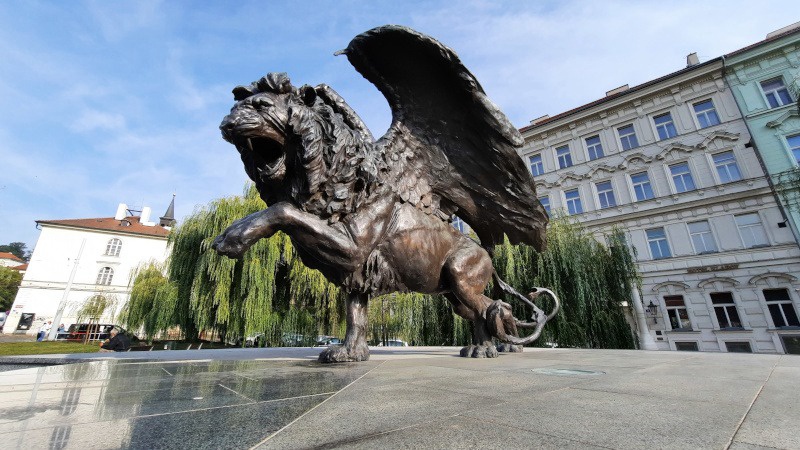
What Is a Winged Lion?
A winged lion is a mythological creature that combines the body of a lion with the wings of an eagle. The lion, traditionally a symbol of strength and courage, is paired with the wings of an eagle, which often represent divine intervention, power, and transcendence. The fusion of these two mighty symbols creates a creature that embodies both earthly strength and heavenly power.
The winged lion is often depicted in ancient art, literature, and religious contexts, signifying the dominance of a ruler or god. Its powerful and majestic appearance has made it an enduring symbol of strength, protection, and wisdom in various cultures.
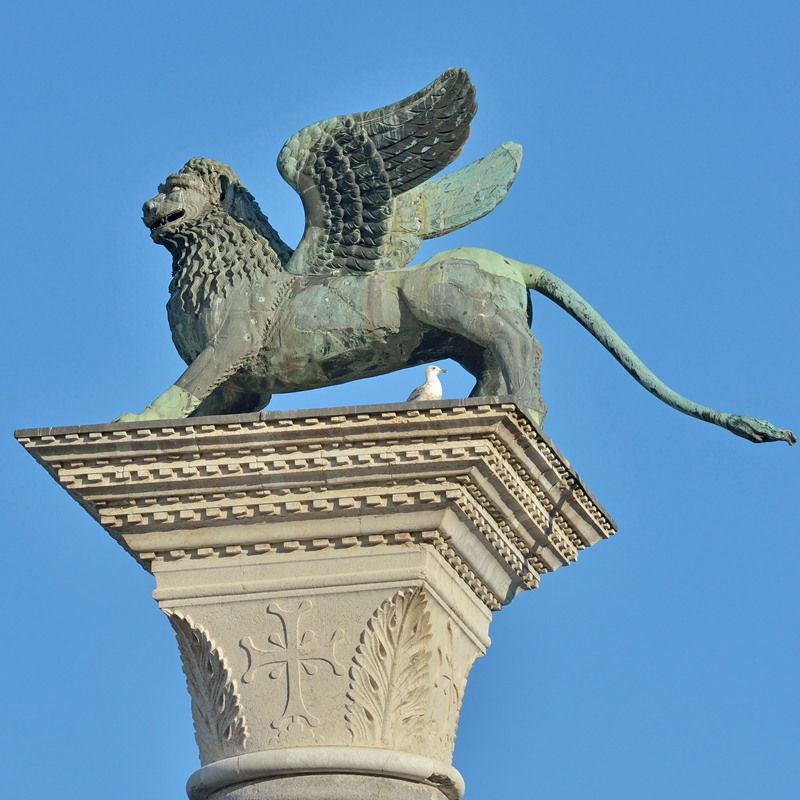
Where Did the Winged Lion Originate?
The winged lion can trace its roots back to several ancient civilizations, but it is most notably associated with the Mesopotamian and Persian empires. The Assyrians and Babylonians famously used the winged lion as a symbol of divine protection and royal authority. The Persian Empire also adopted the image, where the lion represented kingship and the divine right to rule.
One of the earliest known depictions of the winged lion can be found in the ruins of Nineveh, the capital of the ancient Assyrian empire. It was often seen in monumental reliefs and sculptures, meant to symbolize the strength and divine protection that the king enjoyed. The winged lion has also appeared in Egyptian, Greek, and Roman cultures, where it continued to symbolize power, protection, and divinity.
What Does the Winged Lion Symbolize?
The winged lion represents a fusion of strength, divinity, and protection. The lion is a symbol of physical power, courage, and royalty, while the wings represent the divine or celestial realm, symbolizing transcendence, wisdom, and guidance.
In many cultures, the winged lion is believed to act as a guardian or protector. It symbolizes the ability to conquer obstacles and rise above challenges, with the wings representing the power to transcend earthly struggles. It’s often used in religious or royal contexts, representing a connection between the divine and the earthly realms.
For example, in the Babylonian and Assyrian cultures, the winged lion represented royal power and the gods’ favor. In ancient Egypt, winged lions often appeared as guardians of tombs, protecting the deceased in their journey to the afterlife.
Are There Famous Winged Lion Sculptures?
Lion of Saint Mark
Location: End of the Finikoudes promenade, in front of the pier at the square of the Medieval Castle (Fort), Larnaca, Cyprus.
Description: The Lion of Saint Mark symbolizes Saint Mark, the patron saint of Venice. It is a prominent emblem of the Venetian Republic and can be found across various locations in Venice, especially on flags and monuments. In Larnaca, it’s part of the city’s historical connection to the Venetian era and adds to the cultural significance of the region.
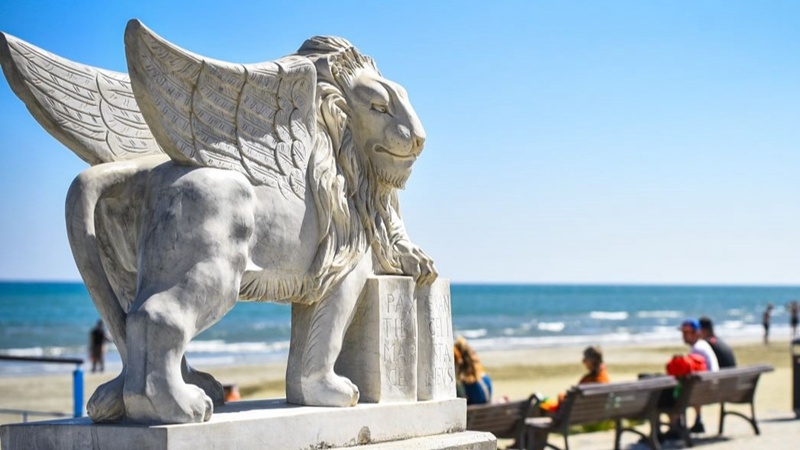
Lamassu/Shedu
Location: British Museum, London (originally from Nineveh, Iraq).
Description: The Lamassu (or Shedu) is a winged lion or bull with a human head, typically depicted with five legs to appear both standing and walking. It served as a protective deity in Assyria, guarding the entrances to palaces and cities, warding off evil spirits, and symbolizing the strength and power of the ruling monarchs.
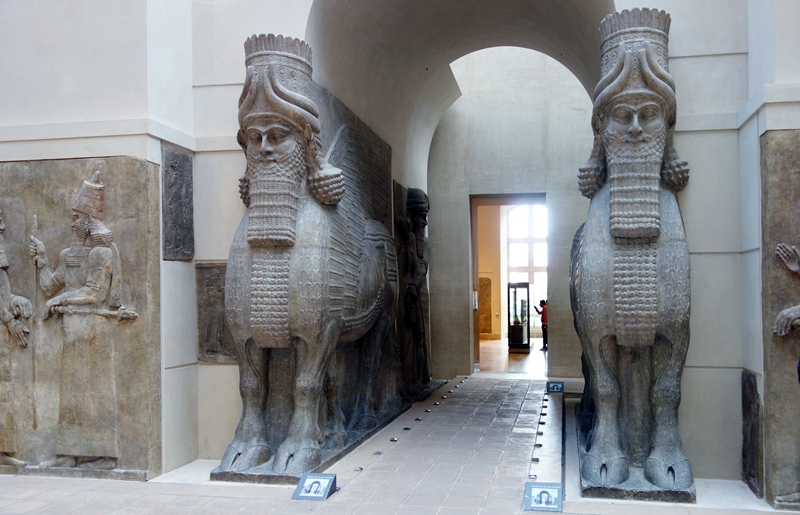
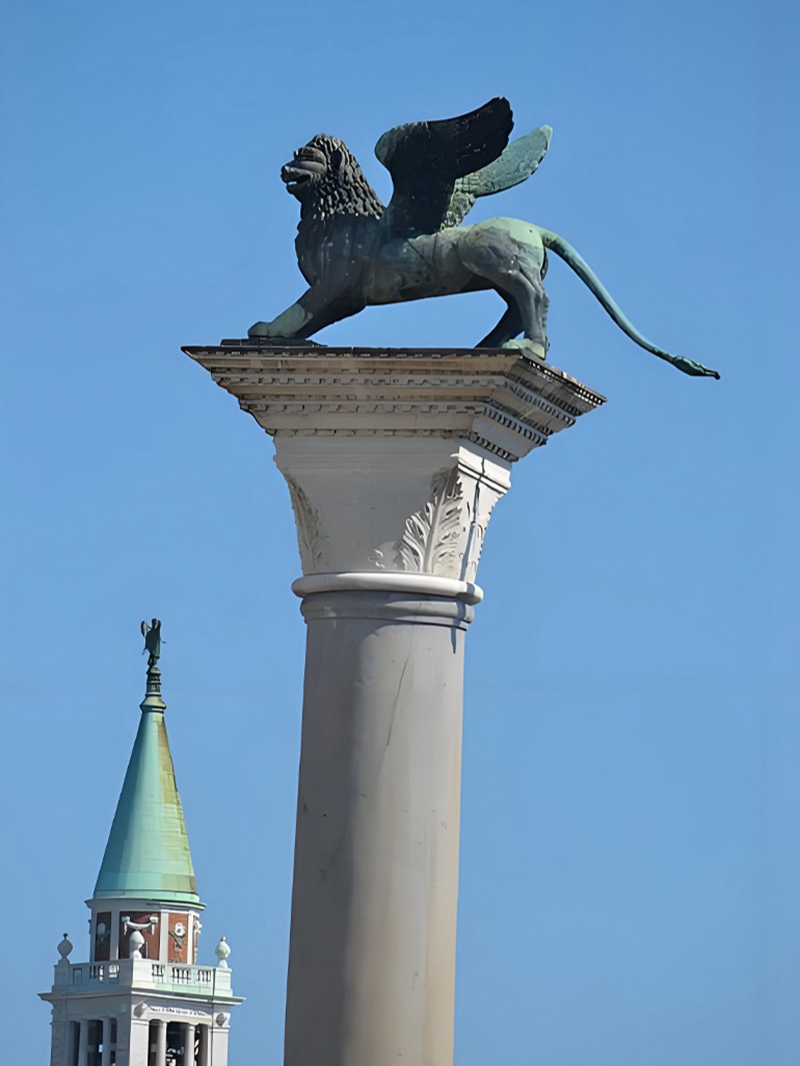
Venice Statue (The Lion of Venice)
Location: Piazza San Marco, Venice, Italy.
Description: This famous bronze winged lion is believed to be a reassembled Tang Dynasty-era tomb guardian. The statue highlights the ancient Silk Road connections between Venice and China. The winged lion, which represents Saint Mark, is an important cultural and religious symbol in Venice and is displayed in the city’s central square, emphasizing the city’s legacy and global influence.
What’s the Difference Between a Winged Lion and a Griffin?
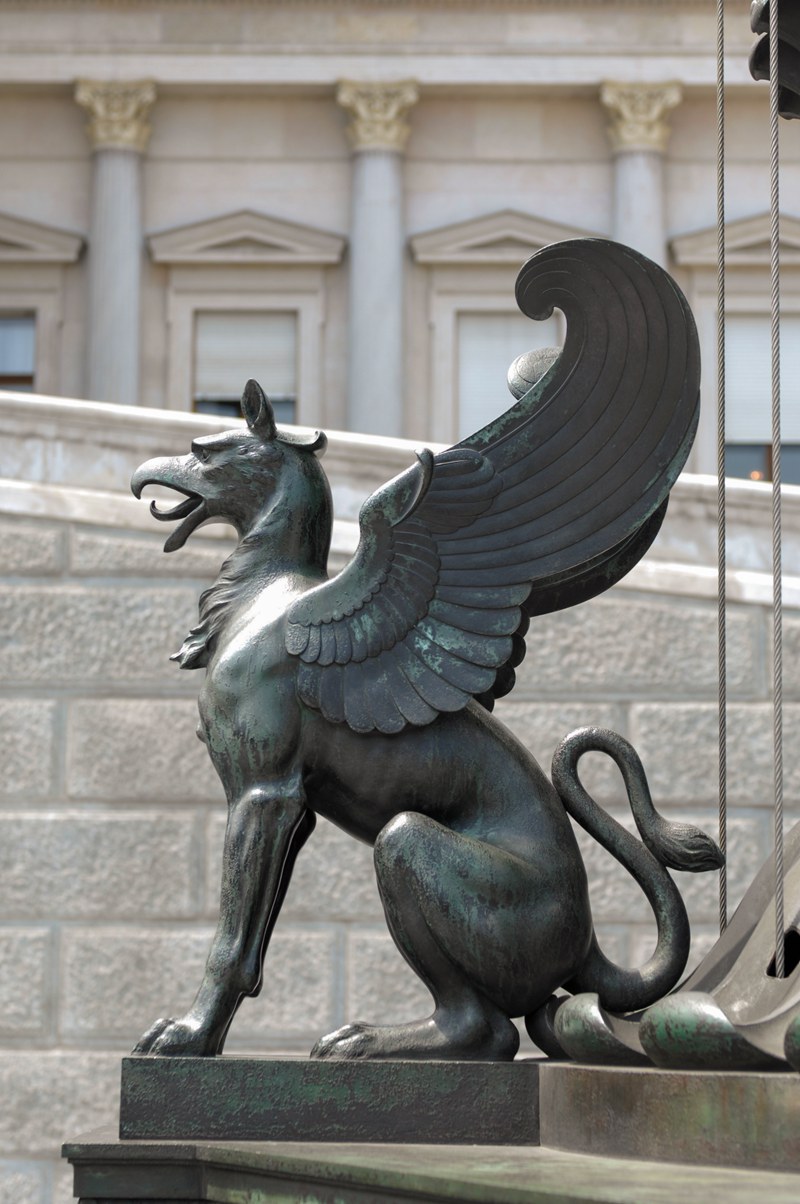
Here’s a table summarizing the key differences between the Winged Lion and the Griffin:
| Feature | Winged Lion | Griffin |
| Appearance | Lion’s body with eagle wings | Lion’s body with eagle’s head and wings |
| Symbolism | Strength, royalty, protection, divinity | Protection, vigilance, wisdom, safeguarding treasures |
| Cultural Significance | Used in Persia, Venice, and Assyria as a guardian and symbol of divine kingship | Known in Greek mythology and ancient Egypt as a protector of gods and royalty |
| Main Focus | Sovereignty and divine kingship | Watchfulness and guarding sacred places |
If you’d like to learn more about Griffin, please read this article: The Griffin: A Mythical Creature from Antiquity to the Modern Era
What Materials Are Used in Winged Lion Sculptures?
Winged lion sculptures are created in a variety of materials depending on their intended purpose and the artist’s skill. Some of the most common materials used include:
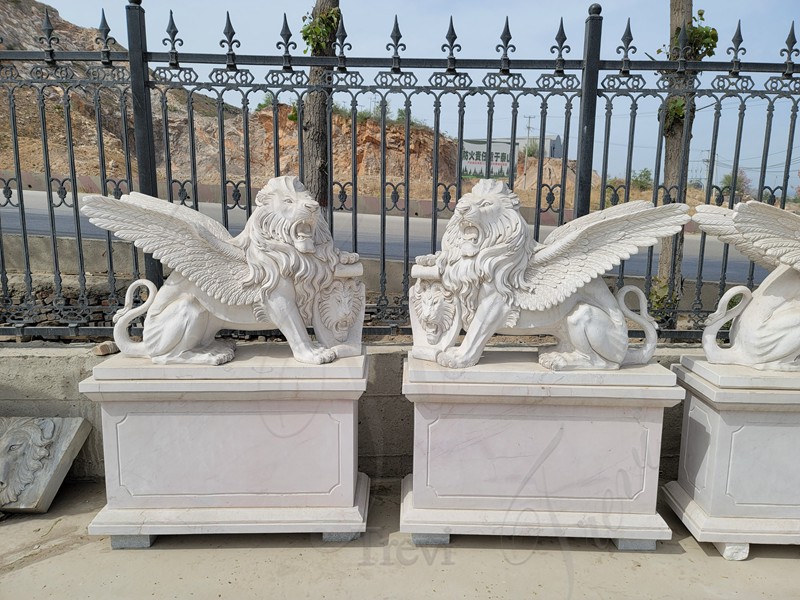
Stone: In ancient times, winged lions were often carved from durable stones such as limestone, marble, or basalt. These materials allowed the sculptures to withstand the elements and retain their grandeur over time.
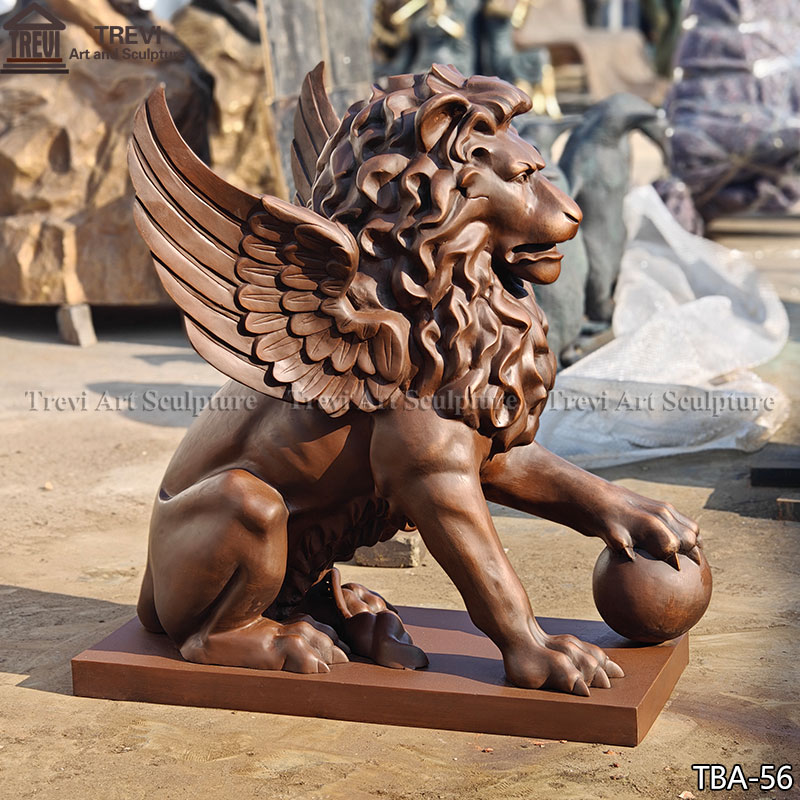
Bronze: Bronze is a popular material for creating both life-size and large winged lion sculptures today. The metal’s durability, ability to capture intricate details, and timeless appeal make it a favorite for modern artists and collectors alike. A bronze winged lion can be cast to achieve lifelike textures, from the sharpness of the lion’s mane to the delicate feathers of the wings.
Wood: In some cultures, particularly in Asia and Europe, wood has been used to craft winged lion sculptures, often for ceremonial or decorative purposes. Though more fragile, wood can create a warm and organic representation of the creature.
Where Are Winged Lion Sculptures Displayed?
Winged lion sculptures are typically displayed in areas that reflect their symbolism of strength, protection, and grandeur. Some common locations include:
Gardens and Parks: Many people display life-size winged lion sculptures in their gardens, estates, or parks. These statues make a bold statement and can serve as a focal point for outdoor spaces.
Royal Palaces and Historical Sites: Historically, winged lion sculptures were placed at the entrances of palaces or temples as a guardian figure. Today, replicas of these sculptures continue to adorn royal properties, historical landmarks, and museums.
Public Squares and Monuments: Winged lions can be seen in public monuments around the world, where they symbolize protection, power, and dignity.
Private Collections: Winged lion sculptures also make an extraordinary addition to private collections, especially for those who appreciate ancient symbolism and artistic mastery.
Final Thought
The winged lion is more than just a mythical creature—it’s a symbol of strength, protection, and divine power that has transcended cultures and centuries. Whether you are looking to enhance your garden with a life-size bronze winged lion sculpture or add a larger-than-life monument to a public space, our custom bronze sculptures offer a way to bring this timeless symbol into your life.
FAQ
What is the Significance of the Winged Lion in Different Cultures?
The winged lion has diverse meanings depending on the culture. The winged lion often embodies a mix of earthly strength and heavenly power, making it a universal symbol of protection, wisdom, and authority.
How Do Winged Lion Sculptures Protect Spaces?
Winged lions were historically used as guardians of temples, gates, and royal palaces. The combination of the lion’s strength and the wings’ divine symbolism made them powerful protectors. Today, they continue to be seen as symbols of protection for homes, gardens, and public spaces, standing as mighty figures that represent both physical strength and spiritual safeguarding.
Are Winged Lion Sculptures Made for Outdoor Use?
Yes, bronze winged lion sculptures are perfect for both indoor and outdoor spaces. The durability of bronze makes it an excellent choice for outdoor environments, where it can withstand the elements while maintaining its grandeur.
What’s the Typical Size of a Winged Lion Sculpture?
Winged lion sculptures can range from life-size (around 5-6 feet tall) to larger-than-life sculptures that exceed 10 feet in height. The size can be customized to fit the intended space, whether it’s for a private estate, a grand entrance, or a monumental installation.
How Do I Purchase a Winged Lion Sculpture for My Space?
If you’re interested in a custom bronze winged lion sculpture for your space, simply contact us. Our team will guide you through the process, from design to installation, ensuring that you get a piece that perfectly suits your needs and enhances your environment.


