When you think of David, Michelangelo’s towering marble giant probably comes to mind first. But decades before Michelangelo ever picked up a chisel, a Florentine sculptor named Donatello had already reinvented the biblical hero in bronze — and changed the course of Western art forever.
A Revolutionary Figure in a Revolutionary Era
Donato di Niccolò di Betto Bardi — known simply as Donatello (c. 1386–1466) — was one of the most innovative artists of the Italian Renaissance. Trained in the workshop of Lorenzo Ghiberti (the man who later crafted the famous “Gates of Paradise” for the Florence Baptistery), Donatello quickly surpassed his master in ambition and originality.
While many of his contemporaries were still painting flat, stylized figures, Donatello was breathing life into stone and metal. He studied classical antiquity with a passion that bordered on obsession, and his sculptures bridged the gap between the medieval world and the modern one.
At the heart of his oeuvre stands one of the most daring works ever created: David.
The First David: Marble (c. 1408–1409)
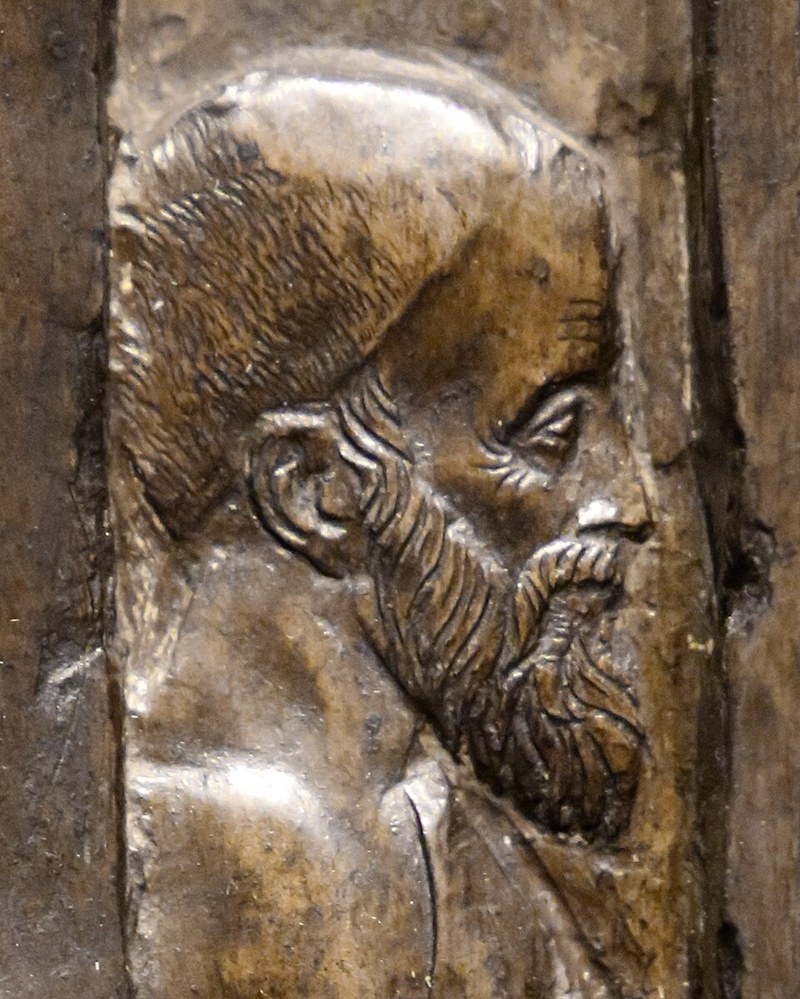
Donatello’s first David was commissioned around 1408–1409 for the Florence Cathedral (the Duomo). Carved from a single block of Carrara marble, this version stands approximately 191 cm (6 ft 3 in) tall.
What Makes It Special?
This David is not the triumphant warrior you might expect. Instead, Donatello chose to depict the moment after the battle — a young shepherd boy, slightly effeminate, with a serene and almost dreamy expression. One foot rests casually on Goliath’s severed head, and the sword hangs loosely at his side.
This was radical. In the medieval tradition, David was always shown as a muscular, fully grown king. Donatello turned him into a nude adolescent — the first free-standing nude male sculpture created since antiquity. It was a bold statement about the beauty of the human form and a deliberate nod to classical Greek and Roman ideals.
The figure wears a broad-brimmed hat and boots, and Goliath’s head lies at his feet with a faint, almost peaceful expression — as if even death has been conquered.
The Second David: Bronze (c. 1440s)
If the marble David was bold, the bronze David (created c. 1440s, likely for the Medici family) was downright scandalous.
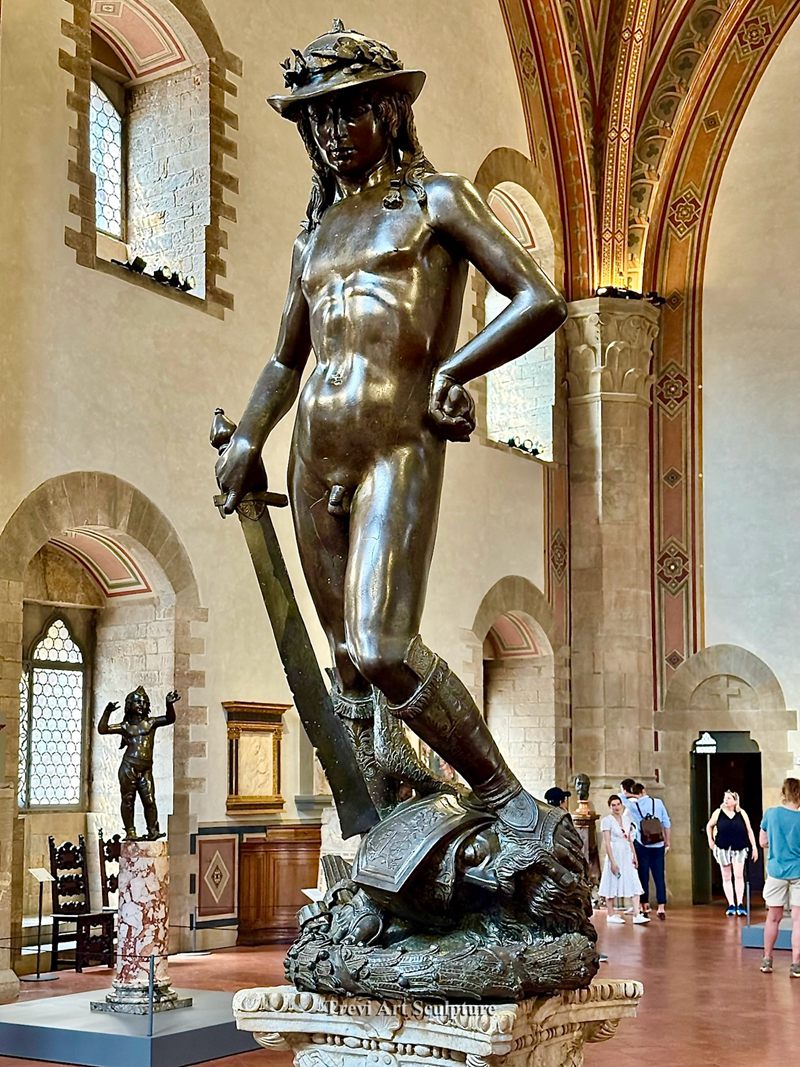
This is the version most people picture when they hear “Donatello’s David” — and for good reason. It is arguably the first free-standing nude sculpture since ancient Rome, and it shattered every convention of its time.
The Visual Shock
Standing just 158 cm (5 ft 2 in) tall, this David is a lithe, androgynous youth. His body is relaxed in a contrapposto stance — weight shifted to one leg, the other crossed casually over the front. He holds Goliath’s sword in one hand and rests the other on his hip.
But the most shocking detail? He is completely naked.
In 15th-century Florence, this was unheard of. The nudity wasn’t just artistic — it was political. The sculpture was made for the Medici Palace courtyard, and scholars believe it carried homosexual undertones. David was a symbol of the underdog, the outsider who triumphs through wit rather than brute strength — a figure that resonated deeply with the Medici family’s self-image as clever rulers who rose to power through intelligence, not just force.
The bronze also features incredible surface detail:
- Feathered boots that look almost soft to the touch
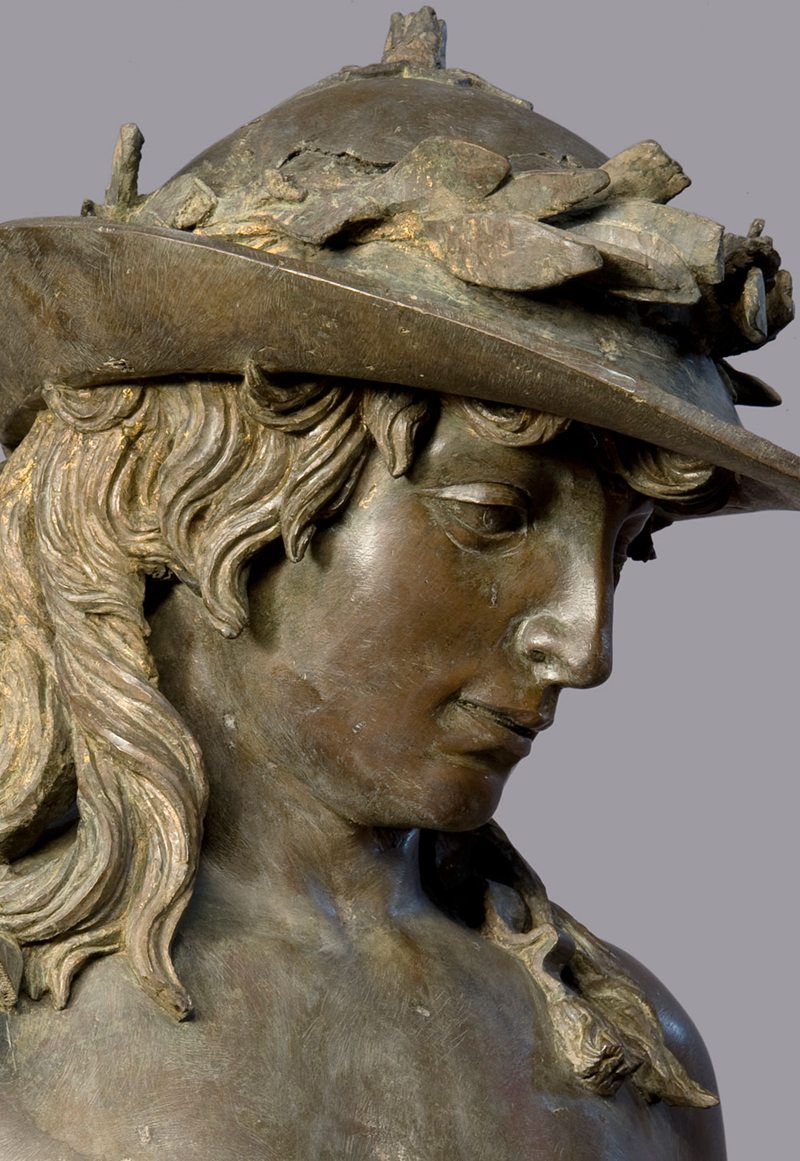
- Curling hair rendered with astonishing precision
- A laurel wreath crowning the head
- Goliath’s head between David’s legs (a detail that has sparked endless debate about its symbolic meaning)
The Craftsmanship: How Did Donatello Do It?
Donatello was a master of multiple media — marble, bronze, wood, terracotta — and his technical skill was legendary.
Marble Technique
For the marble David, Donatello used a method called “non-finito” (unfinished) in some areas, leaving parts of the stone rough to create contrast with the polished figure. This technique added a sense of movement and energy to the sculpture, as if the figure were emerging from the stone itself.
He also paid obsessive attention to anatomical detail — the softness of the youth’s skin, the delicate folds of the hat, the tension in the hands. Every surface tells a story.
Bronze Casting
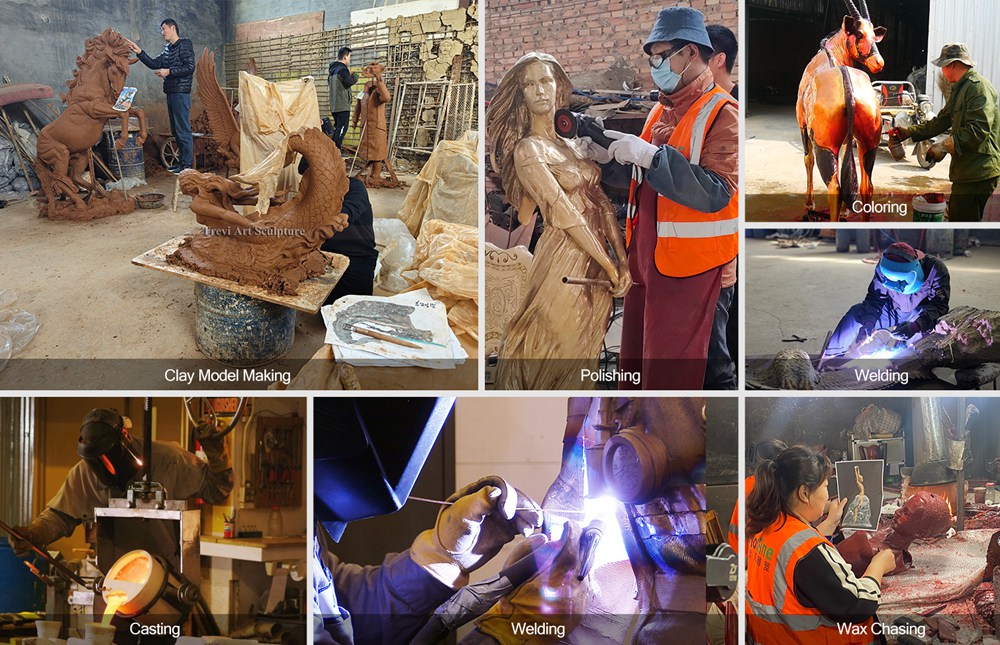
The bronze David was created using the lost-wax (cire perdue) casting method — one of the most complex metallurgical techniques of the time. Here’s how it worked:
- A clay core was sculpted in the shape of the figure.
- Wax was applied over the clay to create the final surface detail.
- The wax model was then covered in a heat-resistant mold (usually clay and plaster).
- The mold was heated, melting the wax, which drained out through channels — hence “lost wax.”
- Molten bronze (around 1,000°C) was poured into the empty cavity.
- Once cooled, the outer mold was broken away, revealing the bronze sculpture.
- Final chasing and patina gave the surface its luminous, golden-brown finish.
The result? A sculpture so lifelike that viewers often forget they’re looking at metal, not flesh.

The Legacy: Why Donatello’s David Still Matters
Donatello’s David didn’t just change sculpture — it changed how we think about art, the body, and power.
Influence on the Renaissance
Donatello’s work directly inspired:
| Artist | Connection |
|---|---|
| Michelangelo | His famous David (1501–1504) is often seen as a direct response, where Donatello’s David is youthful and sensuous, Michelangelo’s is muscular and heroic. Together, they represent two sides of the same coin. |
| Verrocchio | Created his own bronze David (c. 1470s), clearly influenced by Donatello’s version. |
| Andrea del Castagno | Painted a famous David with the Head of Goliath (c. 1450), echoing Donatello’s composition. |
A Symbol of Florence
Both versions of David became symbols of the Florentine Republic — the idea that even a small city could defeat a giant through courage, intelligence, and divine favor. The marble David originally stood in the Palazzo Vecchio (Florence’s town hall), a constant reminder of civic virtue.
A Queer Icon
In recent decades, Donatello’s bronze David has been reclaimed as a queer masterpiece. Its nudity, its androgyny, and its unabashed celebration of male beauty have made it a powerful symbol for LGBTQ+ communities. It reminds us that art has always been a space for identity, desire, and resistance — even 600 years ago.
Where to See Them Today
| Version | Location |
|---|---|
| Marble David (1408–1409) | Museo Nazionale del Bargello, Florence, Italy 🇮🇹 |
| Bronze David (c. 1440s) | Museo Nazionale del Bargello, Florence, Italy 🇮🇹 |
(Yes, both are in the same museum — the Bargello is a must-visit for any art lover!)
Final Thoughts: The Boy Who Changed Everything
Donatello’s David is more than a sculpture. It’s a manifesto.
It says: The human body is beautiful. Youth is powerful. The underdog can win. And art should dare to show what others are afraid to see.
Long before Michelangelo made David famous, Donatello made him human — fragile, sensual, and utterly unforgettable.
If you ever stand in front of that bronze figure in the Bargello, take a moment. Look at the relaxed posture. The gentle smile. The way one hand rests so casually on a hip that once changed the world.
As an iconic masterpiece of the Renaissance, Donatello’s sculpture of David has retained its charm throughout the ages. Art lovers, collectors, and architects around the world are captivated by it. Our custom bronze statue foundry employs professional and refined techniques and specializes in recreating classic Renaissance sculptures. Please feel free to contact us at any time to commission your very own David sculpture and own a timeless treasure of classical art.