
A life-size bronze horse statue typically stands between 60 and 80 inches (5–6.5 feet) at the head, matching the scale of an actual adult horse, and weighs anywhere from 300 to over 800 lbs depending on the pose and casting thickness. The right size for your space depends less on a fixed rule than on three things: the horse’s pose, the viewing distance around it, and the scale of the landscape or architecture it sits in.
This guide walks through standard bronze horse statue dimensions, how pose affects perceived size, and how to match a size to a ranch, garden, estate, or public space — including when a custom size makes more sense than a stock one.
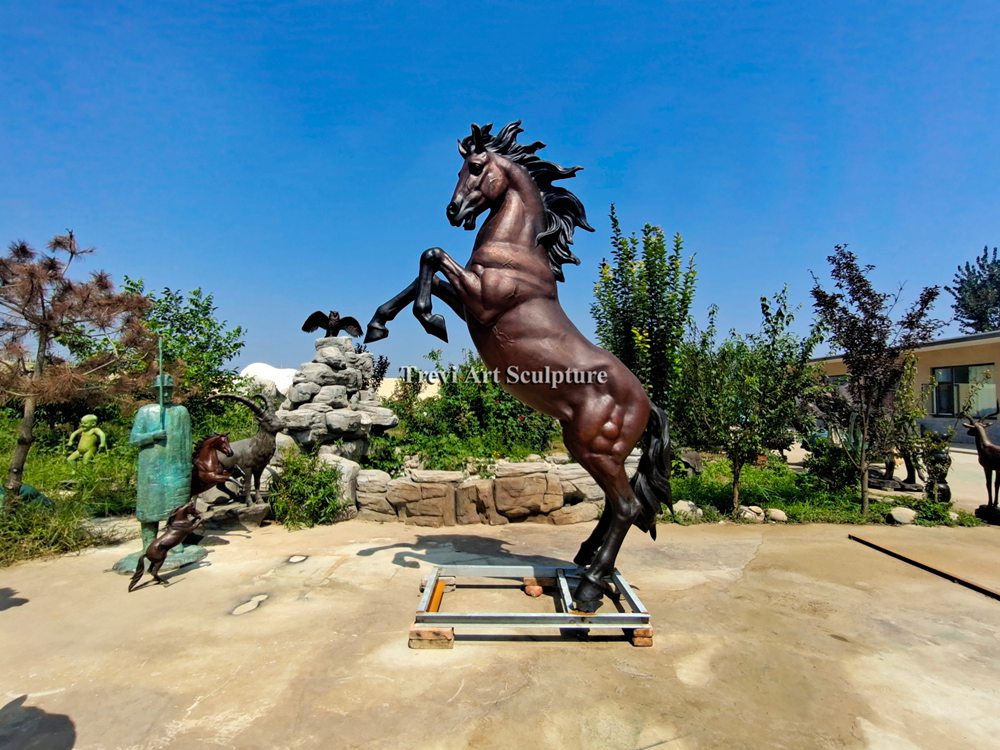
What “Life-Size” Actually Means for a Bronze Horse
“Life-size” doesn’t mean one fixed number — it means the sculpture is cast at the same scale as a real horse of that breed and age. An adult horse stands roughly 60–68 inches at the shoulder (14–16 hands), so a true life-size standing bronze horse lands in that same range, often measured slightly taller — 67–75 inches — because the head and neck rise above shoulder height.
Poses change this significantly:
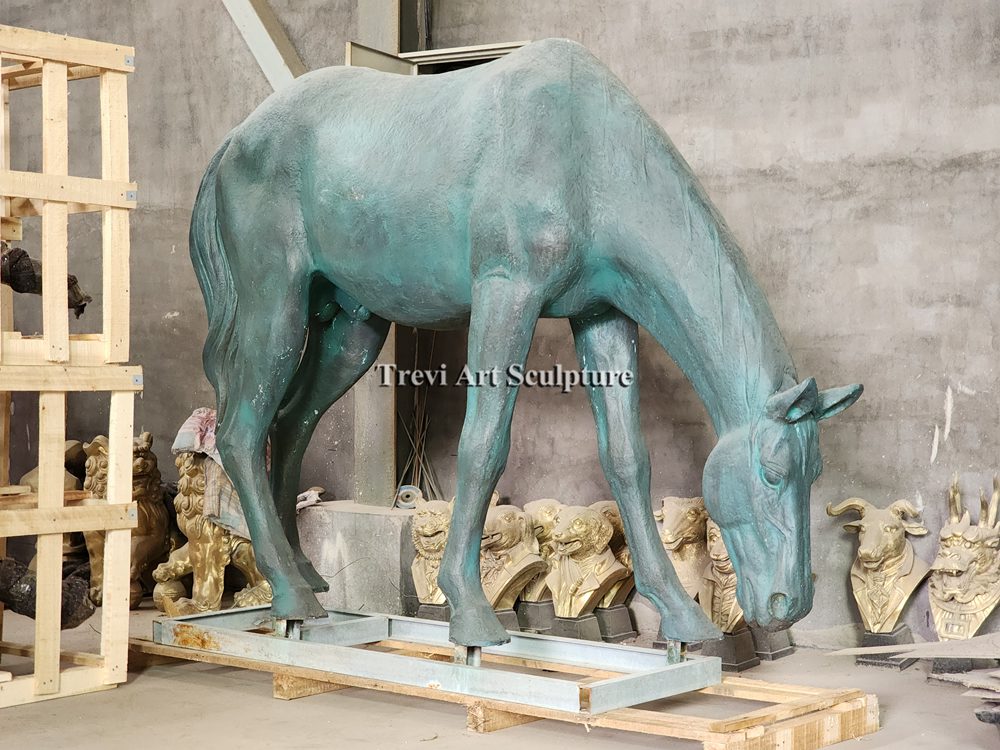
- Grazing horse (head lowered): often measured shorter, around 55–71 inches, since the head drops toward the base.
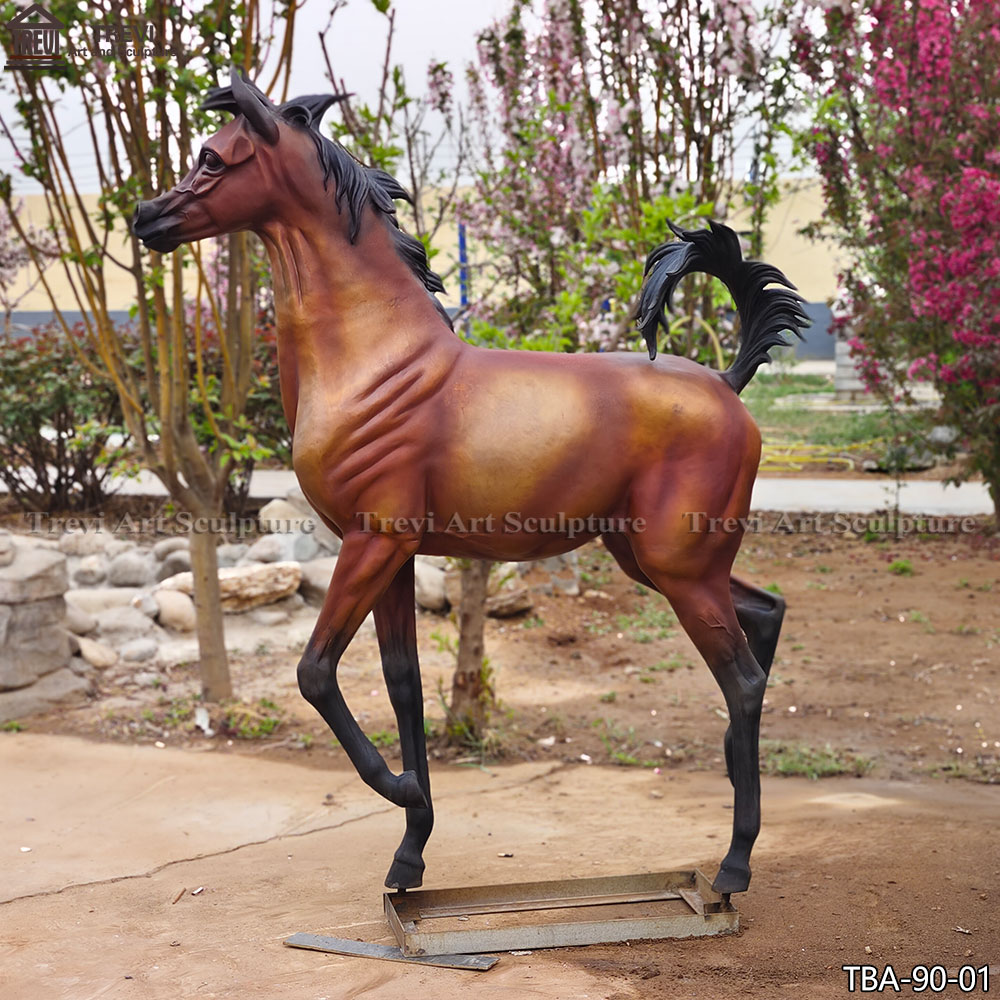
- Standing or walking horse: 65–75 inches, the closest to true anatomical scale.
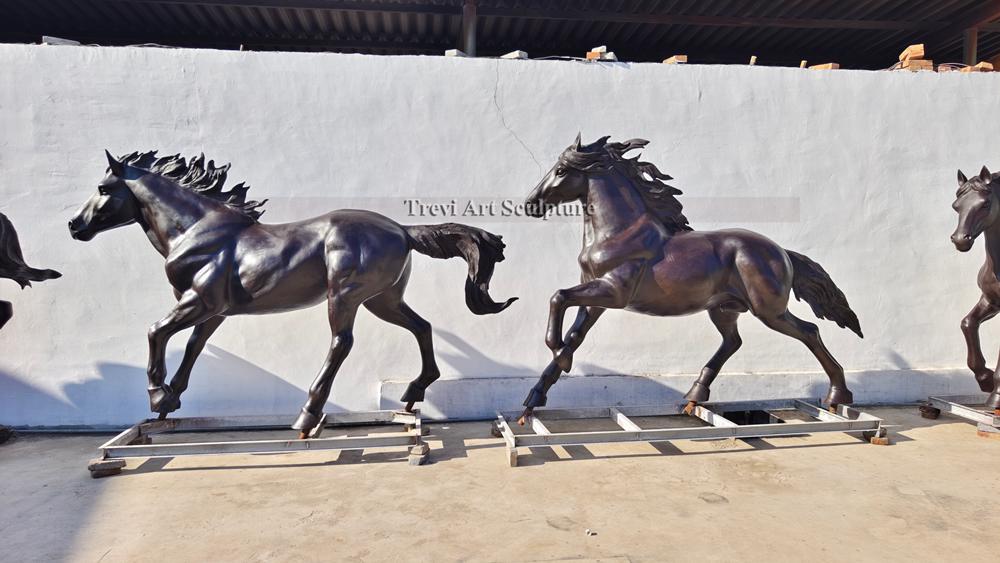
- Galloping or rearing horse: measured taller, sometimes 69–80+ inches, because the extended legs and raised head add height even though the horse’s actual body scale is the same.
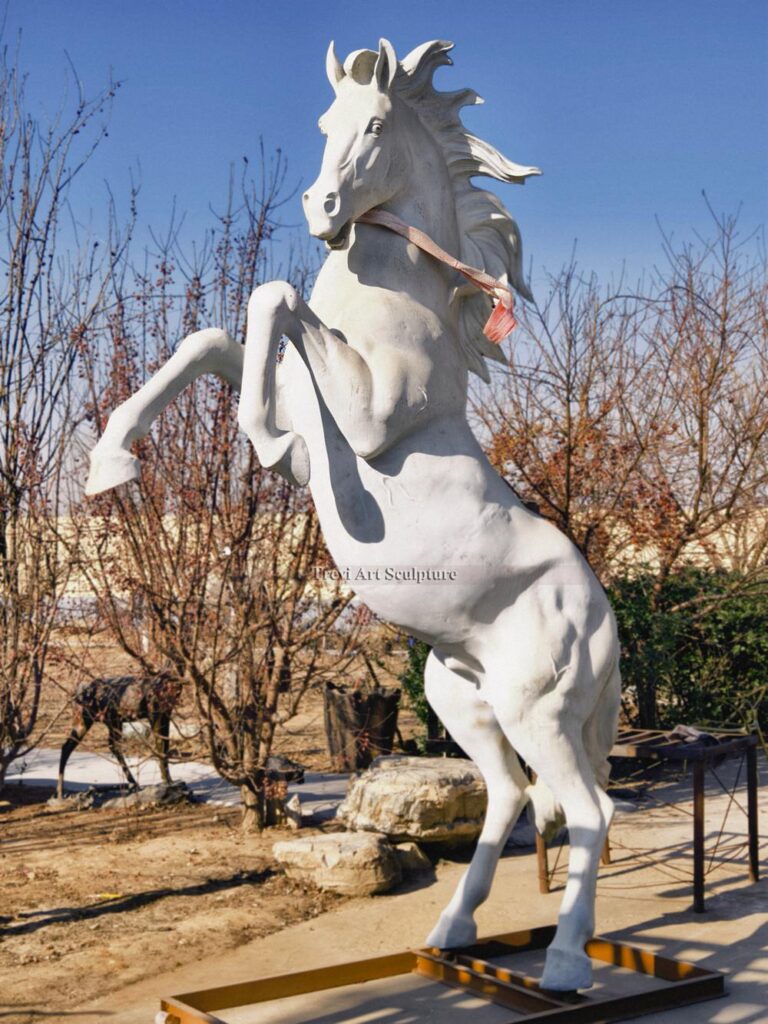
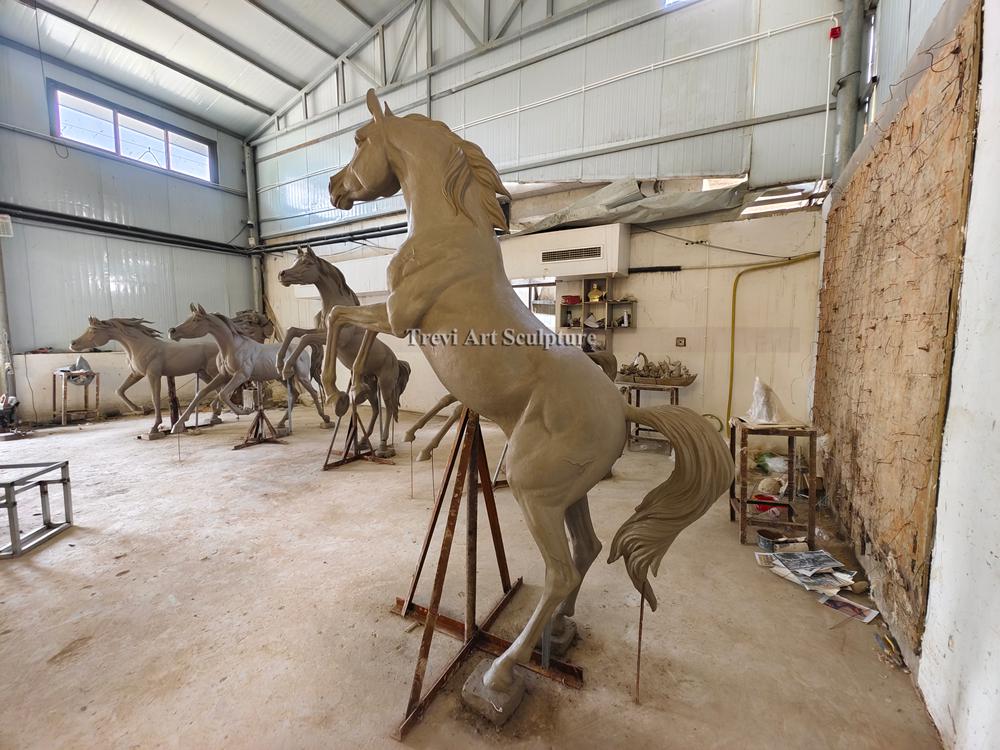
- Jumping or rearing pose (front legs raised, near-vertical stance): 85–110 inches high — the tallest single-horse pose in standard production, since the raised body adds significant vertical height beyond the horse’s actual shoulder height.
Standard Bronze Horse Statue Sizes at a Glance
| Pose / Type | Typical Height | Typical Weight | Best Setting |
| Grazing horse | 55″–71″ | 300–500 lbs | Gardens, quiet lawns |
| Standing/walking horse | 65″–75″ | 400–600 lbs | Entrances, courtyards |
| Galloping horse | 69″–80″ | 500–700 lbs | Ranch entrances, open lawns |
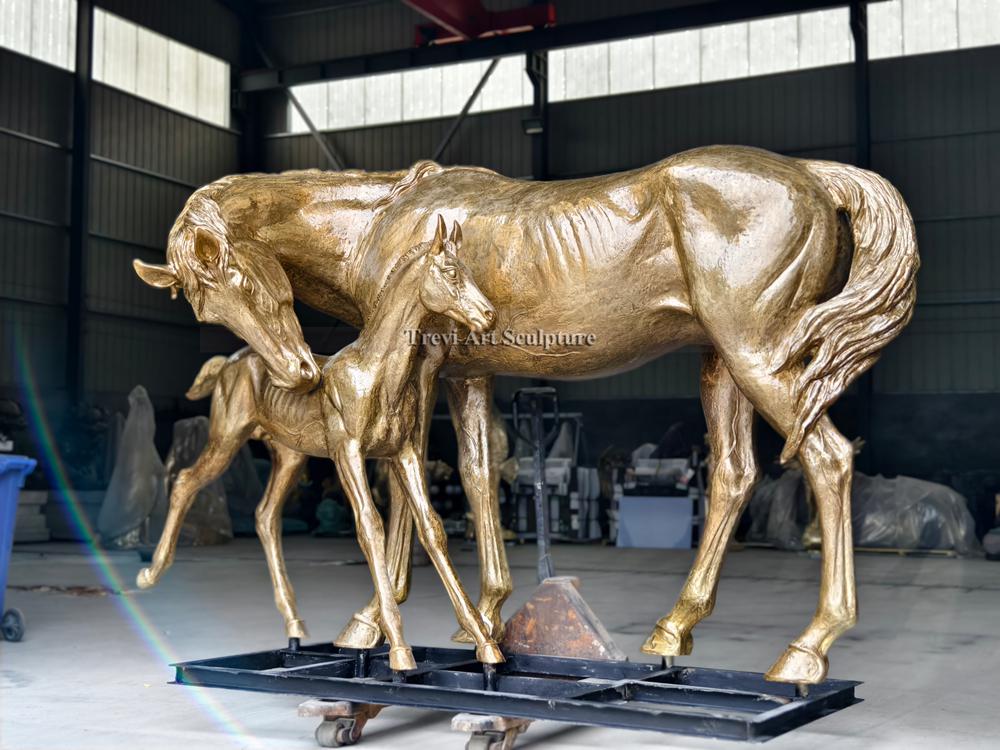
| Mare with foal | Mare: 65″–75″ / Foal: 35″–45″ | 550–750 lbs (combined) | Parks, family estates |
| Jumping / rearing horse | 85″–110″ (tallest standard pose) | 600–900 lbs | Feature lawns, gallery entrances, statement pieces |
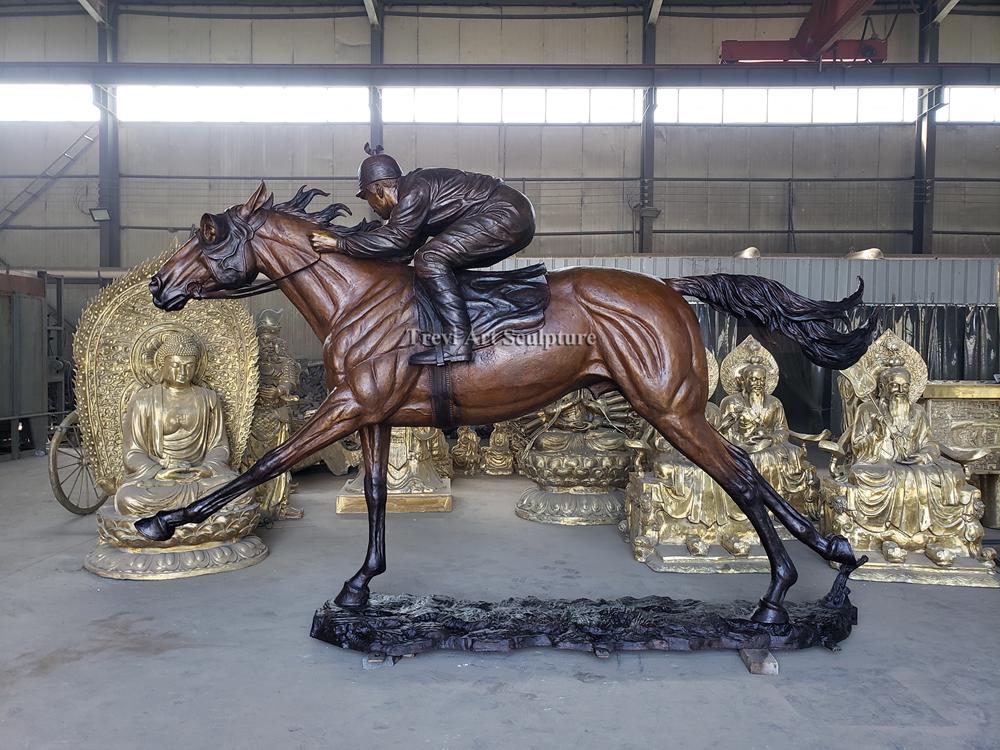
| Equestrian (horse + rider) | 8–9 ft | 700–1,200 lbs | Plazas, public monuments |
| Two-horse chariot group | 10+ ft (monumental) | 1,000+ lbs | City plazas, landmark estates |
These are typical ranges for cast bronze; exact figures vary by foundry and design. Because bronze is cast in sections and welded, foundries can also scale a design up or down to a custom size without losing detail — something not always possible with resin or cast stone.
How to Choose the Right Size for Your Space
1. Match the size to the viewing distance
As a general rule, a statue should be visible and readable from at least 15–20 feet away. If the piece will sit close to a doorway or patio (under 15 feet of clearance), a 55″–65″ grazing or standing pose reads better than a large galloping figure, which needs more open space to look proportionate rather than crowded.
2. Consider the scale of the surrounding architecture
A single 65″–70″ horse works well against a residential garden or ranch fence line. Larger properties — country estates, resort entrances, golf courses — can support a 75″+ galloping horse or even a multi-horse chariot grouping without the statue feeling out of scale.
3. Factor in the base or pedestal
Most life-size bronze horses sit on a low bronze or stone base 4–8 inches high, which adds to the total installed height. For equestrian statues (horse with rider), the pedestal is often 2–4 feet tall on its own, which is why these pieces are measured in total installed height rather than horse height alone.
4. Decide between a single horse and a grouping
A mare-with-foal or two-horse composition reads as a larger, busier focal point even at a similar individual height to a single standing horse, because the eye takes in the full width of the group. For narrow spaces, one horse in a quieter pose (grazing or standing) is usually the better fit.
5. Know when to go custom
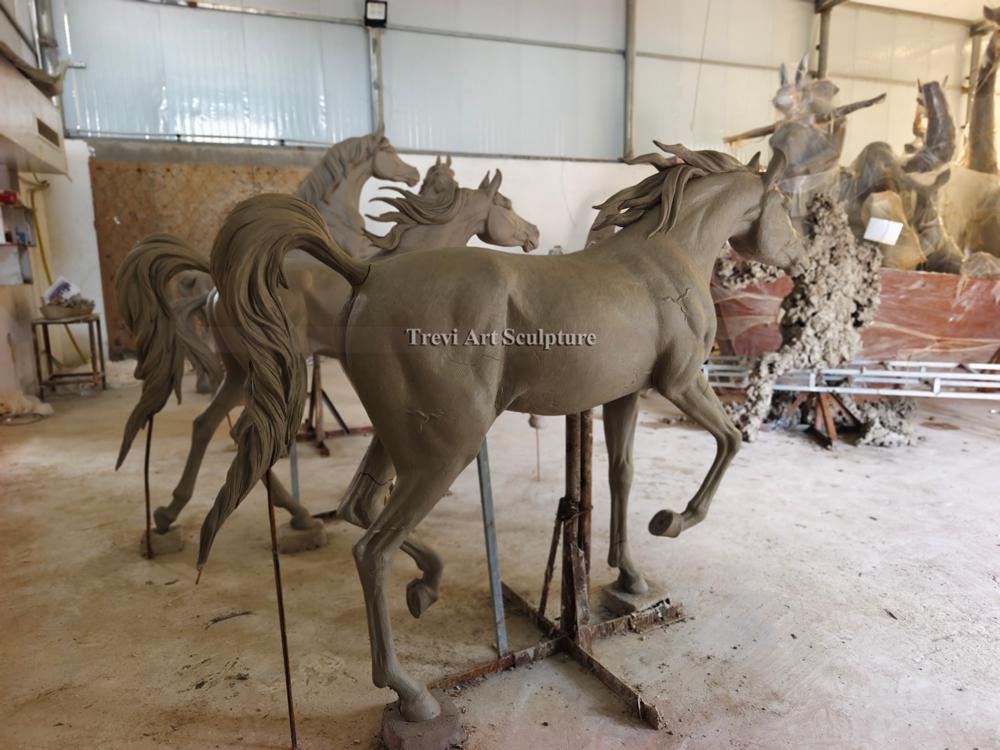
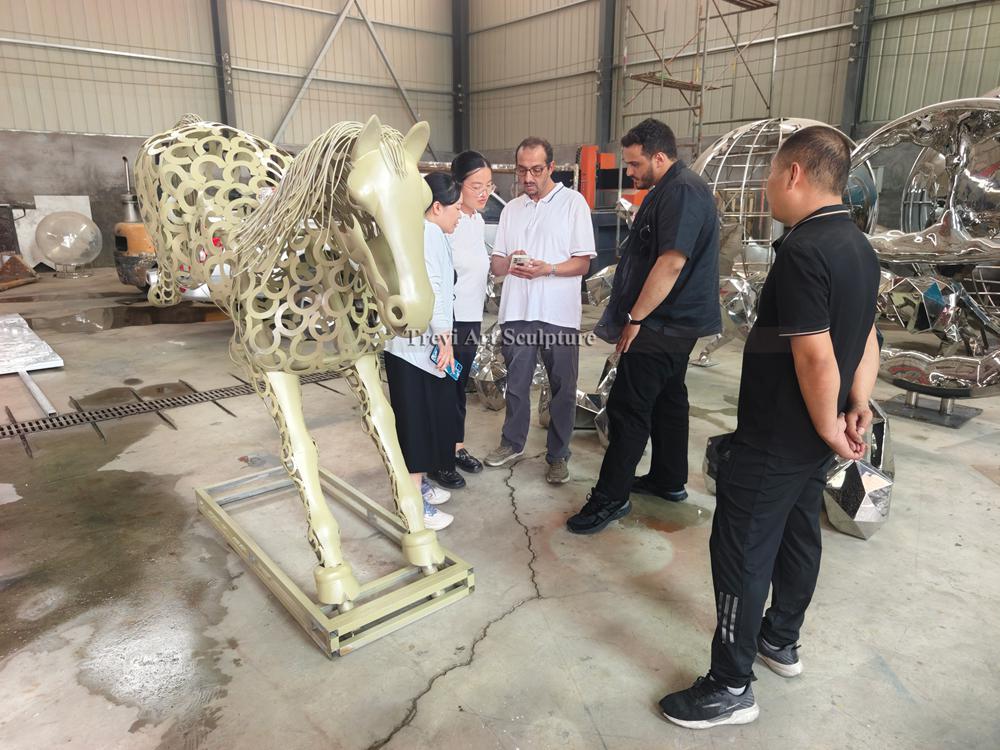
Most foundries offer their standard listed size or a fully custom size — scaled up for a grand entrance or scaled down for a smaller courtyard or memorial garden. Custom sizing is standard practice in bronze casting and typically doesn’t add significant lead time, since the clay/wax model is resculpted to scale before mold-making.
Outdoor Placement by Size
- Under 65″: courtyards, patios, front doors, memorial gardens
- 65″–75″: front lawns, ranch entrances, garden focal points
- 75″+: estate driveways, resort and hotel grounds, ranch gates
- Equestrian / group compositions: public plazas, campuses, large private estates
A Final Note on Getting the Size Right
Bronze horse statues remain one of the most beloved outdoor sculpture choices among customers worldwide, valued for their timeless presence and ability to elevate any landscape. But choosing the right size is just as important as choosing the right pose. Without seeing the statue in context, it’s easy to underestimate or overestimate how a piece will actually fill a space — and customers who guess on size sometimes find that the finished statue, once delivered and installed, doesn’t create the visual impact they had in mind.
To avoid that, we encourage buyers to reach out before finalizing a size. Our design team can provide a custom installation rendering — showing how a specific statue, at a specific size, will look in your actual space — so you can see the result before you commit. If you’re unsure which size is right for your garden, ranch, or estate, contact us, and we’ll help you get it right the first time.
FAQ
How tall is a true life-size bronze horse statue?
A true life-size bronze horse statue generally measures 65–75 inches at the head, matching the scale of a real adult horse. Height varies by pose, with galloping or rearing horses measuring taller due to extended limbs.
Can bronze horse statues be made in custom sizes?
Yes. Foundries can scale a bronze horse design up or down from its standard listed size to fit a specific space, since bronze is cast in sections from a resculpted model rather than a fixed mold.
How much does a life-size bronze horse statue weigh?
Most life-size single bronze horses weigh between 300 and 700 lbs, depending on pose and casting thickness. Monumental pieces, such as multi-horse chariot groups, can exceed 1,000 lbs.
What size horse statue is best for a small garden?
For gardens or courtyards under 15 feet of clearance, a grazing or standing pose in the 55″–65″ range is easiest to scale correctly, since it doesn’t require as much open space to look proportionate.
Does the base or pedestal count toward the listed height?
Usually not — most listed statue heights refer to the horse figure itself, with a 4–8 inch base added separately. Equestrian statues with tall pedestals are the exception and are typically measured as total installed height.


