
On the Gothic cathedrals of Europe, whose spires reach toward the sky, countless Gargoyles and grotesque stone creatures crouch along the heights of the buildings. With bared teeth and fierce expressions, they peer down upon the world below, often provoking a sense of unease in those who look up at them. This raises a natural question: why would such ugly, even seemingly evil figures be placed upon buildings dedicated to God?
Behind this apparent contradiction lies a fascinating world in which function, faith, and artistic imagination were deeply intertwined in medieval architecture.
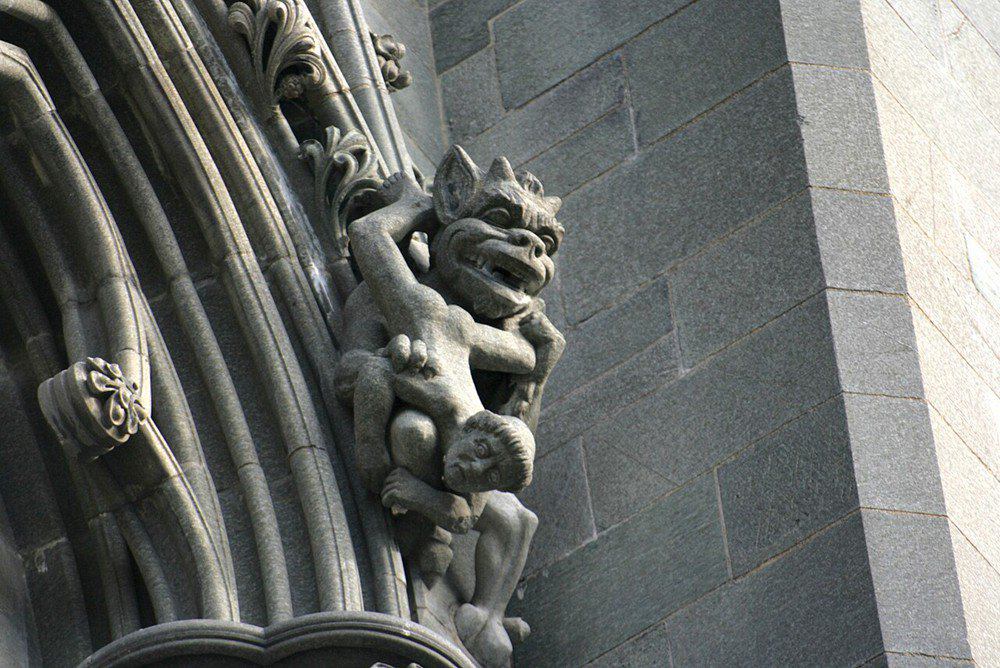
From Practical Architectural Element to Symbolic Form: The Function of Gargoyles
The key to understanding gargoyles lies in a fact that is often overlooked: a gargoyle was first and foremost a functional architectural element, and only secondarily an artistic form.
The word “gargoyle” derives from the Old French gargouille, meaning “throat” or “gullet.” The word itself reveals its essential purpose: water drainage.
Medieval churches had enormous roof areas. If rainwater were allowed to run directly down the walls, it could erode limestone surfaces and mortar joints and eventually threaten the structural integrity of the building. Architects therefore installed projecting stone channels that carried rainwater away from the walls and discharged it at a distance from the structure.
To make these drainage outlets less visually awkward, stonemasons carved them into the forms of animals, monsters, and fantastical creatures. Rainwater would typically flow through the channel and emerge from the creature’s mouth. Thus, the meaning of “throat” and the physical act of “spouting water” became perfectly united.
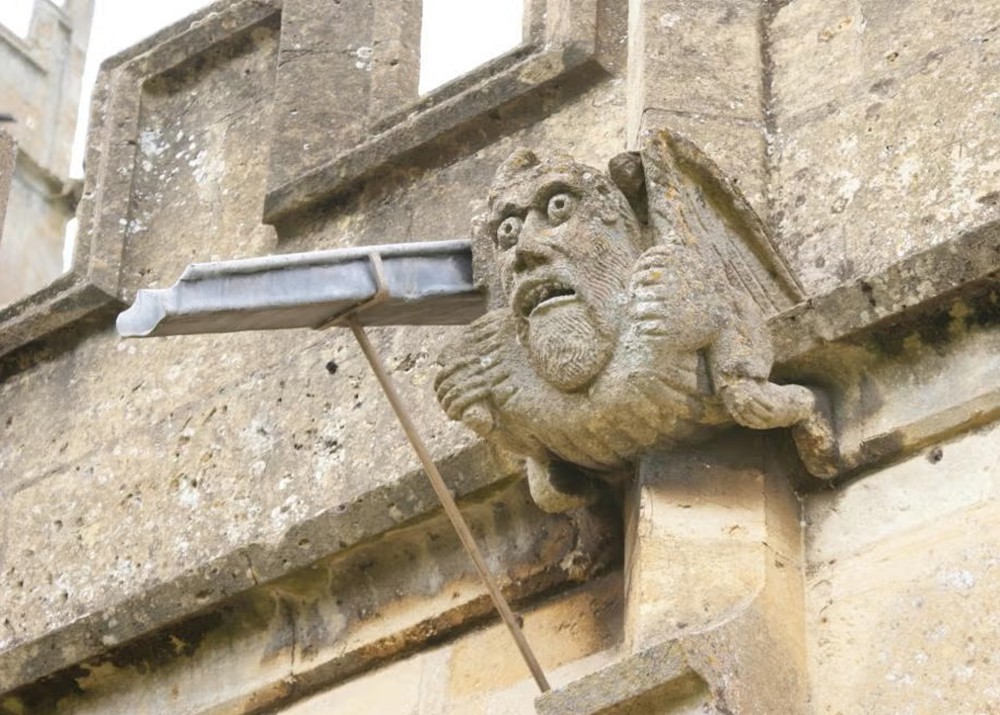
This leads to an important distinction: not every monstrous sculpture on the exterior of a church is a gargoyle. Only those that actually function as water spouts connected to a drainage system should technically be called gargoyles.
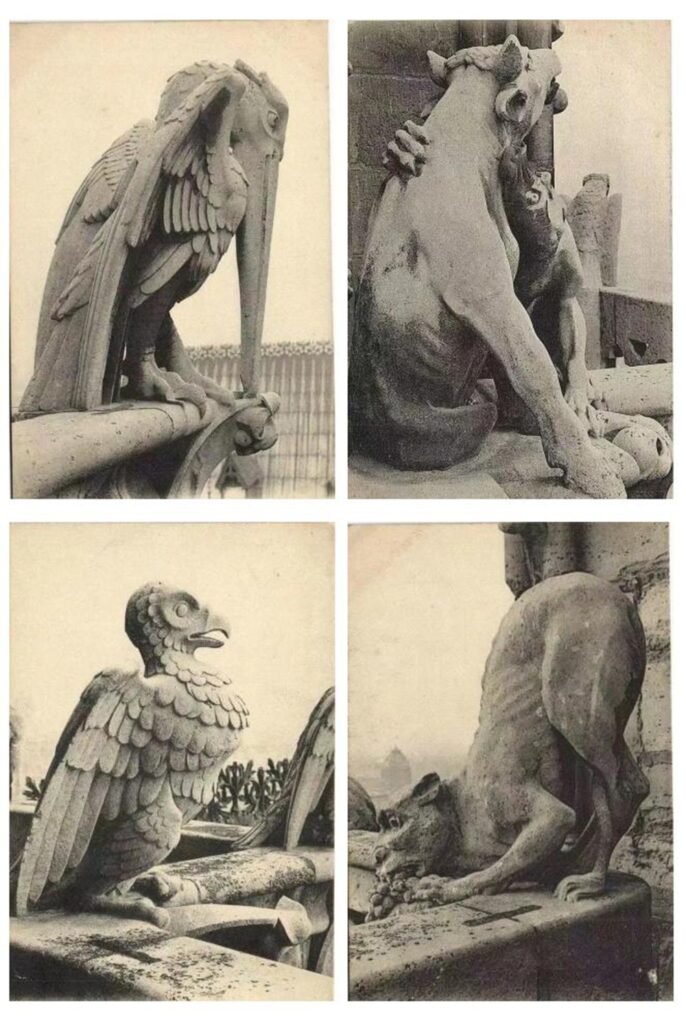
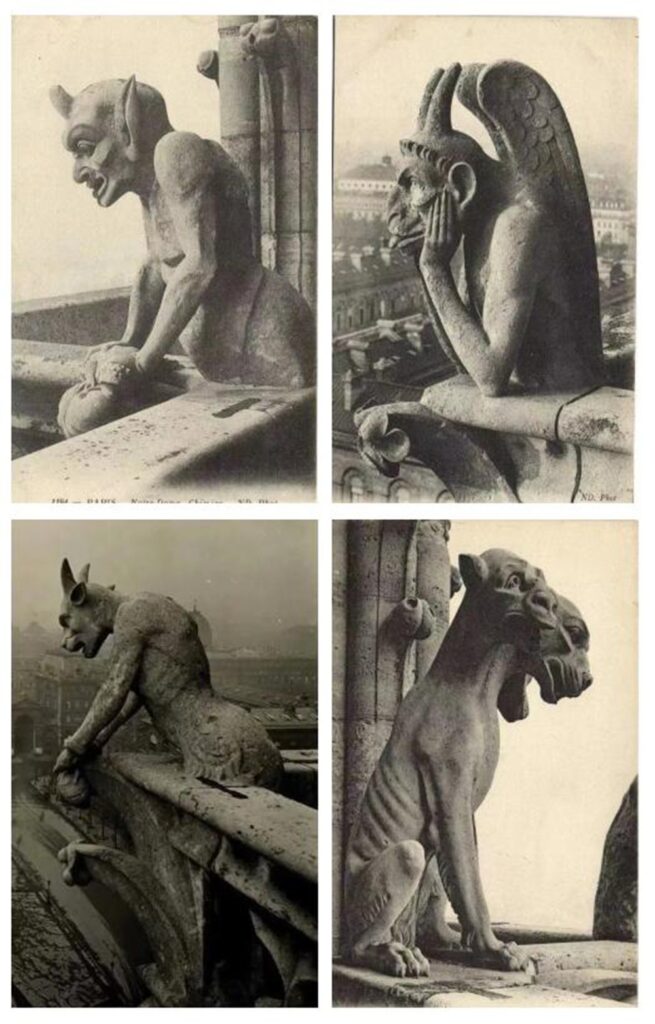
Notre-Dame de Paris is one of the world’s most famous showcases of gargoyles. The half-animal, half-bird creatures extending from the edges of the building and overlooking the city are classic examples of gargoyles. Their mouths contain drainage channels, allowing rainwater to be discharged away from the walls. During heavy rain, streams of water emerge from their mouths, transforming the practical drainage system into a dramatic architectural spectacle.
It is worth noting that the 54 famous chimera sculptures on Notre-Dame de Paris, including the iconic Stryge, are little more than a century old. They are not medieval originals, but were newly conceived and added in the 19th century by the architect Eugène Viollet-le-Duc during his restoration of the cathedral, drawing heavily on the imagination of the Romantic era.
This fact itself reveals the complexity of historic preservation: what we see as “history” today is sometimes, in fact, a product of later reconstruction and reinterpretation.
Grotesques: Creatures of Pure Imagination
If gargoyles are constrained by the physical requirements of drainage channels, grotesques are much freer in form.
Grotesques have no necessary architectural function. They are decorative, narrative, or symbolic creations, often depicting imaginary creatures, distorted human figures, and fantastical combinations of animals and humans.
The word “grotesque” has its roots in the Italian grottesco, literally meaning “of a cave.” The term was first used to describe an ancient decorative painting style discovered in the ruins of Nero’s Golden House in Rome during the late fifteenth century. These paintings combined human figures, animals, plants, and architectural elements in strange and imaginative compositions. The style was later adopted by Renaissance artists such as Raphael in the decoration of the Vatican and subsequently spread throughout Europe.
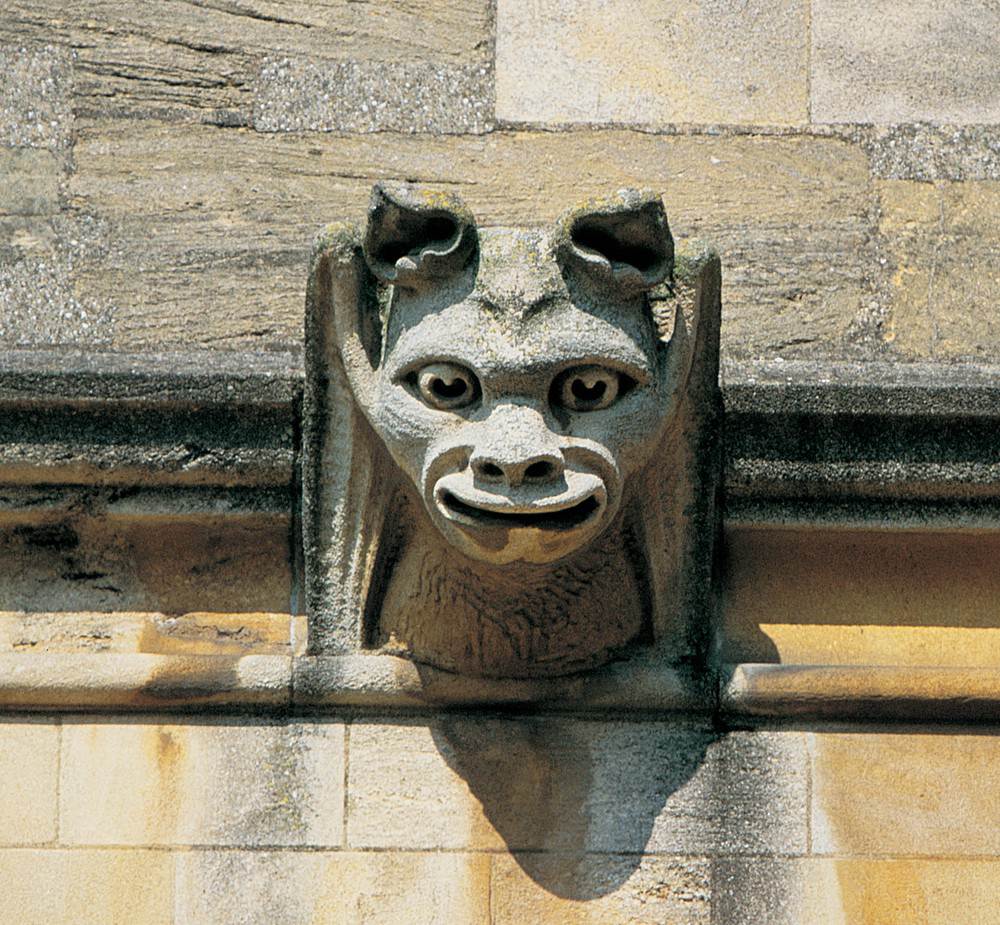
In the context of Gothic architecture, typical grotesques include:
- Human-animal hybrids, such as half-human, half-animal figures
- Winged human faces and multi-headed creatures
- Exaggerated expressions, including protruding tongues, bulging eyes, and distorted faces
- Absurd poses, such as figures hanging upside down or clinging to impossible surfaces
- Fantastical creatures with no obvious narrative connection to the main religious imagery
They could be found on capitals, around arches, along parapets, at the corners of architectural elements, and beneath flying buttresses, creating a kind of “marginal world of imagery” outside the main religious narrative.
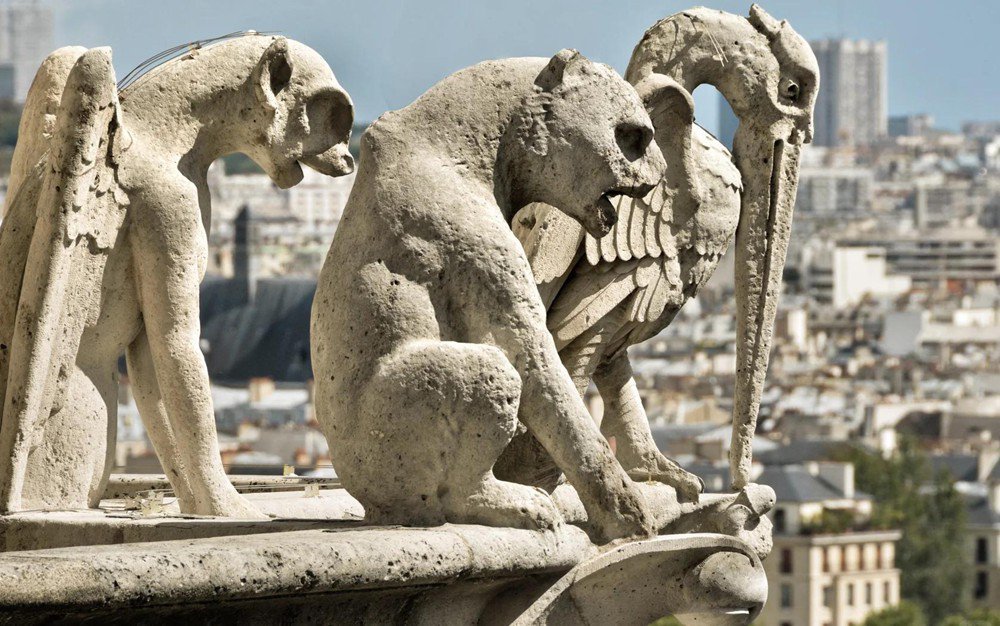
Grotesques vs. Gargoyles
| Feature | Gargoyles | Grotesques |
| Primary Definition | Architectural sculptures that also serve a functional drainage purpose | Decorative sculptures with no essential architectural function |
| Main Function | Carry rainwater away from the building and discharge it through the mouth | Decoration, visual storytelling, symbolism, satire, or artistic expression |
| Water Drainage | Yes — connected to a drainage channel | No — purely decorative |
| Typical Location | Roof edges, parapets, cornices, and other locations where rainwater must be discharged | Walls, arches, capitals, parapets, buttresses, corners, and other decorative surfaces |
| Common Forms | Animals, monsters, dragons, birds, and hybrid creatures | Human-animal hybrids, distorted people, monsters, animals, mythical creatures, and humorous figures |
| Visual Character | Often frightening or monstrous, but their appearance is secondary to their function | Usually emphasizes fantasy, distortion, humor, satire, or imagination |
| Symbolic Meaning | Sometimes interpreted as guardians against evil or symbols of evil being expelled from sacred space | Often associated with moral warnings, popular beliefs, humor, satire, or the medieval fascination with the strange |
| Historical Development | Closely associated with medieval Gothic architecture and its need for effective roof drainage | Developed from broader European traditions of ornamental and grotesque imagery |
| Key Classification | Defined by function | Defined by form and imagery |
| Can It Also Be Grotesque? | Yes. A gargoyle can have a grotesque appearance while still functioning as a water spout | A grotesque cannot technically be called a gargoyle unless it also performs a drainage function |
| Simple Test | Does it drain water? → Gargoyle | Does it only decorate? → Grotesque |
Historical Origins: From the Middle Ages to the Gothic Revival
The widespread appearance of gargoyles and grotesques in European architecture is generally associated with the rise of Gothic architecture during the twelfth and thirteenth centuries.
Gothic architecture pursued height and light. Large areas of the wall were replaced by stained-glass windows, while structural loads were increasingly transferred outward through flying buttresses and external supports. This structural revolution created extensive exterior surfaces, which in turn provided stonemasons with unprecedented opportunities for sculptural decoration.
At the theological level, the medieval Church’s attitude toward these grotesque figures was subtle and complex.
One widely circulated interpretation is that the church functioned as a “Bible of the poor”—a place where religious imagery communicated biblical stories and moral lessons to largely illiterate worshippers. Under this interpretation, the frightening faces of gargoyles and grotesques could serve as warnings against sin. They represented demonic or dangerous forces lurking at the margins of sacred space, reminding believers that the world outside the church was filled with spiritual dangers.
Alternatively, these creatures could be understood as symbols of evil that had been tamed and placed under the control of the Church. By confining monstrous figures to the outer edges of the sacred building, the architecture could symbolically demonstrate the triumph of divine order over chaos.
Another interpretation connects these images with medieval beliefs about protection from evil spirits. Frightening figures were sometimes thought capable of frightening away other supernatural forces. Placing monsters on buildings could therefore function as a kind of symbolic defense—an architectural strategy of fighting evil with frightening imagery.
The fact that gargoyles expelled rainwater from their mouths could even invite symbolic interpretations: they appeared to be literally casting evil out of the sacred space.
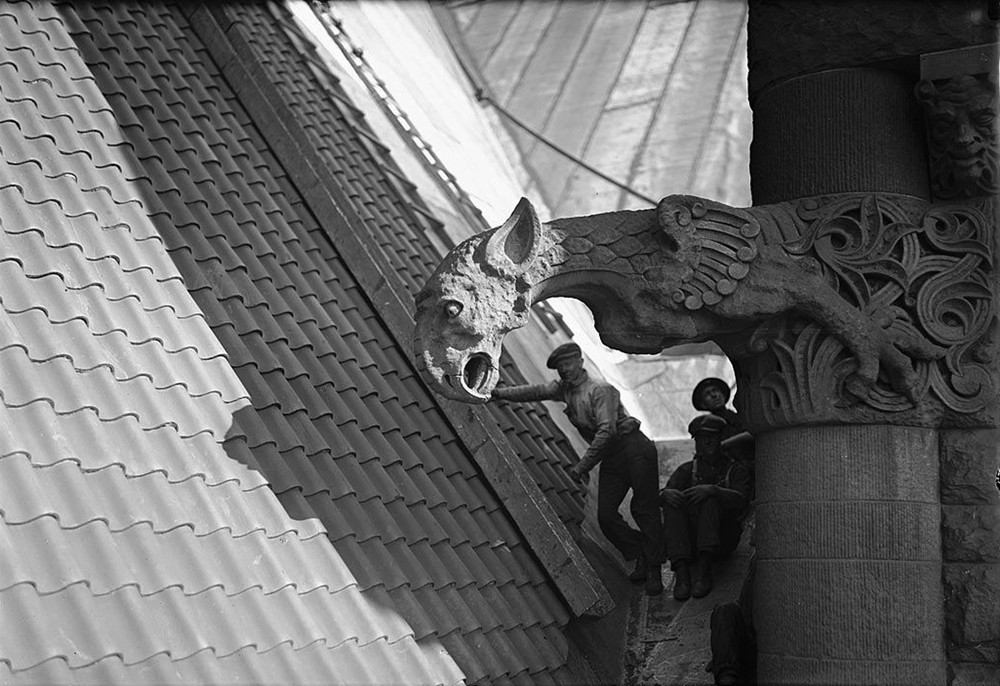
After the Renaissance, as Gothic architecture declined in popularity, the production of gargoyles and grotesques diminished. Their revival came much later with the rise of nineteenth-century Romanticism and the Gothic Revival.
Victor Hugo’s literary treatment of the monsters crouching on the roof of Notre-Dame in The Hunchback of Notre-Dame, together with the extensive restoration and recreation of gargoyles at Notre-Dame under Eugène Viollet-le-Duc in the nineteenth century, played a major role in bringing these medieval stone creatures back into the cultural imagination.
Importantly, many of the gargoyles that have become iconic symbols of Notre-Dame today are not medieval originals but nineteenth-century creations or restorations.
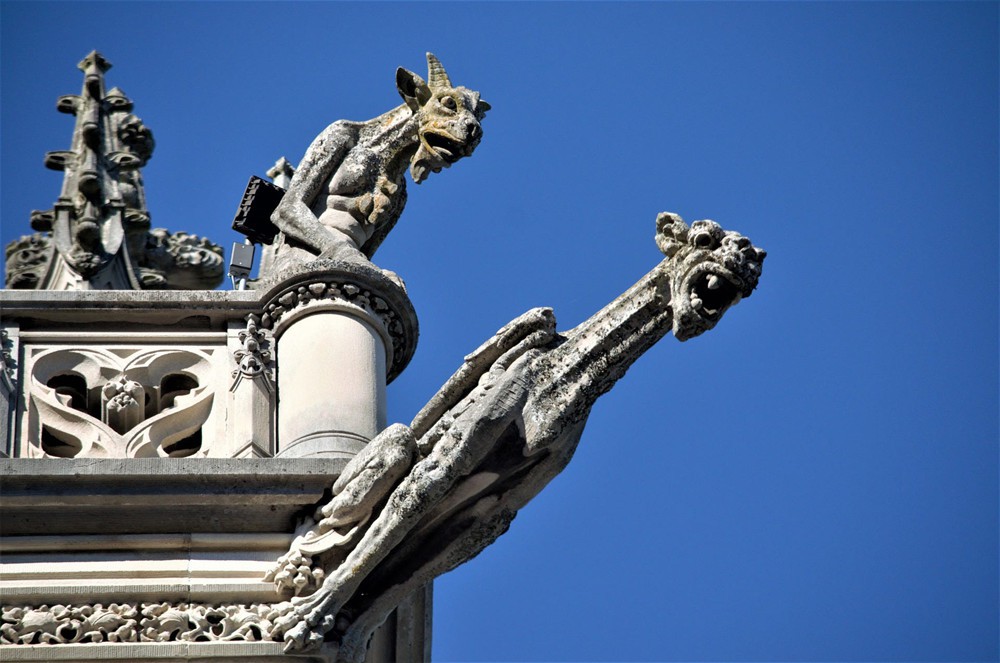
Forms and Imagination: A Stone-Built World of Fantastic Creatures
From a morphological perspective, gargoyles and grotesques form an extraordinarily rich imaginary bestiary.
Animal Forms
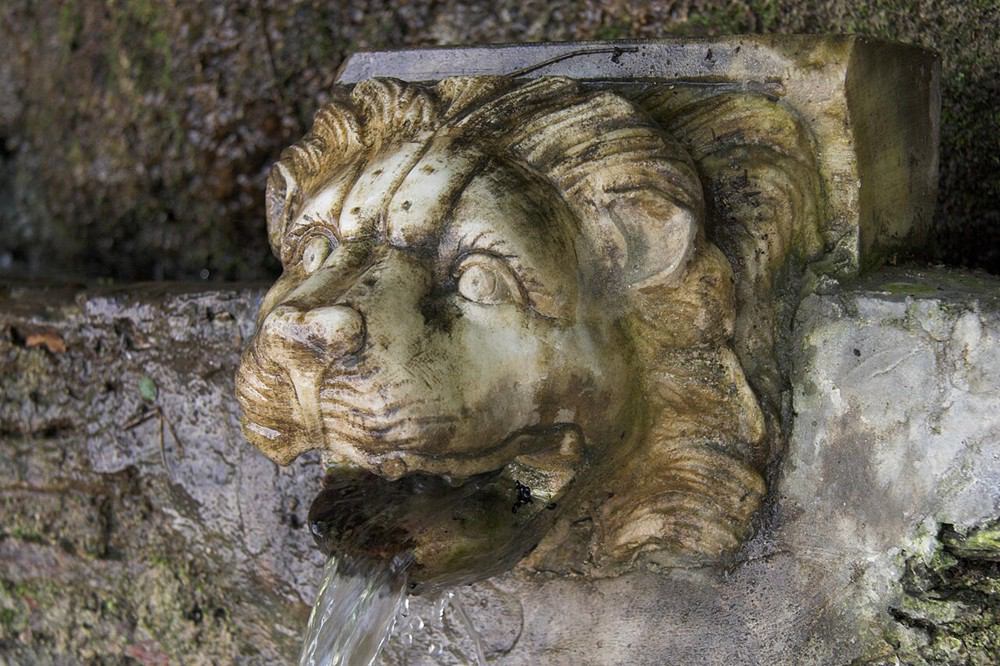
Animal figures are among the most common forms. Lions, wolves, dogs, goats, eagles, and other real animals could be transformed into exaggerated or fantastical creatures.
The lion, for example, carried multiple meanings within medieval symbolism. It could represent Christ through the biblical image of the “Lion of Judah,” while elsewhere the roaring lion could also symbolize Satan and spiritual danger.
Human-Animal Hybrids
More frightening are hybrid creatures: human faces combined with animal bodies, horned human figures, winged monsters, and other unnatural combinations.
Within medieval thought, such hybrid forms could be associated with the violation of natural order, suggesting disorder, chaos, or sin.
Distorted Human Figures
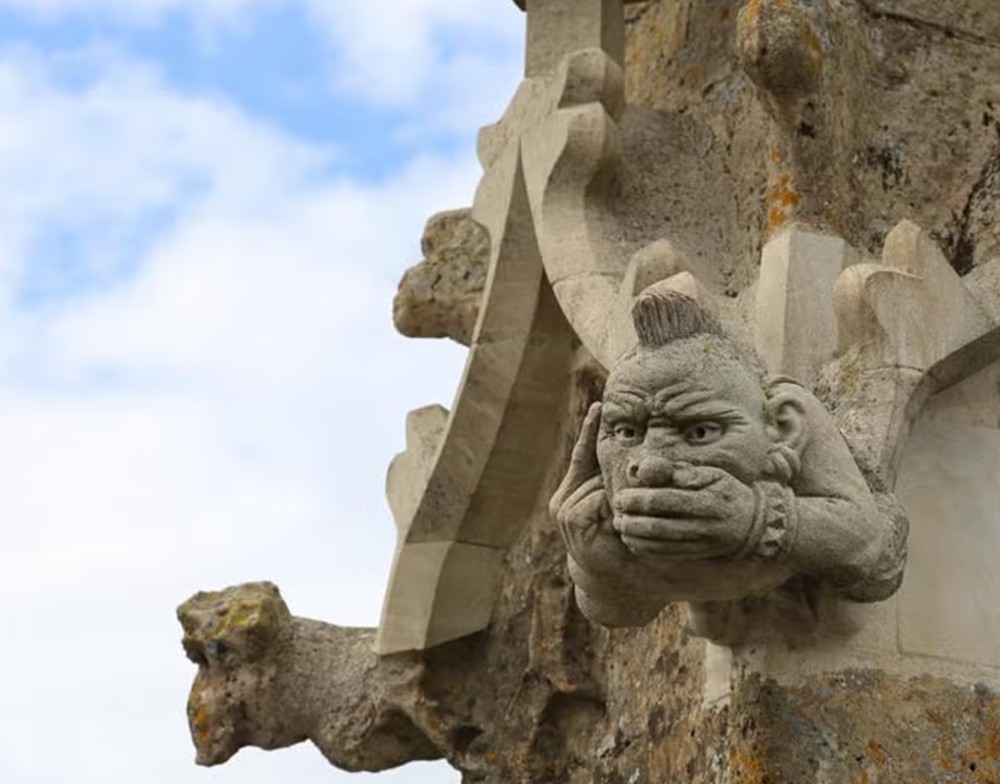
Grotesques could also take the form of monks, fools, ugly old women, or men making exaggerated faces. Some have been interpreted as satirical references to corruption within the Church or society, while others may simply have served a humorous or visually entertaining purpose.
Mythological and Legendary Creatures
Dragons, griffins, basilisks, serpents, and other legendary beings also appear throughout medieval decorative traditions. Each carried its own network of symbolic associations. Dragons, for example, were frequently connected with evil and with demonic forces defeated by saints.
These forms were not necessarily random combinations.
Medieval stonemasons drew upon imagery from the Bible and the Book of Revelation, the moralized animal knowledge found in medieval bestiaries, popular legends concerning spirits and supernatural creatures, and visual traditions passed down within the craft through apprenticeship and guild practice.
As a result, each grotesque figure existed within a complex network of meanings. It could simultaneously function as a visual expression of theology, a carrier of popular beliefs, and a demonstration of the individual stonemason’s technical skill and imagination.
Debate and Interpretation: Fear, Humor, and the Poetics of the Margins
The cultural meaning of gargoyles and grotesques has long been debated. Several central questions deserve particular attention.
1. The Paradox of Fear and Humor
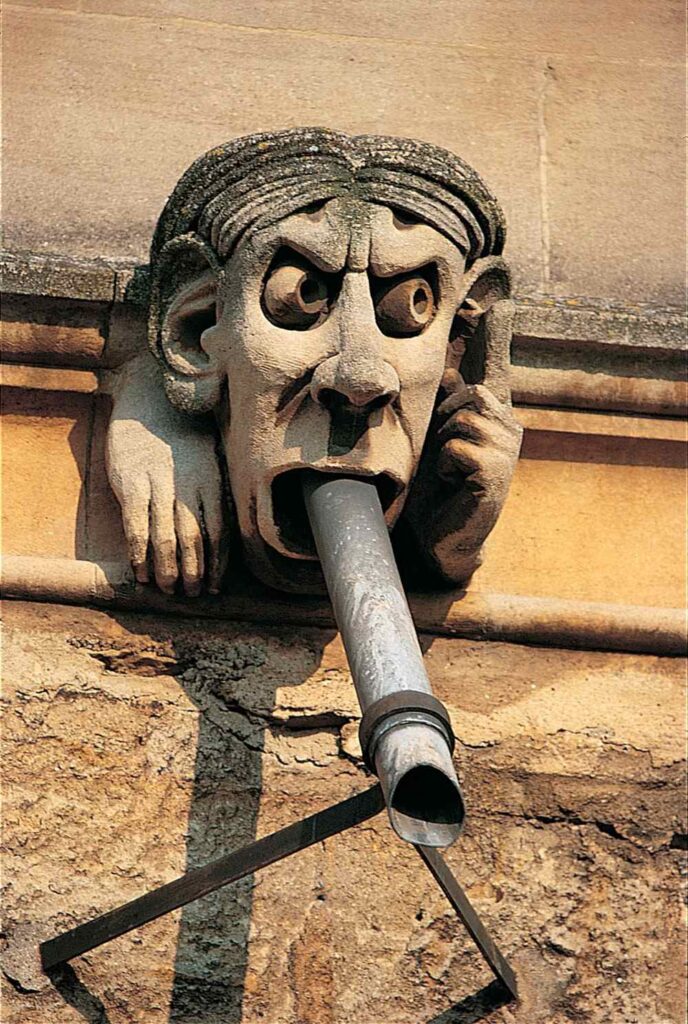
These stone figures can be frightening, but they can also be surprisingly funny.
Many grotesques exaggerate their poses and expressions to such an absurd degree that they become almost comic: figures stick out their tongues, make ridiculous faces, hang upside down, or peer from impossible angles.
Some scholars have pointed out that medieval culture did not necessarily regard fear and laughter as mutually exclusive emotions. Within traditions of carnival and popular culture, the humorous imitation of frightening things could itself serve as a form of release and transformation.
The grotesque figures on the margins of churches may therefore represent a kind of “sacred humor”—a physical expression of the ability to confront frightening forces through laughter.
2. The Meaning of the Marginal Position
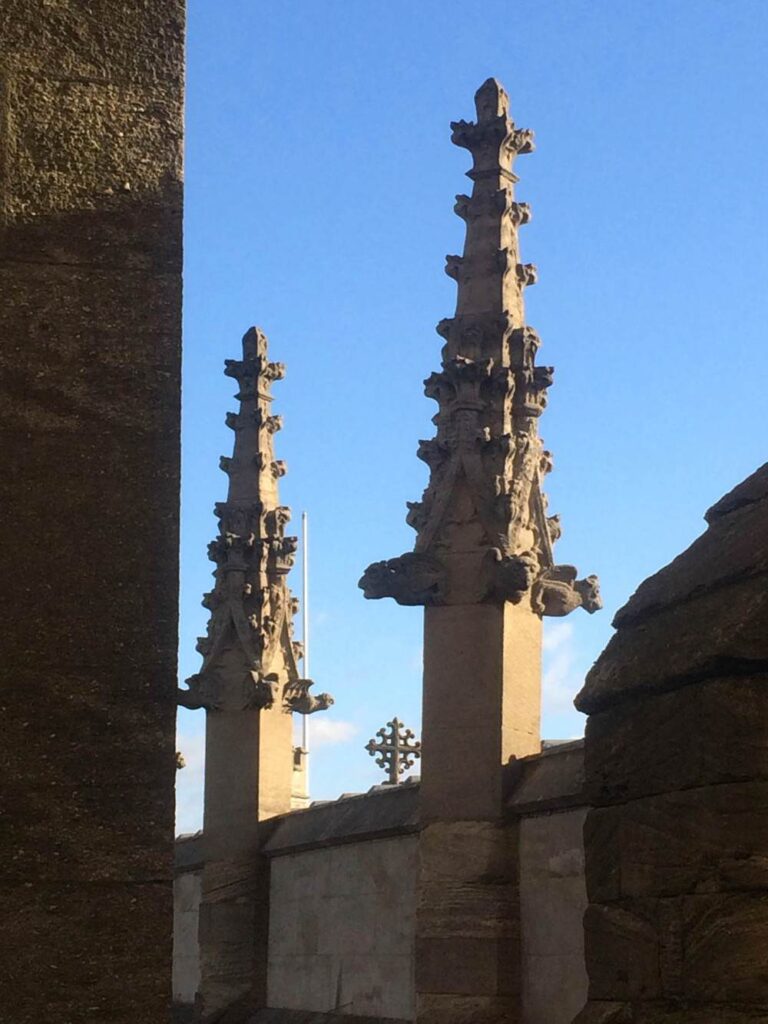
Gargoyles and grotesques rarely occupy the central façade, altar, or other primary locations of a church. Instead, they tend to cluster around the edges of buildings, at great heights, on corners, and in transitional spaces.
This spatial distribution may itself carry symbolic meaning.
The grotesque belongs to the boundary—to the threshold between the sacred and the secular. It guards the border while simultaneously disturbing the visual and psychological order of that border.
3. Reinvention in Modern Popular Culture
In modern popular culture, the gargoyle has evolved from an architectural drainage element into an independent fantasy creature.
The 1994 Disney animated series Gargoyles transformed gargoyles into nocturnal stone warriors who awaken at night and protect a city. In countless games, films, novels, and fantasy works, the “gargoyle” has become a standardized monster type, often endowed with abilities such as flight, stone transformation, and supernatural strength.
This modern transformation has largely separated the gargoyle from its original architectural and theological context. Yet it continues to preserve one of its most enduring ideas: the gargoyle as a guardian of the margins.
From Medieval Gargoyles to Modern Architectural Sculpture
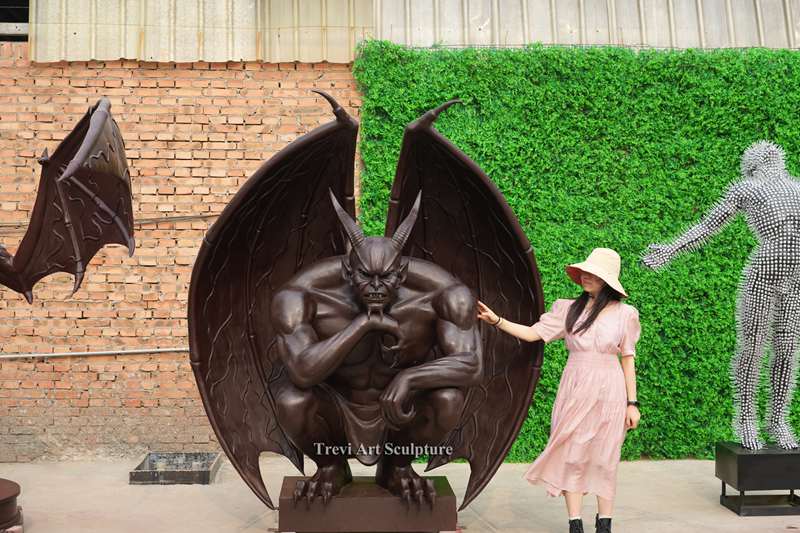
Perhaps this is why the fascination with gargoyles and grotesques has never truly disappeared. Although their original medieval functions and religious meanings have faded, their distinctive forms continue to appeal to modern architects, property owners, landscape designers, and collectors.
Today, gargoyles and grotesque sculptures are no longer limited to historic Gothic buildings. They are increasingly used to add history, mystery, and character to private estates, gardens, hotels, commercial properties, public spaces, and contemporary architecture.
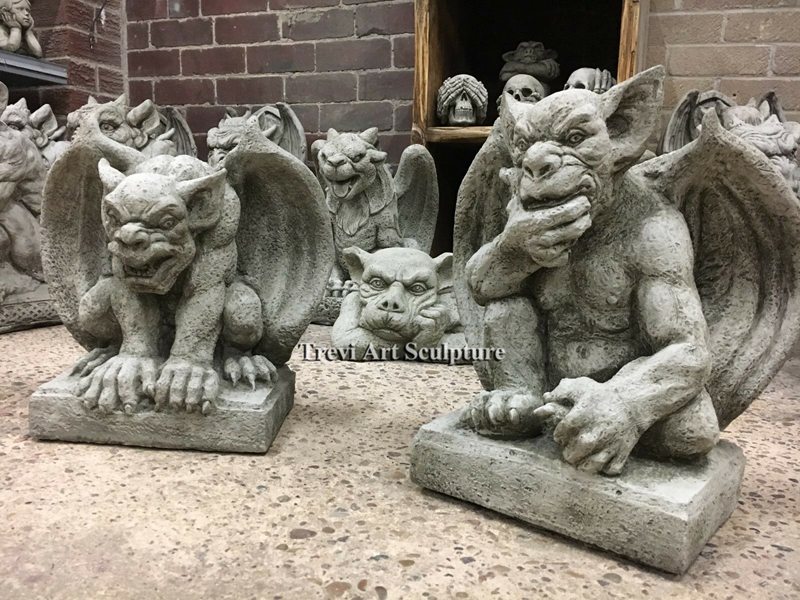
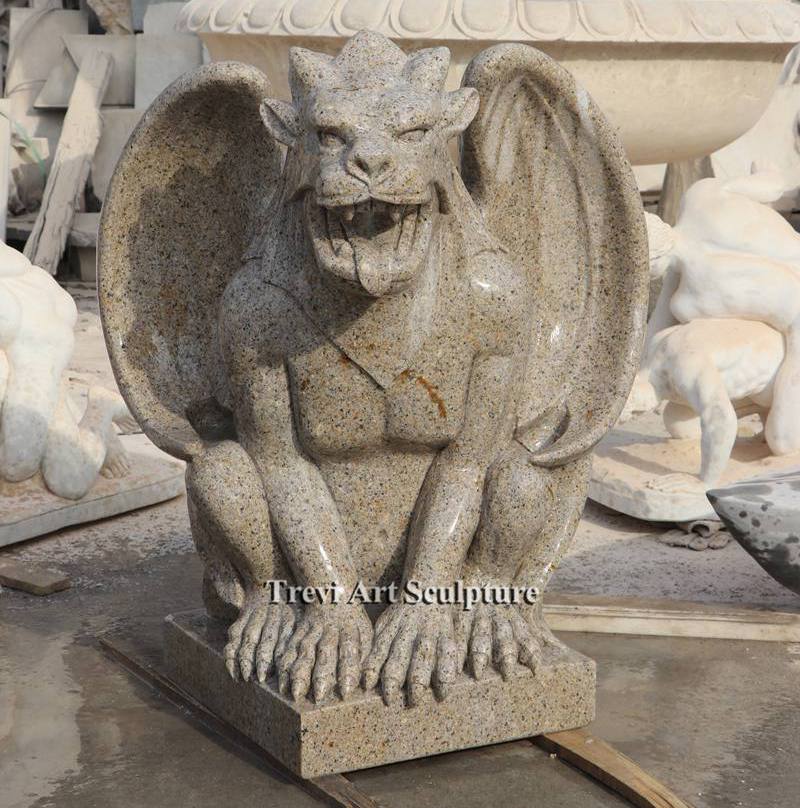
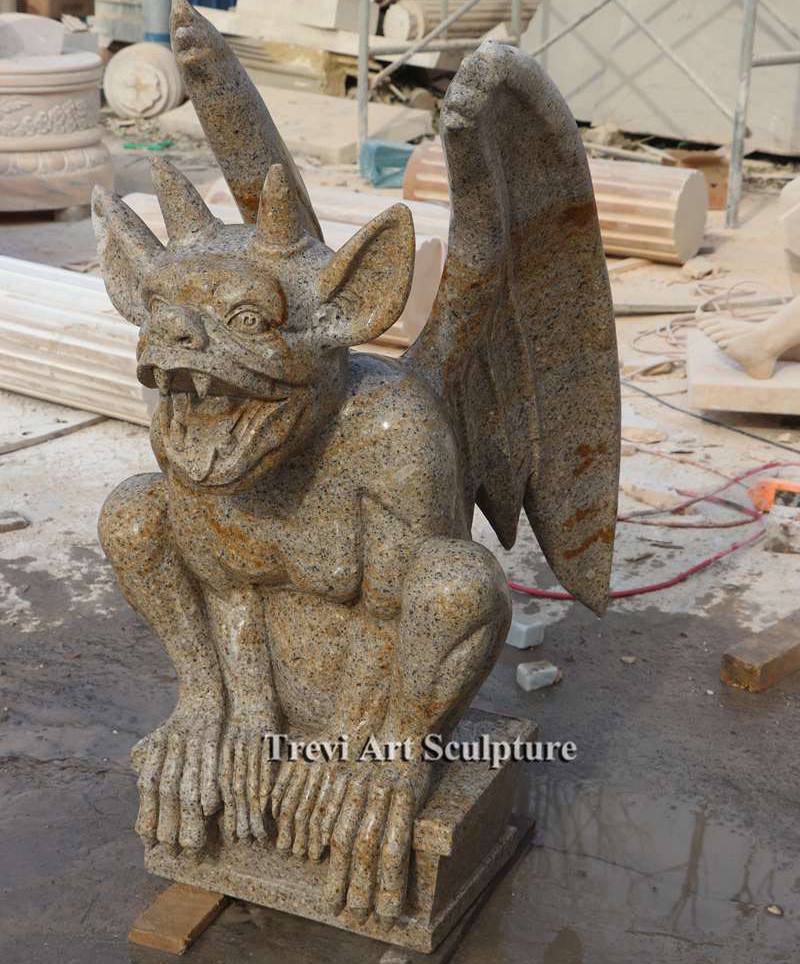
As a professional sculpture manufacturer, we can recreate a wide range of gargoyle and grotesque designs, from faithful reproductions of historic European sculptures to fully customized creations based on drawings, images, or original concepts.
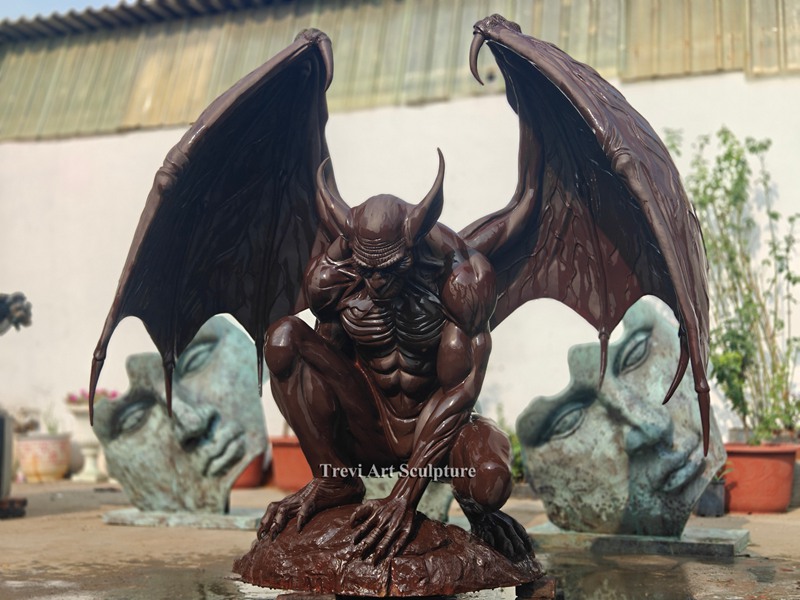
Marble, granite, and bronze are all popular choices. Stone offers a traditional architectural appearance and excellent durability, while bronze provides greater flexibility for detailed sculptural designs. Whether you need a medieval gargoyle, a fantastical grotesque, or an original architectural creature, our sculptors can turn your idea into a professionally crafted sculpture.
Conclusion
The gargoyles and grotesque sculptures found on Gothic cathedrals were never merely decorative elements or ugly architectural additions. They represent a remarkable fusion of practical function (rainwater drainage), religious belief (warding off evil), and public instruction (visual education).
These stone monsters crouch silently high above the ground, their grimacing faces guarding sacred spaces while also telling modern viewers a wordless story of the medieval world—a world shaped by faith, fear, and fantastical imagination.
References
- Wikipedia. “Gargoyle” and “grotesque.”
- Camille, Michael.The Gargoyles of Notre-Dame: Medievalism and the Monsters of Modernity. Chicago: University of Chicago Press, 2009.
- Friends of Notre-Dame de Paris.Official website pages on gargoyles and grotesques.


