
If you’ve ever driven along the Potomac near Arlington National Cemetery, you’ve probably seen it: six bronze figures straining together to plant a flagpole into a pile of rock, an American flag snapping overhead. It’s one of the most photographed war memorials in the world — and one of the most replicated. As a bronze foundry that has cast military memorial sculptures for clients across several U.S. states, including full-scale reproductions of this very statue, we get asked about it constantly. Here are eight facts that go beyond the postcard version.
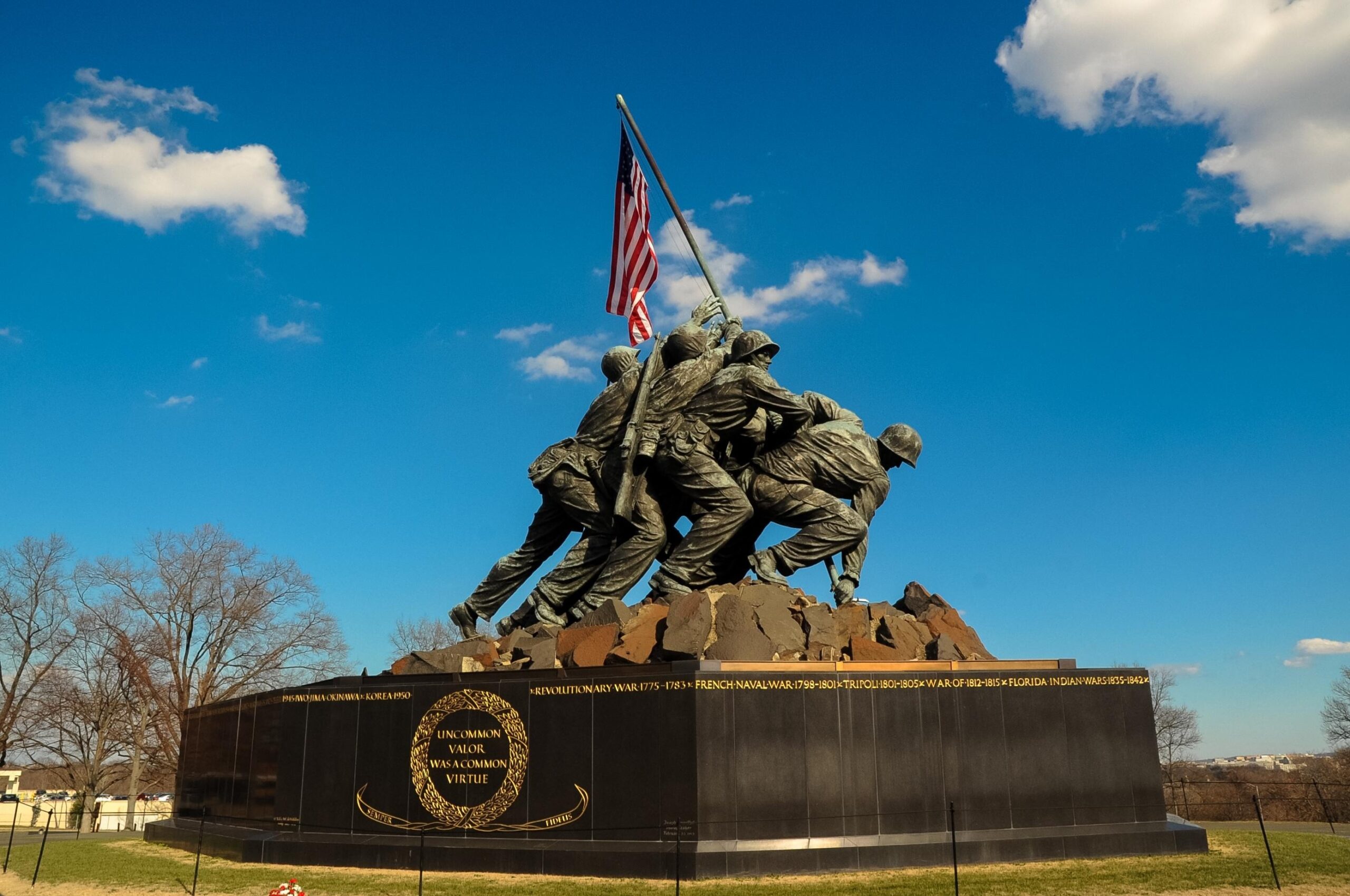
The Memorial Statue at a Glance
The Marine Corps War Memorial, widely known as the Iwo Jima Memorial, is a bronze monument located in Arlington, Virginia, just north of Arlington National Cemetery and across the Potomac River from Washington, D.C.
Key facts:
- Subject: Six U.S. servicemen raising the American flag atop Mount Suribachi during the 1945 Battle of Iwo Jima, based directly on Joe Rosenthal’s Pulitzer Prize–winning photograph
- Sculptor: Felix de Weldon
- Material: Cast bronze
- Height: About 78 feet, with figures six times life size
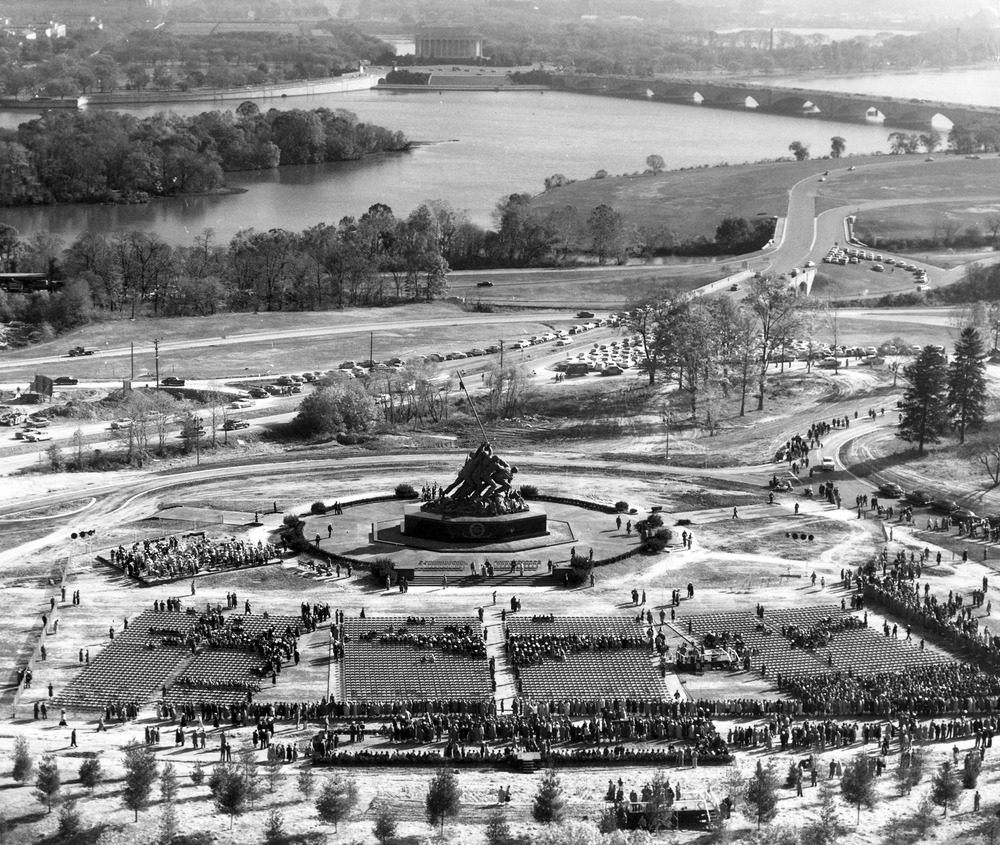
- Dedicated: November 10, 1954, by President Dwight D. Eisenhower
What it commemorates:
The memorial is not just a tribute to the flag-raising on Iwo Jima — it’s dedicated to every U.S. Marine who has died in service to the country since the Corps was founded in 1775. The base carries the names and dates of every major Marine engagement in that history, alongside the inscription: “In honor and in memory of the men of the United States Marine Corps who have given their lives to their country since November 10, 1775.” The Iwo Jima flag-raising simply serves as the enduring symbol for that broader sacrifice, which is why the memorial remains one of the most recognized war memorials in the world — and one of the most frequently reproduced in bronze.
1. It’s Based on a Photo Taken in Under 1/400th of a Second
The entire monument traces back to a single frame. On February 23, 1945, Associated Press photographer Joe Rosenthal snapped six Marines raising the second, larger flag atop Mount Suribachi during the Battle of Iwo Jima. The shot won a Pulitzer Prize and became the visual shorthand for American resolve in the Pacific War.
2. The Sculptor Built the First Model in a Single Weekend
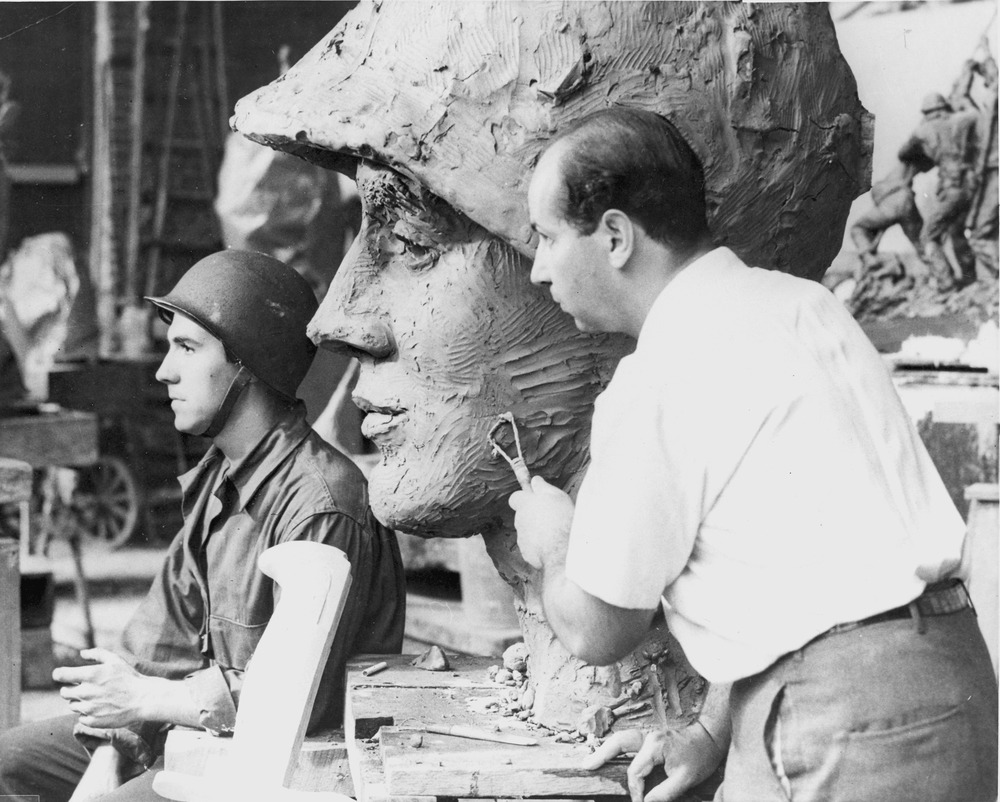
Sculptor Felix de Weldon, who was serving with the U.S. Navy at the time, was so struck by Rosenthal’s photograph that he built a scale model of the scene almost immediately after seeing it. Getting from that quick study to the finished, monumental bronze took nearly a decade of refinement, casting, and assembly.
3. Only Three of the Six Marines Posed in Person
Of the six men shown, only three — Rene Gagnon, Ira Hayes, and John Bradley — survived the battle and were able to sit for de Weldon while he modeled their faces in clay. For the other three, who had been killed in later fighting on Iwo Jima, the sculptor worked from photographs and physical records to recreate their likenesses.
4. The Figures Are Six Times Life Size
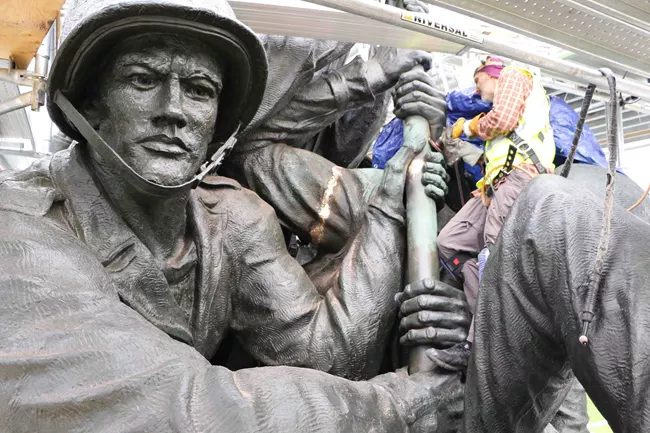
This isn’t a life-sized tribute — it’s a giant. Each Marine stands roughly 32 feet tall, the flagpole they’re raising is 60 feet long, and the overall memorial reaches about 78 feet from base to flag. At 100 tons of cast bronze, it’s often cited as the largest bronze statue in the world.
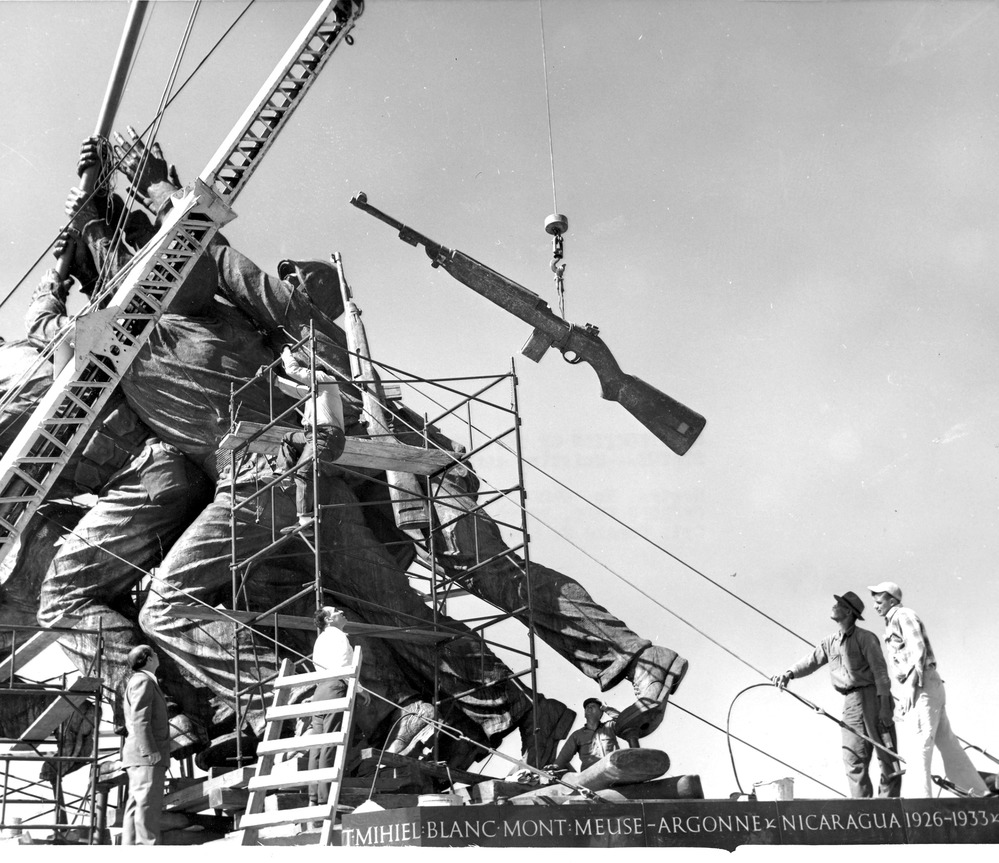
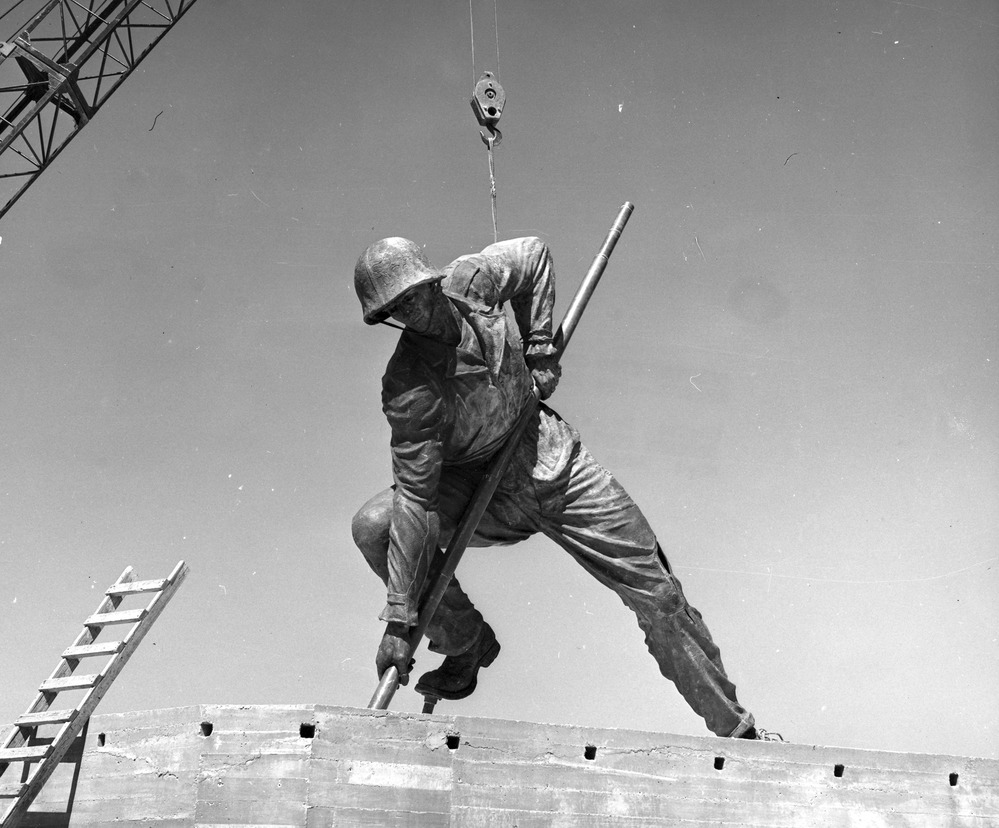
5. It Was Cast in Pieces and Assembled on Site
A statue this size can’t be poured in one shot. The full figure group was cast in a dozen separate bronze sections, trucked to Arlington, and then welded and bolted together on the memorial’s foundation — a sequence that mirrors how large-scale bronze monuments are still built today.
6. The Flag Never Comes Down
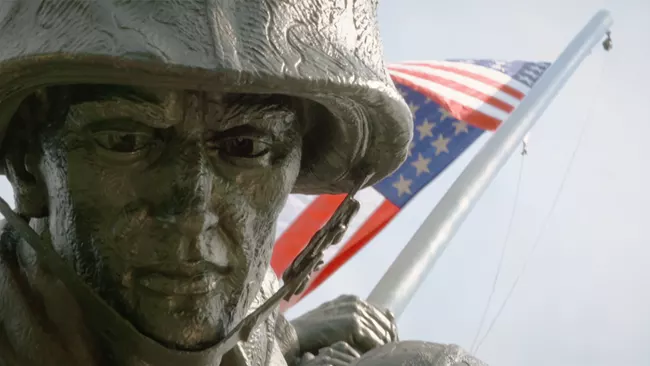
By presidential proclamation, a cloth American flag flies from the memorial’s flagpole 24 hours a day, 365 days a year. It’s one of only a handful of sites in the country with that designation.
7. The Base Honors Every Marine Engagement Since 1775
The memorial isn’t only about Iwo Jima. The granite base is inscribed in gold with the names and dates of every major Marine Corps engagement since the Corps was founded, along with the dedication: “In honor and in memory of the men of the United States Marine Corps who have given their lives to their country since November 10, 1775.”
8. It Wasn’t Built with a Single Dollar of Public Money
President Eisenhower dedicated the memorial on November 10, 1954 — the Marine Corps’ 179th birthday — but the roughly $850,000 project was funded entirely through private donations, largely from Marines and Marine Corps organizations, without any taxpayer funding.
Why This Statue Still Matters to Us
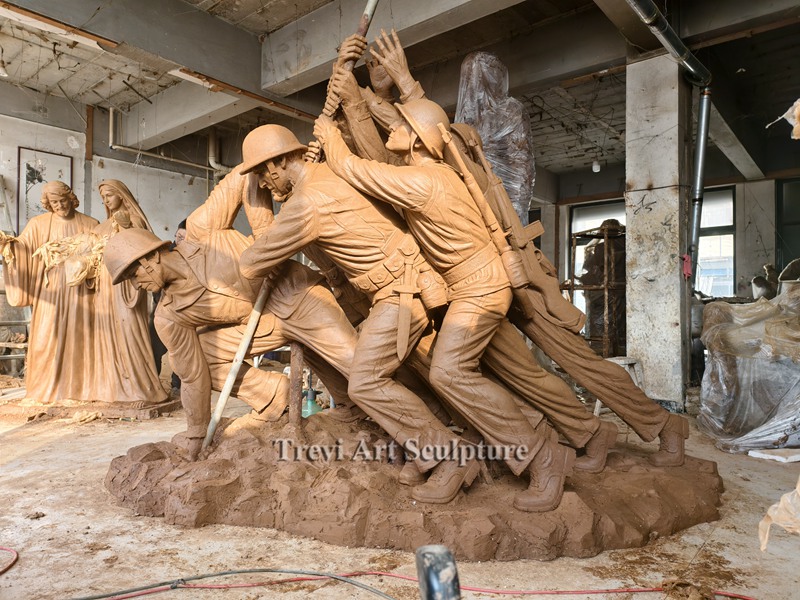
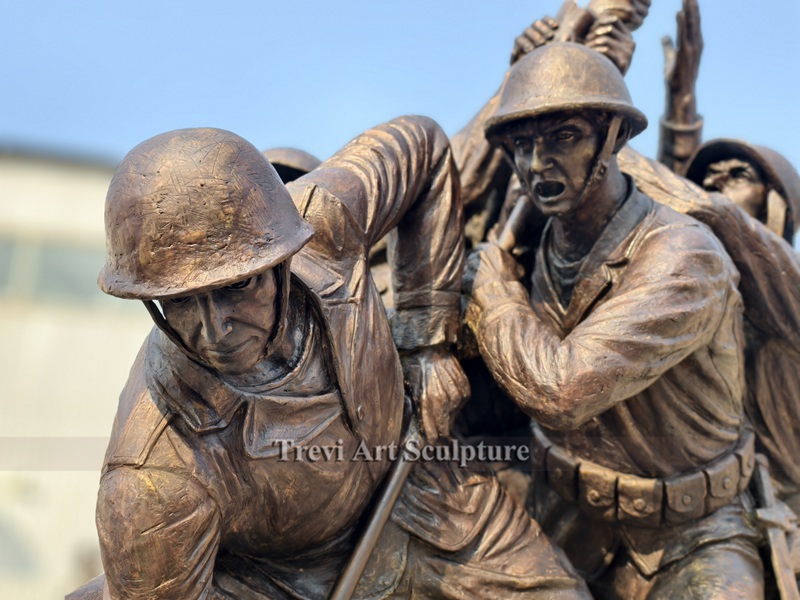
At our foundry, we’ve spent years casting bronze military memorials, and we’ve had the privilege of producing full-scale and scaled replicas of the Iwo Jima Memorial for clients in several U.S. states — from veterans’ organizations to municipal parks looking to honor local service members. Reproducing a piece like this respectfully takes the same craft the original demanded: sectional casting, careful surface detailing, and an assembly process built to withstand decades outdoors.
A Recent Project: One Veteran’s Personal Tribute
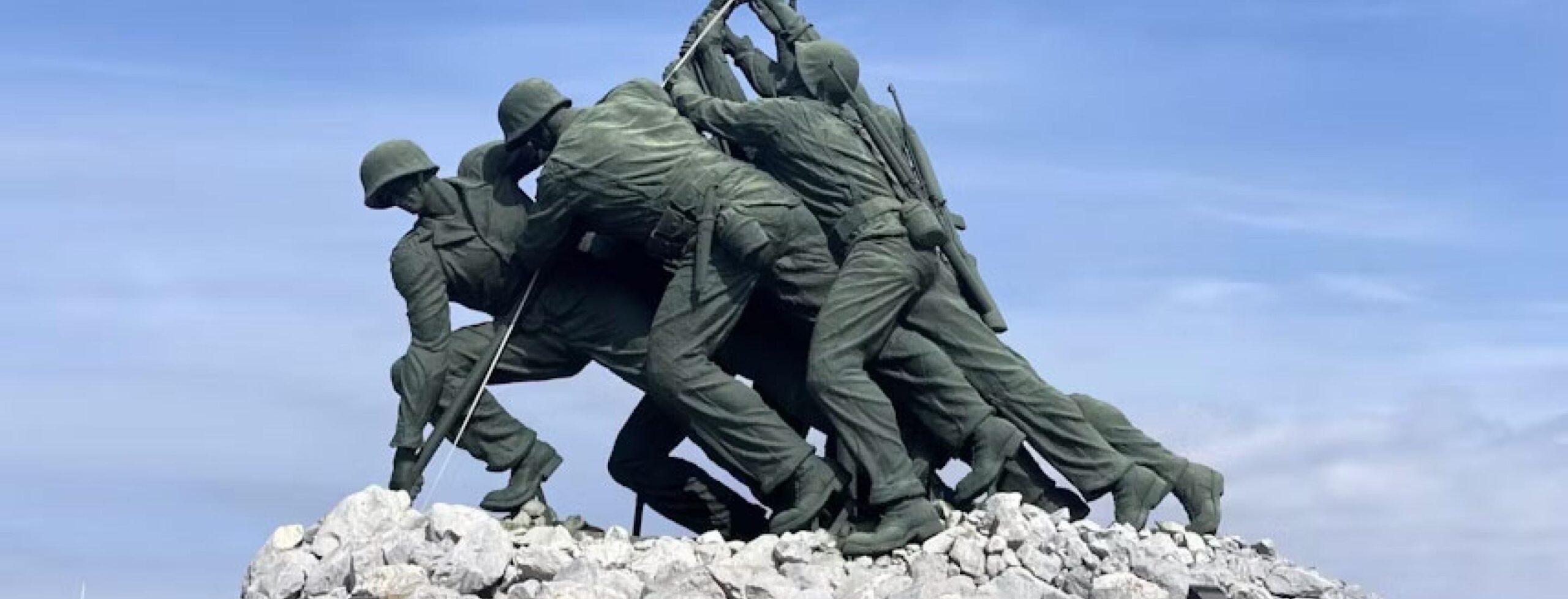
One of our most memorable recent projects came from a U.S. Army veteran who wanted a faithful bronze reproduction of the Iwo Jima Memorial for display in his own community — funded entirely out of his own pocket, without any government or organizational backing. Working closely with him at our Trevi foundry, our team translated the original composition into a scaled bronze casting, from sculpting and mold-making through sectional casting, hand-finishing, and final assembly, matching the pose, proportions, and surface detail of the original as closely as possible.
The finished piece now stands on public display locally, a personal tribute he can point to and say he made happen himself. It’s exactly the kind of project we love taking on — helping veterans and communities give lasting, physical form to the stories they want remembered.

If you’re planning a memorial for a base, a park, a campus, or a private collection — whether it’s a replica of an iconic piece like this one or a fully custom military sculpture — we’d love to talk through what you have in mind. Reach out anytime.


