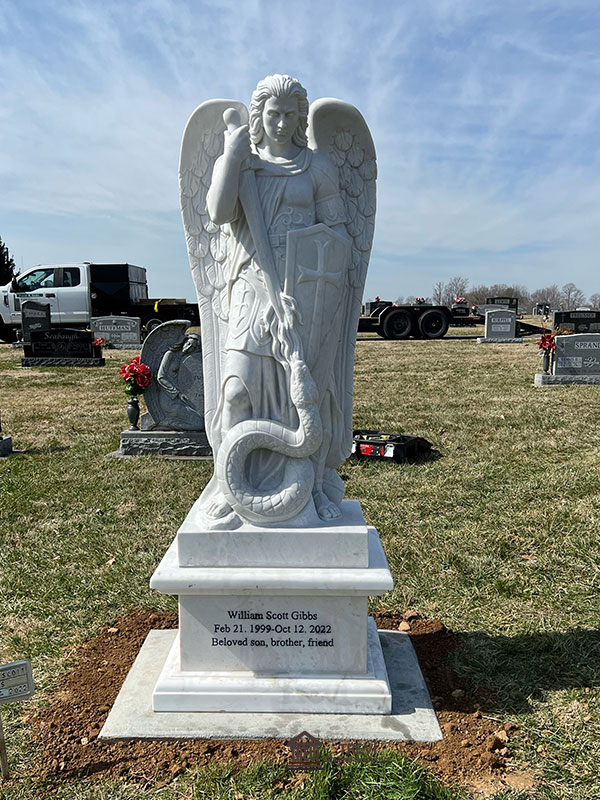
When one’s gaze falls upon the sculptures standing tall in city squares or atop churches, the figure of St. Michael always instantly captures people’s attention. This archangel, who defeated Satan in religious legend, has become the embodiment of justice, protection, and strength through his fearless posture and sacred halo. For churches, the sculpture of St. Michael is a tangible expression of faith and a spiritual anchor for the faithful; for cities, it is an iconic cultural symbol that carries historical memories and embodies the city’s spiritual essence. Today, let us explore the world’s famous sculptures of St. Michael and discover the stories and charm behind them.
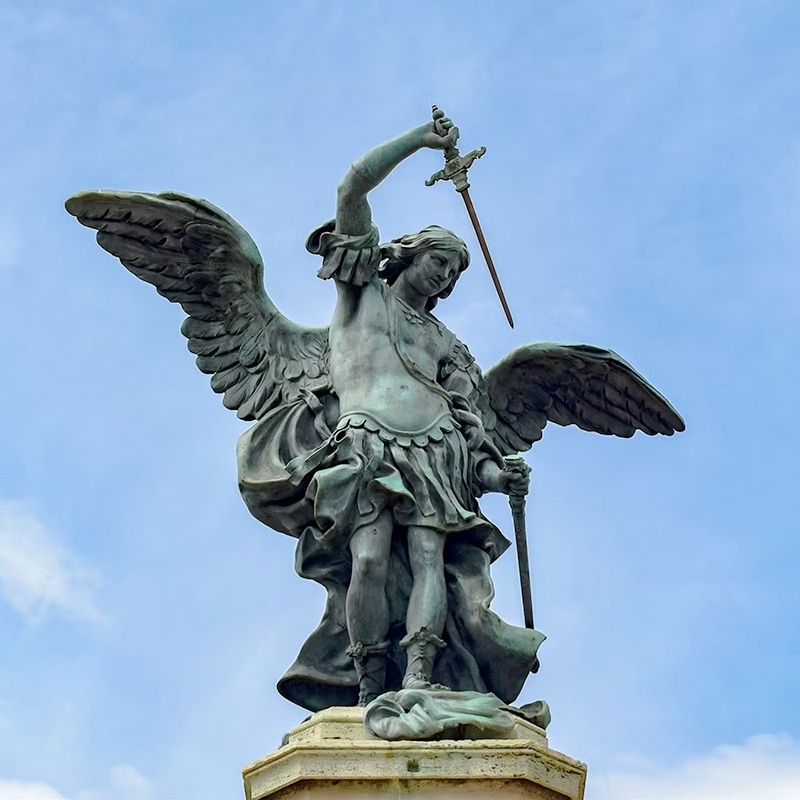
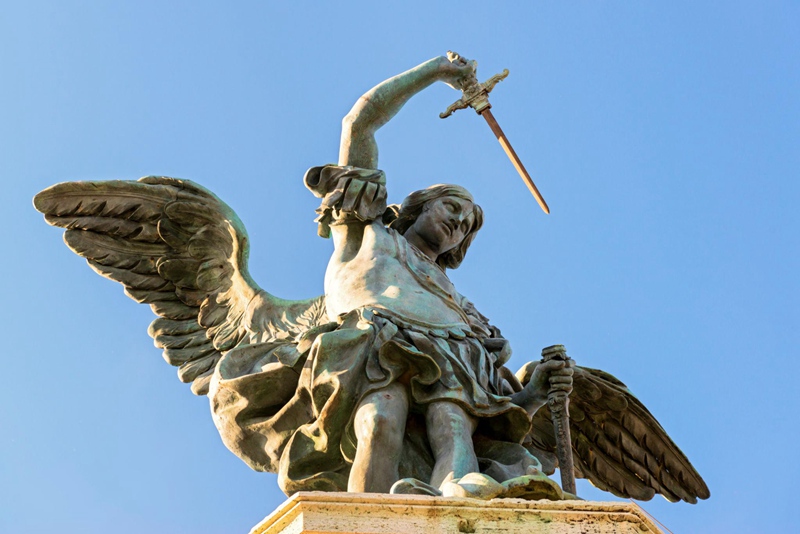
Archangel Michael Statue – Castel Sant’Angelo (Rome, Italy)
Location: Castel Sant’Angelo
Design:
This sculpture takes a unique approach: instead of depicting battle, St. Michael is shown sheathing his sword. The motion is subtle and inward, with wings slightly folded and posture relaxed. This creates a rare moment of calm resolution rather than action.
The anatomy is idealized but restrained, and the drapery flows gently, reinforcing a sense of peace. The composition focuses on narrative symbolism rather than physical struggle.
Creation background:
The statue commemorates a legendary vision in which St. Michael appeared above the castle, signaling the end of a devastating plague. The act of sheathing the sword represents divine mercy and the restoration of peace, making this one of the most symbolic interpretations of the archangel.
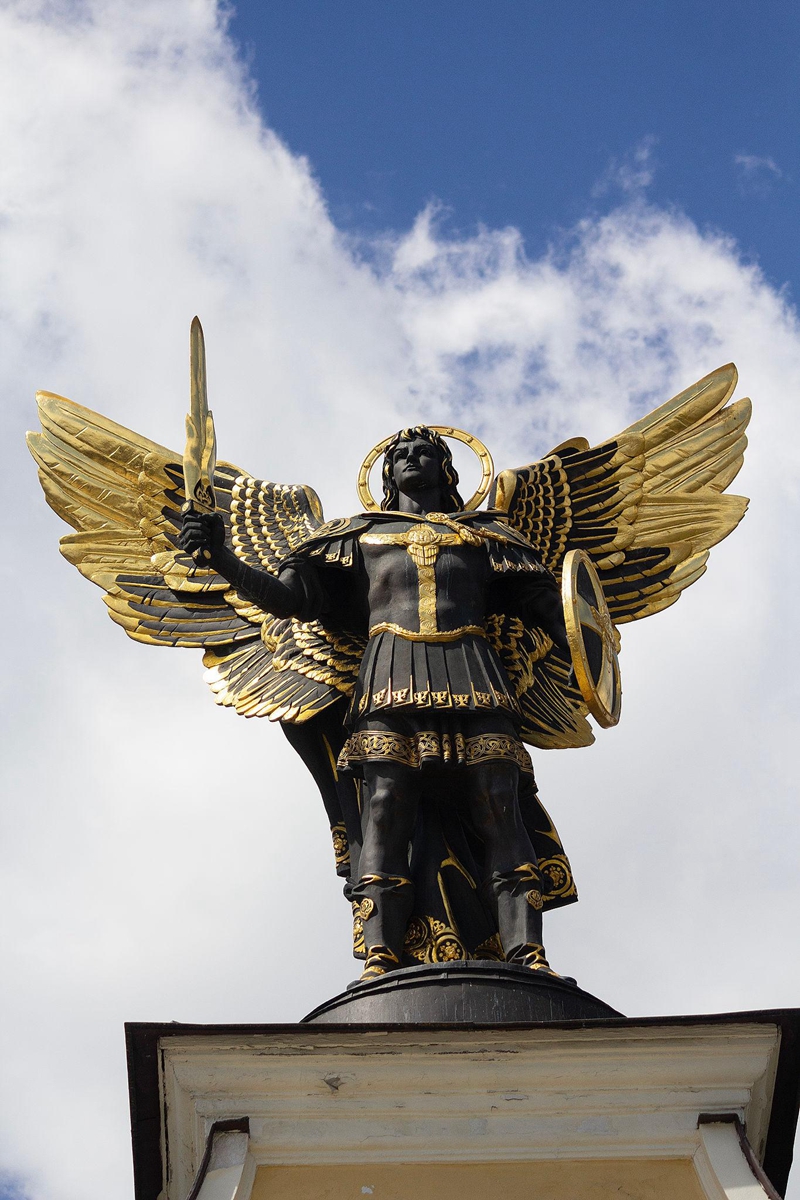
St. Michael the Archangel – Independence Square (Kyiv, Ukraine)
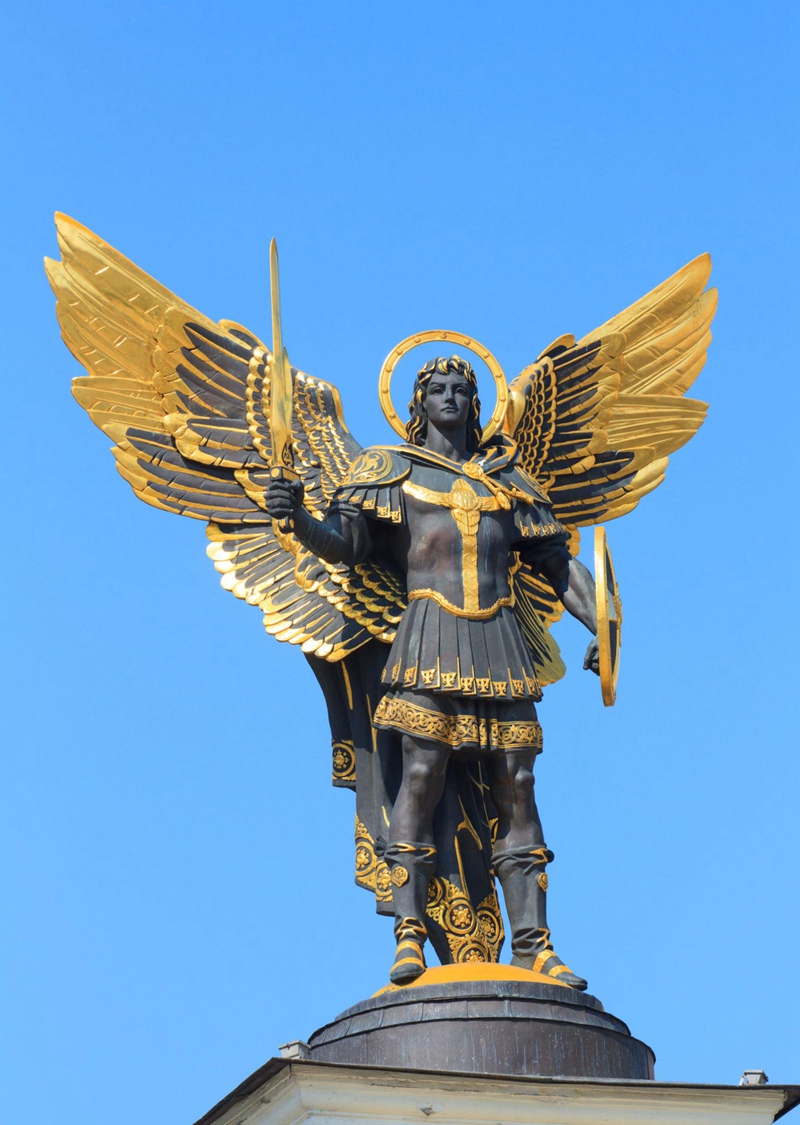
Location: Independence Square
Design:
This statue emphasizes frontal symmetry and authority. St. Michael stands upright, holding a sword and shield, creating a balanced and defensive composition. The wings rise vertically, reinforcing stability and protection rather than motion.
The golden finish gives the sculpture a radiant, almost celestial presence, making it highly visible within the urban landscape.
Creation background:
As the patron saint of Kyiv, St. Michael represents national identity and protection. The sculpture reflects both religious devotion and cultural symbolism, portraying the archangel as a guardian over the city.
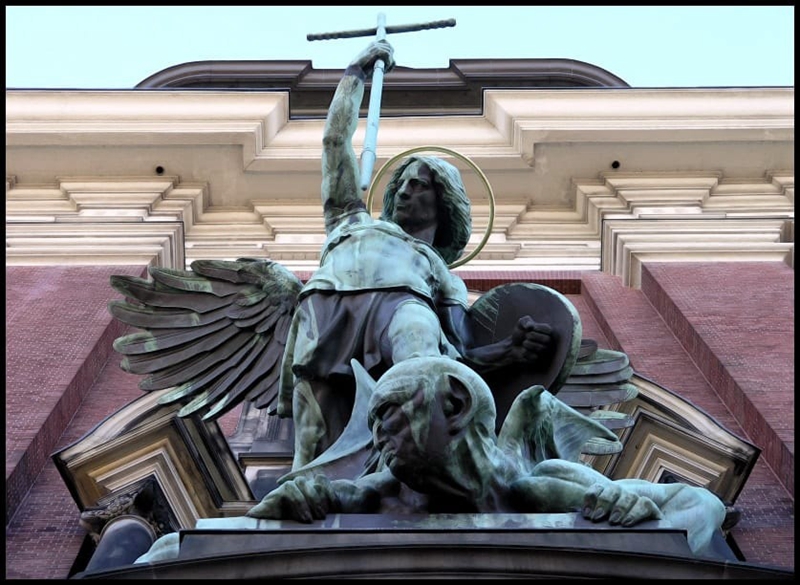
Archangel Michael – St. Michaelis Church (Hamburg, Germany)
Location: St. Michael’s Church Hamburg
Design:
Positioned above the church entrance, the sculpture shows St. Michael pinning the devil beneath his feet. The composition is compact but forceful, designed to be viewed from below.
The upward perspective exaggerates the figure’s dominance, while the wings and sword create a strong visual hierarchy.
Creation background:
Placed at the threshold of the church, the statue symbolizes spiritual protection—reminding visitors of the triumph of good over evil as they enter the sacred space.
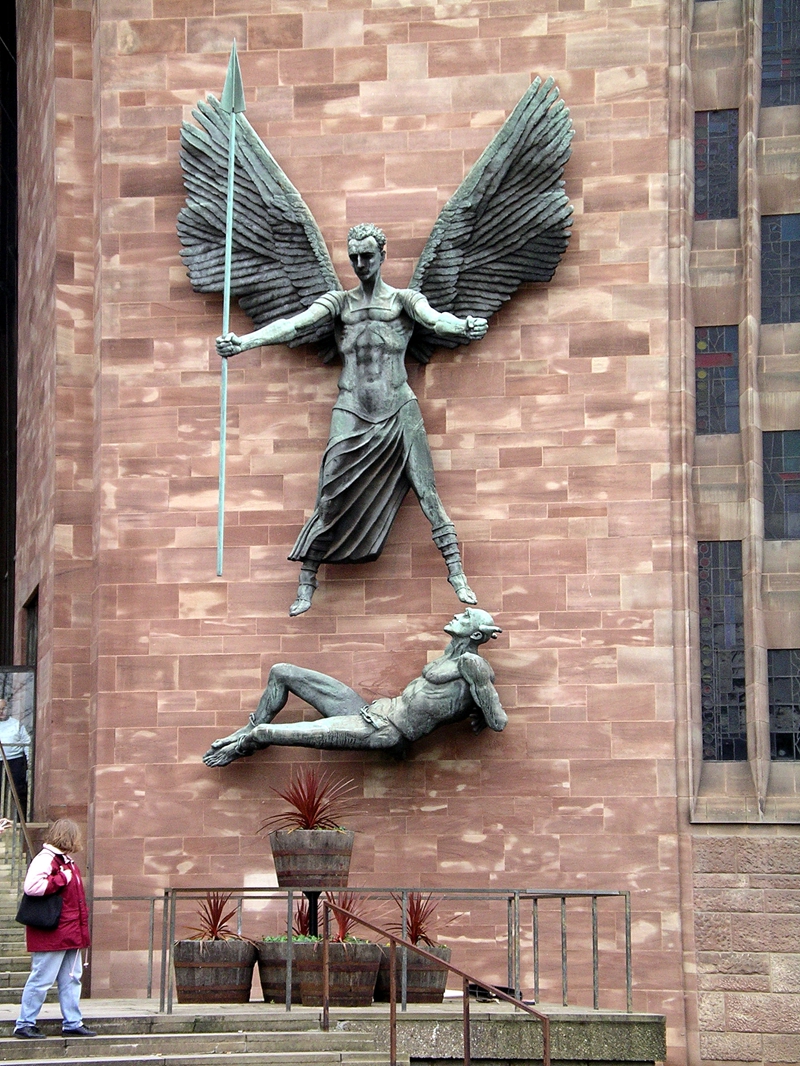
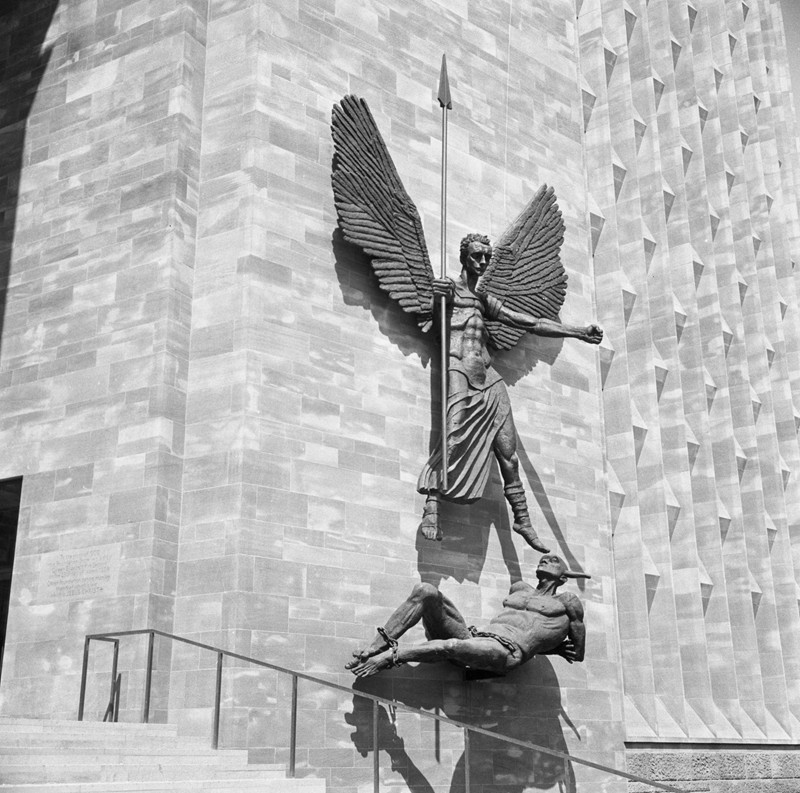
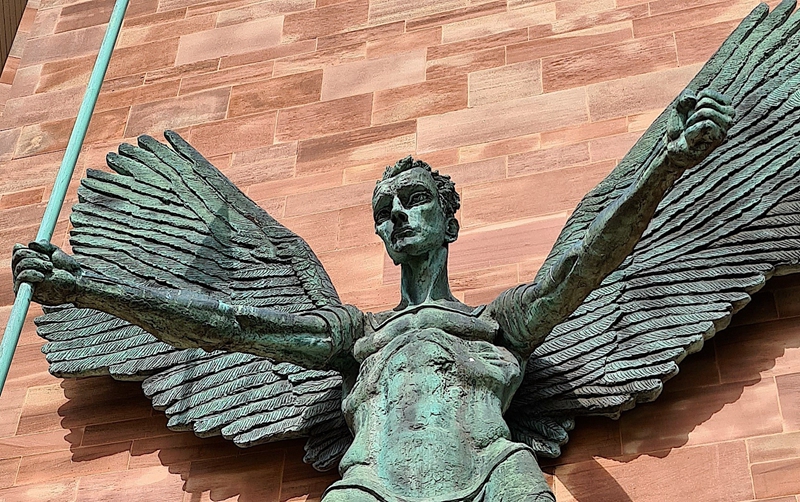
St Michael’s Victory over the Devil – Coventry, England
Location: Coventry Cathedral
Design:
This modernist sculpture departs from classical realism. St. Michael’s body is elongated and stylized, while the devil beneath him is distorted and abstract. The contrast creates emotional intensity rather than anatomical accuracy.
The composition uses strong diagonals and exaggerated forms to emphasize struggle and triumph. The surface texture is rough, adding to the expressive quality.
Creation background:
Installed after World War II, the sculpture symbolizes victory over destruction and evil. It reflects a modern reinterpretation of religious themes in a time of rebuilding and reflection.
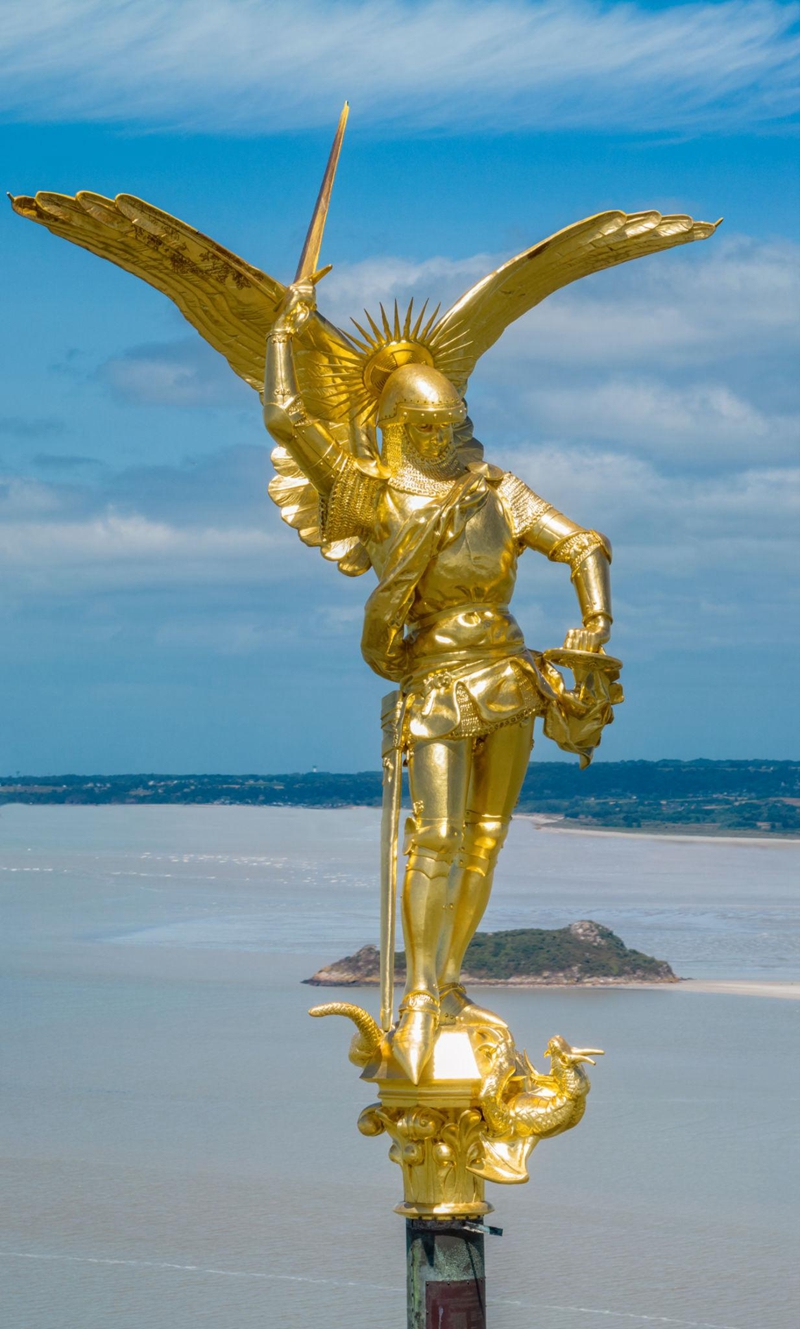
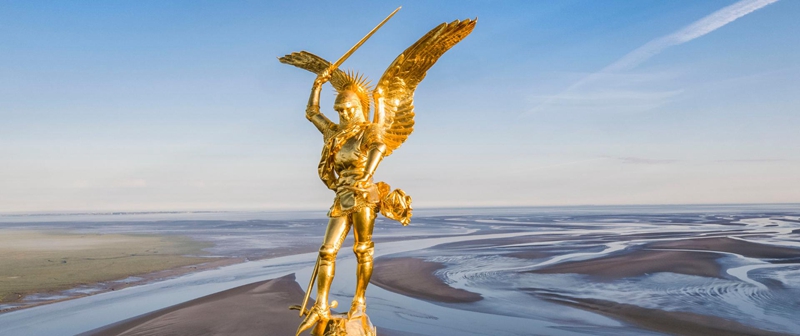
Statue of Saint Michael and the Dragon – Mont Saint-Michel Abbey (France)
Location: Mont Saint-Michel Abbey
Design:
This statue presents Saint Michael in a commanding vertical composition, perfectly aligned with the soaring Gothic spire beneath him. His wings are fully extended, forming a radiant silhouette against the sky, while his right arm raises a sword in a decisive gesture of victory. Beneath his feet lies the dragon, compressed into a compact form, emphasizing the contrast between divine authority and defeated evil.
The gilded surface enhances the sculpture’s visual impact, catching sunlight and transforming the figure into a luminous beacon visible from afar. The proportions are intentionally elongated to harmonize with the architecture, making the statue appear almost weightless despite its material.
Creation background:
The statue reflects over a thousand years of devotion to St. Michael at this site. According to legend, the archangel appeared in 708, instructing Bishop Aubert to build a sanctuary here, turning the island into a major pilgrimage destination.
Installed during the 19th-century restoration, the sculpture reinforces Mont Saint-Michel’s identity as a spiritual stronghold—symbolizing St. Michael as protector, judge, and guide for believers.
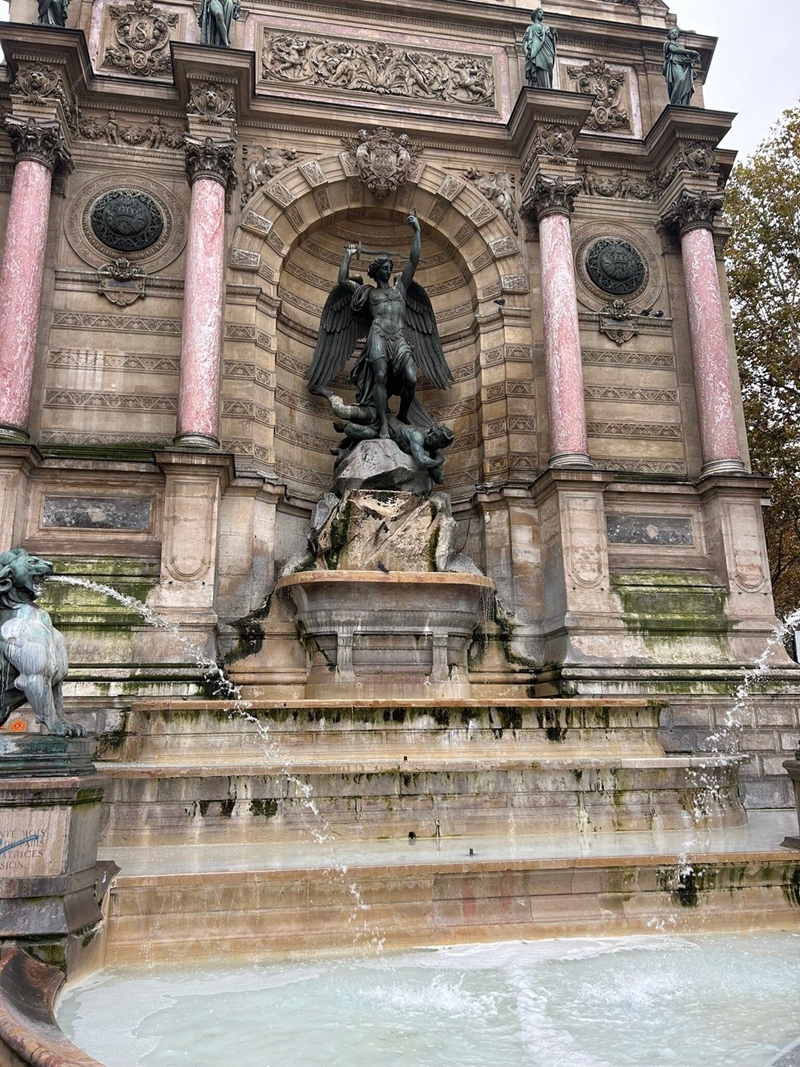
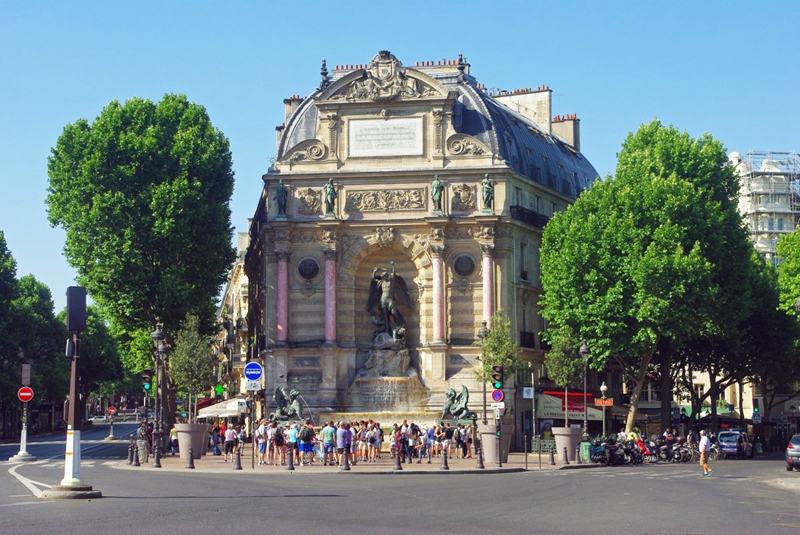
Fontaine Saint-Michel – Paris, France
Location: Fontaine Saint-Michel
Design:
Unlike isolated statues, this work integrates sculpture into a monumental architectural fountain. St. Michael stands centrally, pressing the devil downward with controlled force. His posture is upright and balanced, emphasizing moral authority rather than explosive movement.
The composition is highly theatrical: flanking dragons, layered stone textures, and cascading water create a multi-sensory experience. The figure is framed like a stage performance, with strong symmetry and rich ornamentation typical of 19th-century Parisian design.
Creation background:
Constructed between 1858 and 1860 during the urban transformation of Paris, the fountain was intended not only as decoration but as a symbolic statement of order and morality in the modern city.
St. Michael’s victory over evil here reflects the broader theme of civilization triumphing over chaos.
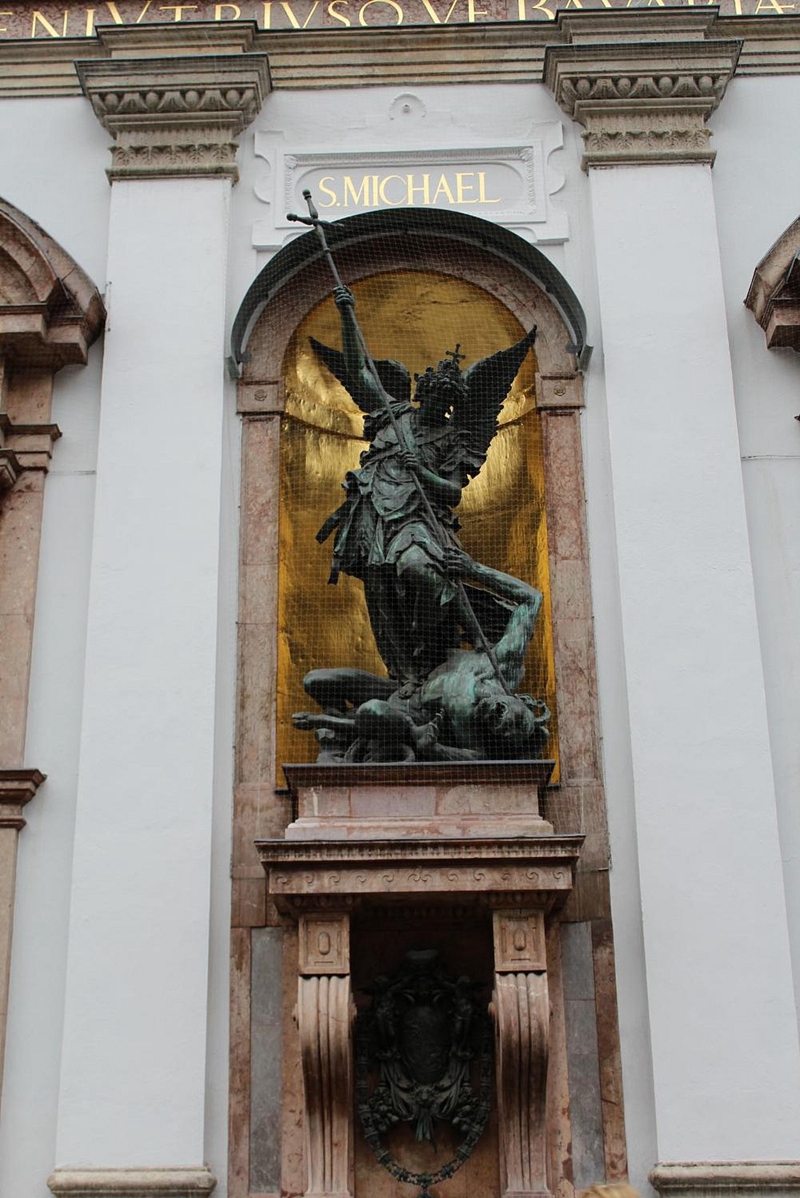
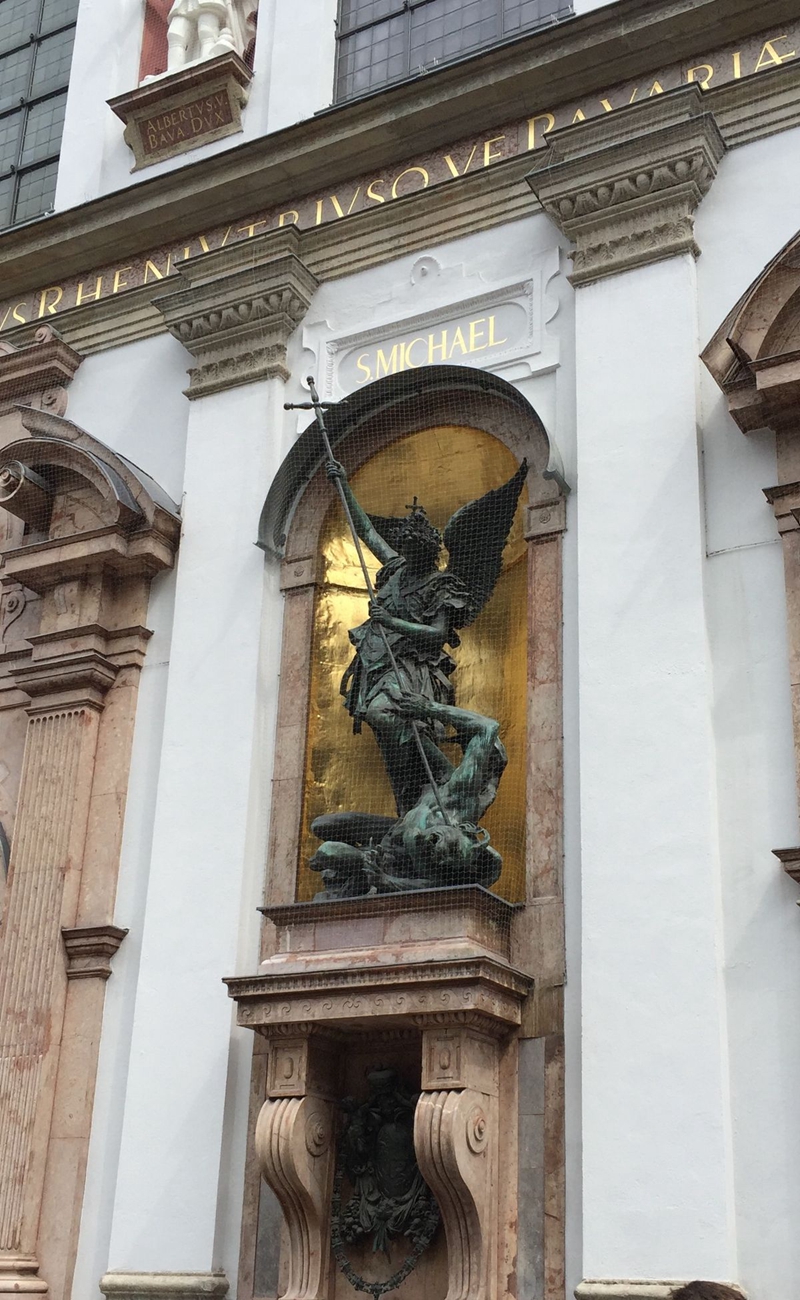
st michael statue – Munich, Germany
Location: St. Michael’s Church, Munich, Germany
Design:
This sculpture presents Saint Michael in a forceful moment of combat, standing over the defeated devil with a strong downward motion. His body is slightly twisted, creating a dynamic diagonal composition that conveys tension and action. The wings are spread wide but angled backward, allowing the viewer’s focus to remain on the decisive gesture of victory.
The figure of the devil is compressed beneath St. Michael’s feet, often depicted with contorted anatomy to emphasize defeat and chaos. In contrast, the archangel’s form is idealized and balanced, reinforcing the visual contrast between divine order and evil. The drapery flows around the body, adding movement and rhythm to the sculpture, while the sword acts as a central visual axis guiding the viewer’s eye.
Creation background:
Created within a strong Catholic artistic tradition in southern Germany, this sculpture reflects the Counter-Reformation emphasis on dramatic religious imagery. During this period, art was used as a tool to inspire faith and communicate clear moral messages.
St. Michael, as a symbol of divine justice, was frequently depicted in victorious combat to reinforce the idea of good triumphing over evil. This statue embodies that message through its expressive composition and powerful narrative, serving both as decoration and spiritual instruction within the church setting.
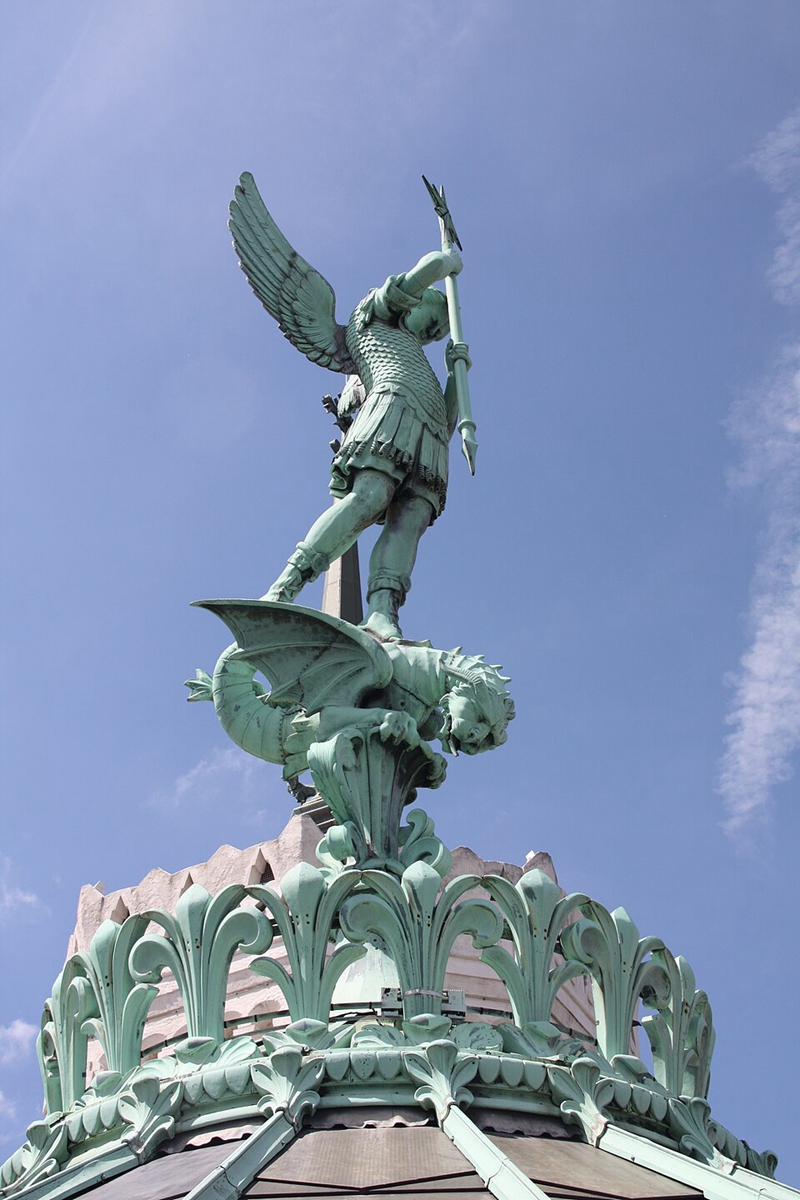
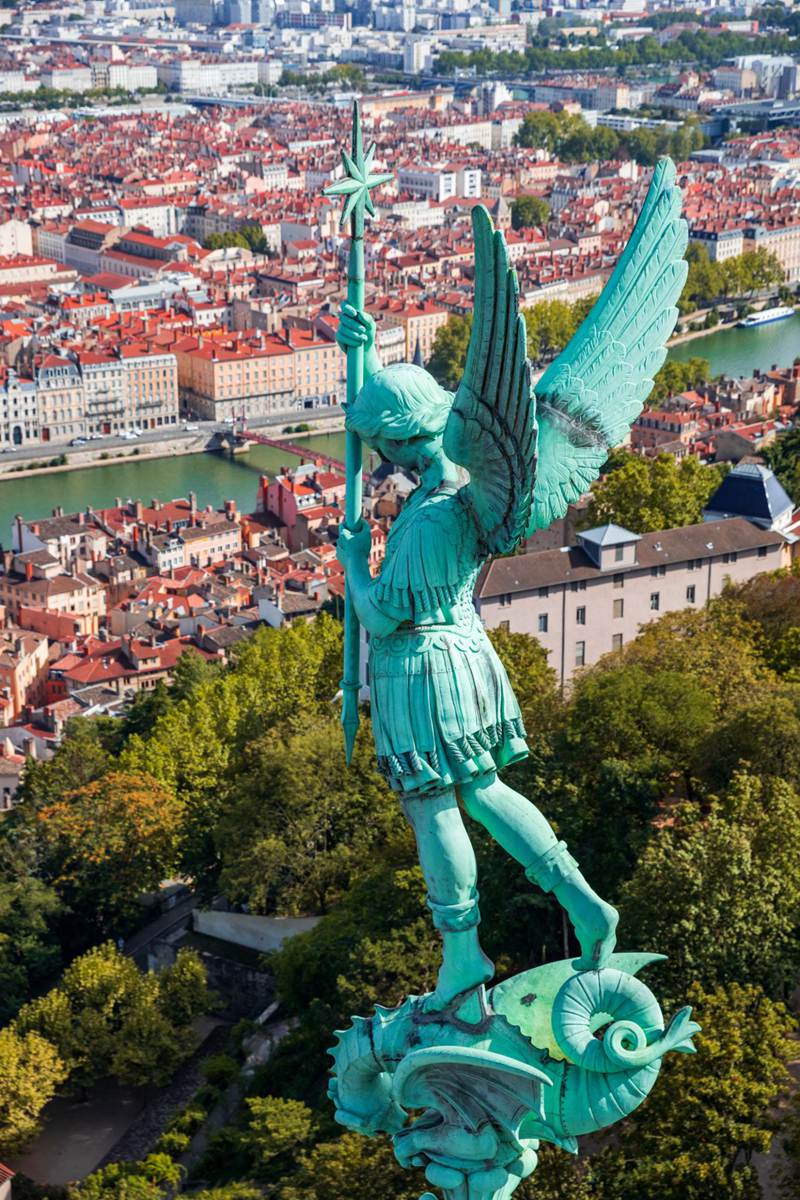
Statue of Saint Michael on the Basilique Notre-Dame de Fourvière – Lyon, France
Location: Basilique Notre-Dame de Fourvière, Lyon, France
Design:
This statue integrates Saint Michael into the architectural framework of the basilica, resulting in a composition that is both decorative and symbolic. The figure is typically shown in a controlled stance, with one foot placed over a subdued dragon, rather than in an explosive combat scene.
The posture is upright and composed, emphasizing authority and calm dominance. The wings are symmetrically arranged, contributing to a sense of balance and harmony with the surrounding architecture. Fine detailing in the armor, feathers, and facial features reflects the craftsmanship of 19th-century religious sculpture.
Unlike more dramatic interpretations, this design focuses on clarity and refinement. The sculpture communicates victory through stability and order, rather than intense motion, making it visually consistent with the basilica’s ornate yet structured style.
Creation background:
The Basilica of Notre-Dame de Fourvière was constructed in the late 19th century as a symbol of gratitude and faith, overlooking the city of Lyon. The inclusion of Saint Michael aligns with the broader decorative program celebrating key figures of Christian belief.
In this context, St. Michael serves as a guardian figure, representing protection over the city and its people. The sculpture reflects a period when religious art emphasized harmony, craftsmanship, and integration with architecture, rather than purely dramatic storytelling.
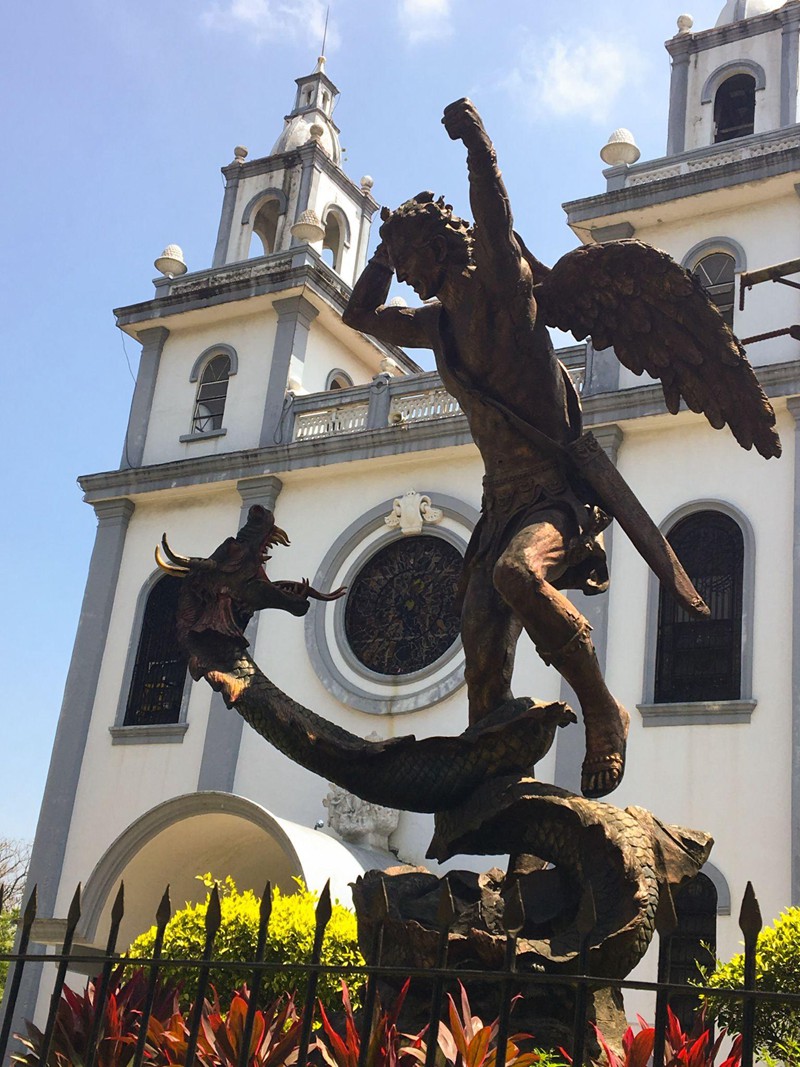
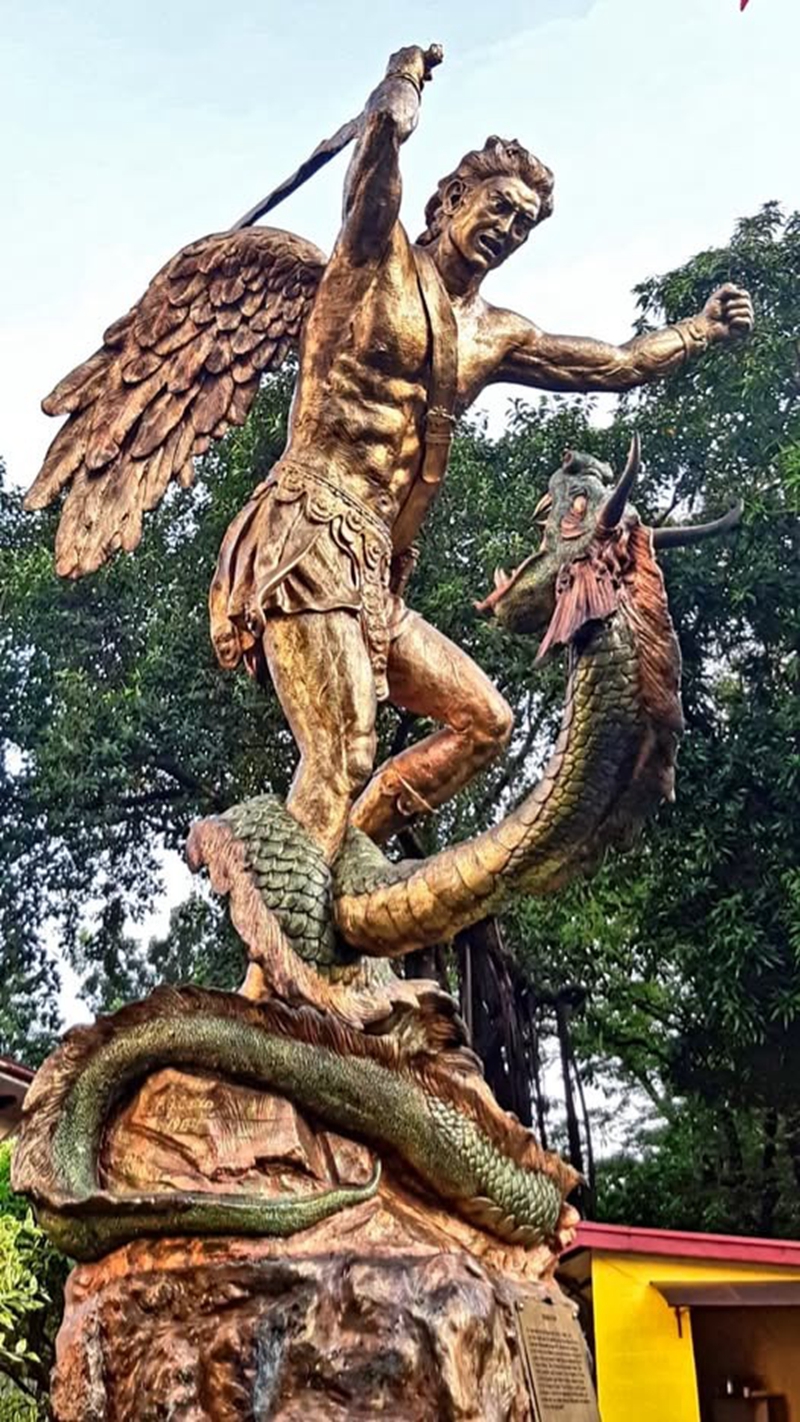
St. Michael the Archangel Slaying a Dragon – Philippines
Location: Philippines
Design:
These statues are often highly expressive, with vivid colors and dynamic motion. St. Michael is shown actively striking the dragon, with dramatic gestures and intense facial expressions.
The compositions are narrative-driven, focusing on storytelling and emotional engagement rather than strict realism.
Creation background:
Rooted in strong Catholic traditions, these sculptures reflect local craftsmanship and devotional practices, making the archangel more accessible and relatable to the community.
Archangel Michael Statue – Mexico City (Ernesto Tamariz)
Location: Mexico City
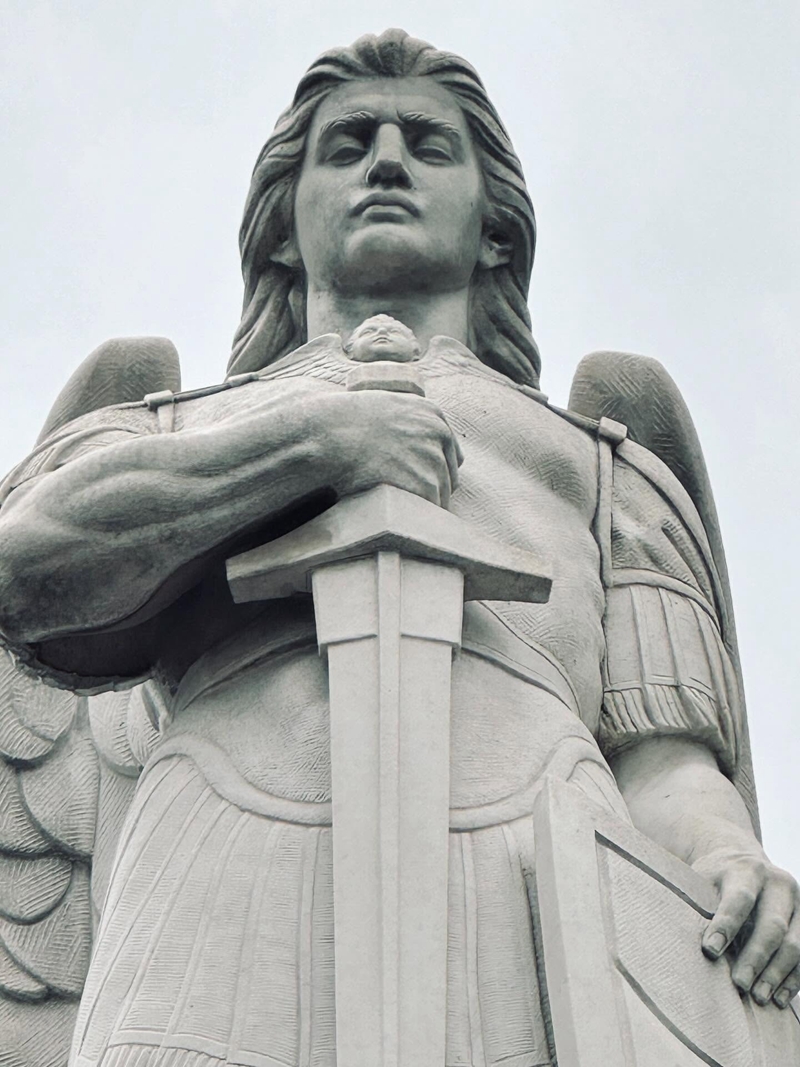
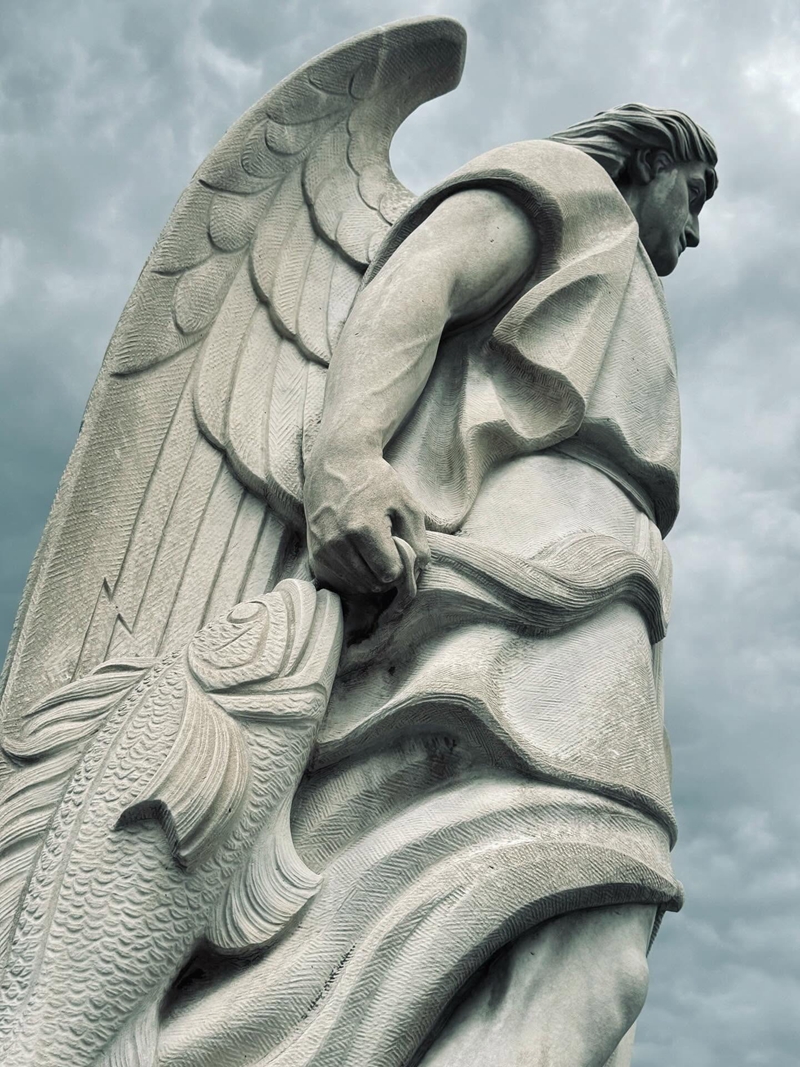
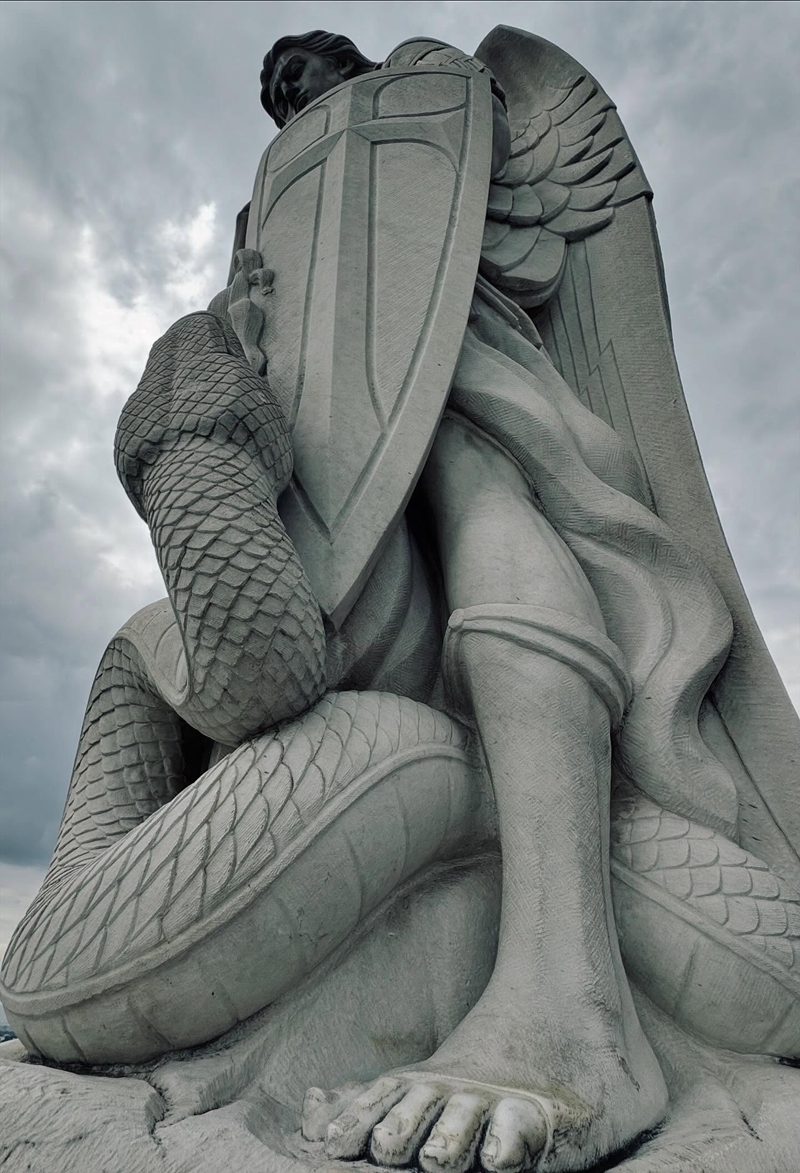
Design: The statue depicts St. Michael standing on a dragon and a snake in a static but solemn posture. The angel is wearing armor and wings, holding a shield in his left hand and resting his right hand on his chest, with a pensive and majestic look. Under his feet is a giant snake, a symbol of evil, which is completely subdued. The whole statue has a compact structure and a low center of gravity, conveying a restrained and firm sense of power. The high-altitude background behind it forms a sharp contrast with the solemn white color of the statue, making it particularly eye-catching in the sun.
Background: Ernesto Tamariz is a famous Mexican sculptor in the 20th century, known for carving religious and monumental statues. This work was created in 1957 and is a classic interpretation of the image of St. Michael as the “Conqueror of Satan” in the Mexican Catholic tradition. It also symbolizes the national spirit, the protection of the city, and the victory of personal faith over temptation.
Archangel Michael Statue – Brussels, Belgium
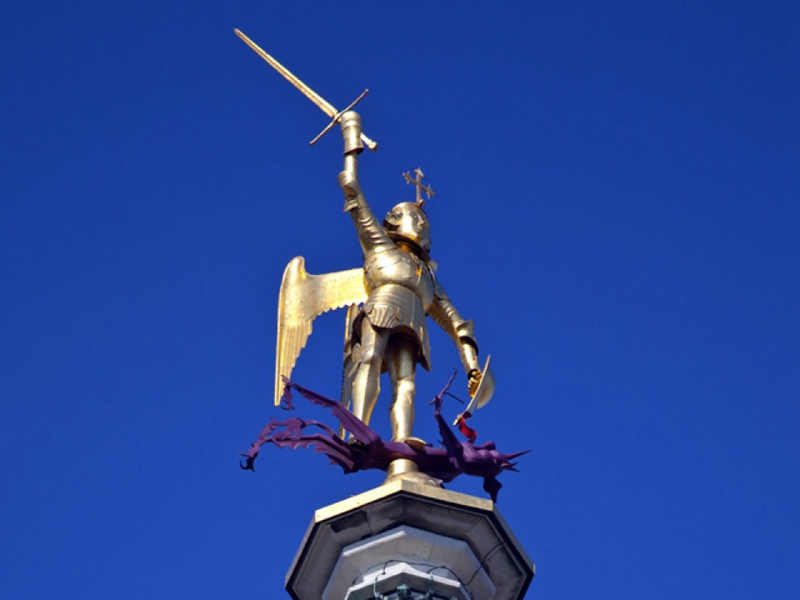
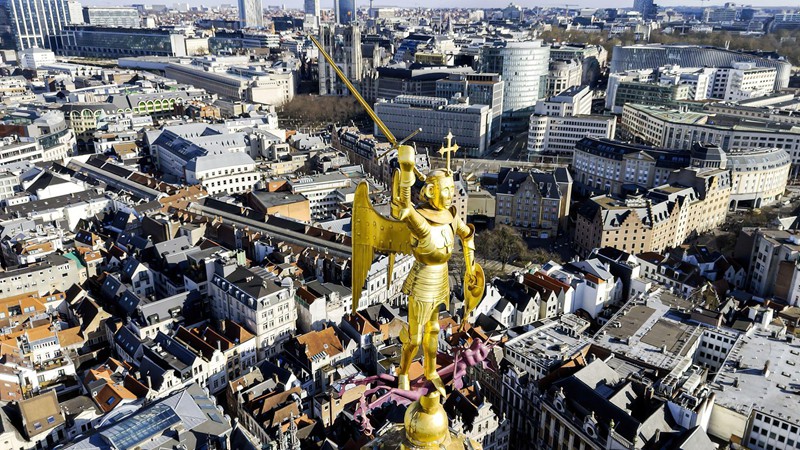
Location: Brussels City Hall
Design:
This Gothic-style figure is slender and vertically oriented, designed to complement the tall spire. St. Michael is shown defeating a dragon, but the forms are elegant and stylized rather than muscular.
The emphasis is on line and silhouette, creating a refined and harmonious architectural ornament.
Creation background:
As the patron saint of Brussels, St. Michael symbolizes civic protection. The statue reflects medieval traditions where religion and city identity were closely intertwined.
Final thought
From Gothic spires to modern bronze masterpieces, each Saint Michael the Archangel statue reflects a unique interpretation of victory, protection, and divine justice. Whether calm and symbolic or dramatic and dynamic, these sculptures demonstrate the timeless appeal of St. Michael as a subject in religious art.
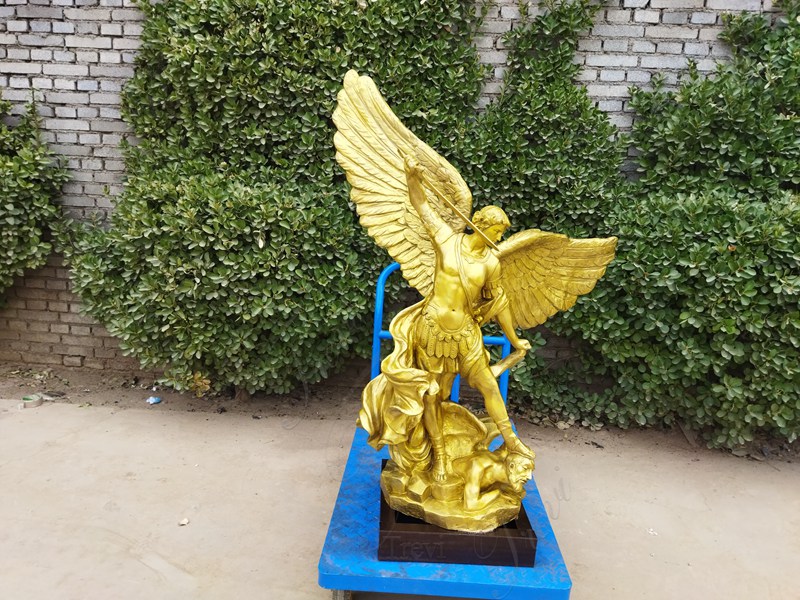
For collectors, churches, and designers, these works provide valuable inspiration.
If you are looking to create a custom St. Michael statue, professional sculpture studios today can reproduce or reinterpret these iconic designs in bronze or marble—tailored to your space, scale, and artistic vision.